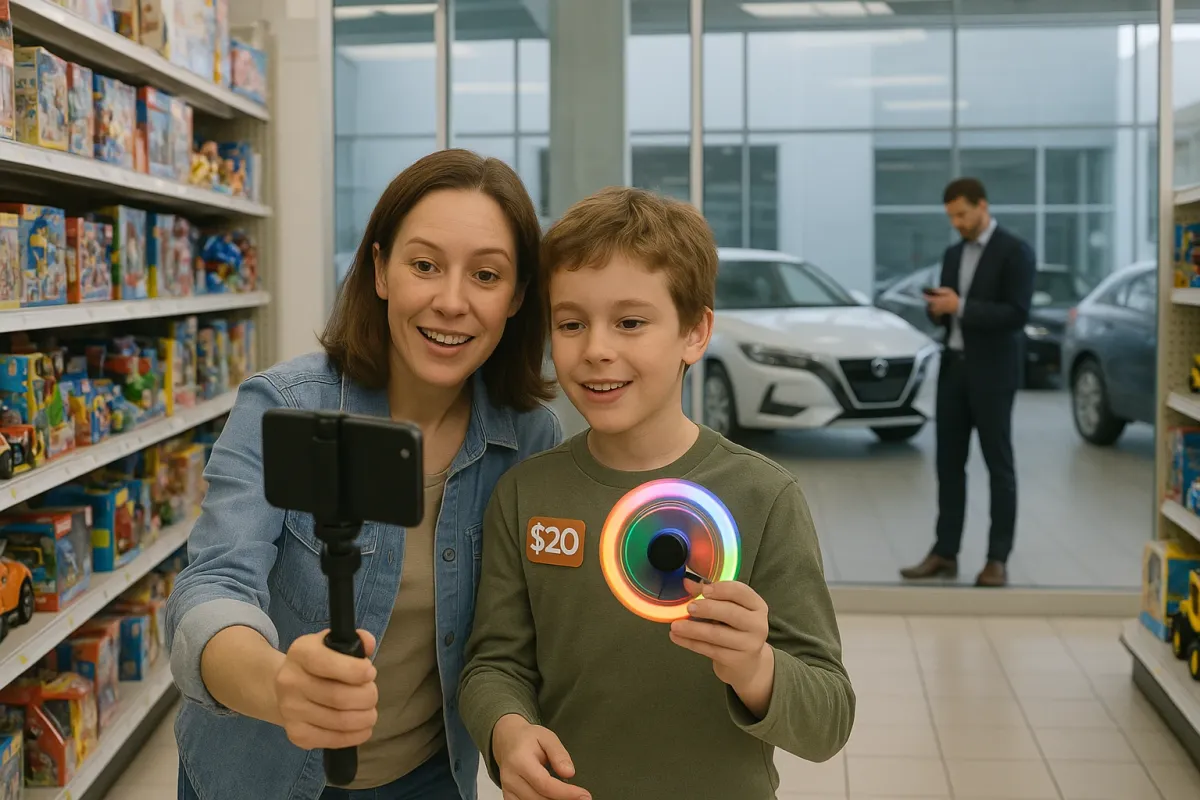
That same psychology is quietly driving how people shop for cars right now—especially budget‑friendly models and trims that look premium online, but don’t always deliver when you get behind the wheel. In a year where more shoppers are hunting for deals, a car that “seems like more than its price” is the automotive version of a hot $20 toy. The difference? If your kid’s toy disappoints, you’re out a few bucks. If your car disappoints, you’re stuck with a five‑figure mistake.
Here’s how to read modern car reviews through that “premium on a budget” lens—and how to test‑drive the way smart shoppers are buying those viral toys: skeptical, curious, and focused on real‑world value.
Look Past the “Gift Wrap”: Design vs. Daily Use
Just like those Instagram‑ready toys that photograph beautifully, a lot of today’s budget cars are designed to win the first impression: big screens, aggressive grilles, chrome‑style trim, and LED light signatures that mimic luxury brands.
When you read or watch a review, don’t stop at “it looks great for the price.” Ask:
- *How does the interior feel after 30 minutes? Reviewers should mention seat support, headroom, and visibility, not just ambient lighting and screen size.
- What materials are where you actually touch? Soft‑touch where your elbows, knees, and hands rest matters more than a stitched dash strip you’ll barely notice after week one.
- Are storage spaces useful or just for show? Pay attention when reviewers talk about door bins, wireless phone trays that actually hold the phone in corners, and cupholders that fit large bottles.
- What’s the cabin like in bad conditions? Look for notes on wind noise at highway speeds, how easy it is to find controls at night, and how quickly the defrosters work.
On your own test drive, sit in the car the way you’d live with it: phone, drink, bag, kids’ stuff. If it feels like a pretty toy that’s annoying to use, that’s your sign.
Separate “Wow Features” From “Living With It Features”
Those viral sub‑$20 toys succeed because they’re simple and fun right out of the box. Carmakers, by contrast, often lead with tech features that look impressive on a spec sheet but can be clumsy in daily use.
When a review lists a long feature count for a budget car—panoramic screen, wireless charging, app‑based key, driver‑assist suite—focus on:
- Setup friction: Does the reviewer mention needing multiple apps, accounts, or updates just to get basic functions working?
- Menu depth: Are common tasks—turning on heated seats, changing drive mode, adjusting climate—buried in multiple screen layers?
- Physical backups: Are there still knobs and buttons for volume, temperature, defrost, and hazard lights, or is everything touch‑only?
- Consistency: Do reviewers complain about laggy responses, random disconnects with Apple CarPlay/Android Auto, or systems that behave differently day to day?
On your test drive, mimic your real routine:
- Connect your phone. See how long it takes, and whether it reconnects on its own when you restart the car.
- Try the driver‑assist: lane keep, adaptive cruise, parking sensors. Are they helpful or constantly nagging and beeping?
- Turn things on and off quickly without looking away from the road. If it feels like using a complicated toy with too many modes, expect daily annoyance.
Watch How Reviewers Talk About Ride Quality, Not Just Power
Parents buying those well‑reviewed budget toys care about durability: will it still work after a kid drops it a few times? With cars, the equivalent is ride comfort and long‑term driveability, especially on rough streets and highways.
In reviews, look for:
- Road noise and vibration: Words like “quiet for the class” or “surprisingly refined” are strong positives. Phrases like “gets busy over bumps,” “twitchy,” or “boomy at highway speeds” suggest you’ll be tired after a long drive.
- Suspension tuning: If reviewers say “sporty but harsh,” translate that to “could get old on your commute.” A slightly softer, well‑controlled ride is usually better for daily use than a budget car pretending to be a track toy.
- Steering feel: Comments like “light but accurate” are a good sign for city driving. “Numb,” “vague on center,” or “requires constant correction” matter more than 0–60 times in real life.
- Seat comfort on longer drives: If a reviewer mentions back or leg fatigue after an hour, pay attention.
On your test drive, don’t just loop the dealership:
- Find a stretch of highway. Listen for wind around the mirrors and pillars; notice if you have to raise your voice.
- Hit some patched or broken pavement at normal speed. Does the car crash over bumps or stay composed?
- Drive with the stereo off for a few minutes. Road and tire noise will be most obvious in silence.
If a car only feels impressive when you’re flooring it, but annoying at 35–70 mph, it’s the car version of a flashy toy that’s fun for five minutes then gets shelved.
Pay Close Attention to How Reviewers Frame Value, Not Just Price
That trending “toys under $20” list isn’t really about the number—it’s about perceived value: “This feels like it should cost more.” The car equivalent is when reviewers say things like “punches above its weight” or “best value in the segment.”
Dig into why they say that:
- What are they comparing it to? If a budget compact SUV is praised only against older models or base trims, that’s different from comparison to current class leaders.
- Which trims actually make sense? Reviewers often point out a specific mid‑spec trim as the sweet spot. Entry‑level may feel too bare, top trims overpriced. Lock onto the trim they’d personally buy.
- What’s standard vs. optional? Many “value” claims fall apart once you add must‑have safety and comfort features. Watch for reviews that mention, “You have to step up at least one trim to get X.”
- Operating costs: Good reviewers talk about real‑world fuel economy, insurance estimates, and maintenance intervals. A low sticker price with thirsty mileage and short service intervals is a fake “budget” car.
Before you visit a dealer, match this to your own numbers:
- Decide your all‑in budget (payment + fuel + insurance + maintenance).
- Identify one or two trims that align with how reviewers talk about value, not just “the cheapest one.”
- Cross‑shop at least one competitor in the same money range that reviewers keep mentioning. Often, the “viral value pick” isn’t the one with the loudest marketing, but the one reviewers can’t stop referencing as the benchmark.
Use Social Buzz the Way Parents Use Reviews: Filter, Don’t Follow
That toy article is going viral because people love sharing “hacks” that make them feel smart. The same thing happens on car TikTok, YouTube, and Instagram: clips of “hidden gem” models and “this car is way nicer than its price” spread quickly. Some are honest; some are just well‑packaged ads.
Treat car buzz the way cautious parents treat toy reviews:
- Prioritize long‑term reviews. Look for content from owners who’ve lived with the car for 6–12 months, not just launch‑day impressions. They’ll mention rattles, software glitches, and real fuel economy.
- Scan comment sections. With any model getting a lot of love, see what actual owners are saying below: recurring complaints about a specific transmission, infotainment crash, or dealer experience are red flags.
- Check recall and reliability data. After a model has been on sale for a bit, check NHTSA recall info and early reliability reports (Consumer Reports, owner forums, Reddit threads). Viral “value” can evaporate if the car is constantly in the shop.
- Beware of “too good to be true” deals. If a clip screams about a fully loaded car for an unbelievably low monthly payment, remember: local incentives, huge down payments, and long loan terms can be hidden in the fine print.
When you’ve narrowed your list using reviews and buzz:
- Test‑drive on your terms, not the salesperson’s short route.
- Bring a friend or partner and let them* drive too; a second opinion often catches things you miss.
- Walk away if something feels off, no matter how “hot” or “limited” the deal is claimed to be.
Conclusion
The reason those “under $20 but looks expensive” toys are dominating feeds today is simple: people want to feel like they hacked the system and got more than they paid for. That’s exactly what most shoppers want from a car in 2025—a budget that behaves like it belongs in the next price class up.
The difference is stakes. With toys, you can impulse‑buy. With cars, you need a plan: ignore the gift wrap, interrogate the features you’ll use every day, focus on ride and comfort over raw numbers, and treat “value” as total cost over time, not just a headline price. Use current reviews and social buzz as tools, not instructions, and you’ll end up with something better than a viral deal: a car that still feels like a smart choice years after the algorithm moves on.