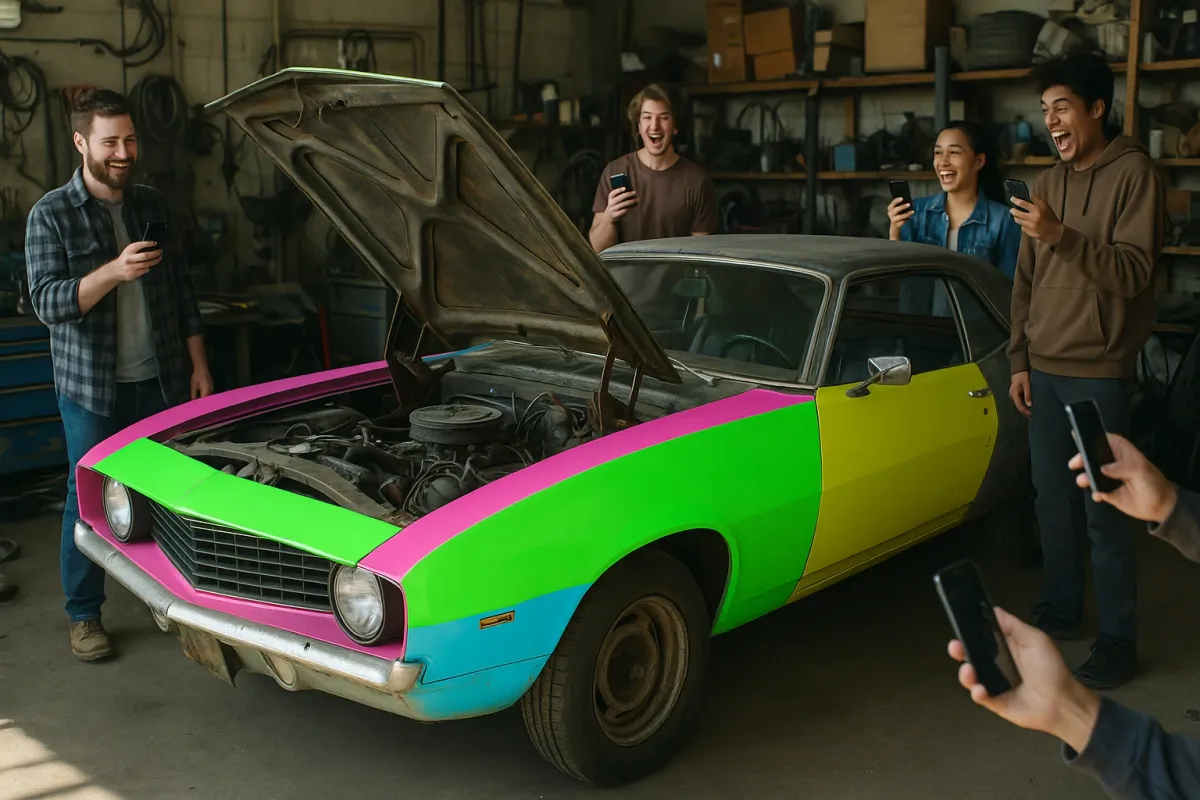
If you own a car—especially anything older, special, or enthusiast‑grade—that statue is your warning shot. The same “good enough” mindset that ruins historic art can quietly destroy the value, safety, and reliability of your vehicle. You might not end up trending on social media, but you can absolutely end up paying for someone else’s shortcuts.
Below are five practical maintenance lessons car owners can pull from this kind of restoration fail—so your ride doesn’t become the automotive version of a viral “before and after” meme.
Respect Original Parts: Not Every Replacement Is An Upgrade
One reason the 1923 statue restoration blew up online is that the “fixed” version barely respected the original. Features were softened, details were lost, and the piece looked like a cheap copy of itself. The same thing happens when cars are “restored” with the wrong parts just because they’re cheaper or easier to get.
For daily drivers, aftermarket parts are fine in many areas, but you still want to avoid the ultra‑cheap, no‑name components for critical systems. Discount brake pads that fade after two hard stops, bargain‑bin suspension components that wear out in a year, or no‑brand tires with vague wet‑weather grip can all turn your car into a safety risk. For enthusiast and classic vehicles, swapping factory‑spec components for whatever’s on sale can also hurt long‑term value. Think carefully before replacing OEM headlamps with mis‑aligned aftermarket LEDs, or factory trim with low‑quality replicas that don’t fit right. Always ask: “Is this part at least as good as what came from the factory?” If not, it’s the restoration‑fail version of maintenance—looks like you did something, but the underlying quality is worse.
Don’t Let “Good Enough” Bodywork Become A Permanent Problem
On the statue, you could see where someone took the fastest, easiest route—filling and smoothing instead of carefully repairing detail. In body shops, the equivalent is thick filler hiding poor prep, mis‑aligned panels, or structural issues left untouched. From the outside the car looks “fixed,” but underneath, the problems are just waiting to come back.
When your car needs bodywork—especially after a collision—ask the shop directly how they’re approaching the repair. Are they pulling and aligning the structure, or simply filling and repainting what you can see? Are they measuring panel gaps and cross‑checking with OEM spec, or eyeballing it? A high‑quality repair will involve proper frame measurements, anti‑corrosion treatment on any bare metal, seam sealer where the factory used it, and correct paint prep rather than just a quick sand and spray. Once the car is back, inspect seams, panel gaps, and reflections in the paint. Wavy reflections, mismatched gaps, or overspray on trim pieces are signs of rushed work. Just like the statue, if the “restoration” doesn’t stand up to close inspection, it’s not actually fixed.
Know When DIY Becomes “Destroy It Yourself”
Whoever signed off on that statue restoration may have been trying to save money by skipping a true professional. The result became a viral warning about why some jobs need expertise, not just enthusiasm. Cars are no different: there’s smart DIY, and there’s “I watched half of a video and now my dashboard won’t turn on.”
Routine maintenance like oil changes, tire rotations, wiper replacements, and cabin air filters are great entry points for DIY. They’re low risk, well documented, and mistakes are usually easy to fix. But there’s a clear line where you should stop: airbag systems, high‑voltage EV components, timing belts or chains on interference engines, and structural rust repair are all areas where a mistake can be dangerous and very expensive. Before you tackle a job, ask yourself three questions: Do I fully understand every step of the process? Do I know how to verify that it’s done correctly? And what’s the worst‑case cost if I get this wrong? If spending $300 at a reputable shop prevents a $3,000 mistake—or a safety issue—it’s worth it. Don’t let your weekend project turn into the automotive version of a meme‑worthy “restoration” thread.
Document Everything: Good Work Deserves A Paper Trail
One reason the statue story caught fire is that there was a clear “before and after” contrast—but no clear trail of who approved what or how qualified they were. On cars, missing documentation is a huge red flag. A vehicle that’s supposedly “fully restored” or “meticulously maintained” without receipts or service records is like an unsigned restoration with no credentials behind it.
Any time you do maintenance—whether at home or at a shop—log it. Keep digital copies of invoices, parts numbers, and dates. Note the mileage for oil changes, brake fluid flushes, timing belt services, and major repairs. For body or paint work, keep photos of the damage, the repair in progress, and the final result. This kind of record helps in three ways: it keeps you on schedule for future maintenance, it boosts resale value because buyers can verify what’s been done, and it gives any future shop a clear picture of the car’s history so they’re not guessing. In a world where people are more skeptical than ever of “restored” anything—cars, art, even old houses—a solid paper trail is your credibility.
Treat Preventive Care Like Conservation, Not Decoration
Art conservators talk about “doing as little as necessary, as carefully as possible.” Their goal isn’t to make an old piece look brand new; it’s to keep it structurally sound and true to itself for as long as possible. Good car maintenance works the same way. It’s not about flashy add‑ons—it’s about quietly protecting what you already have.
That means staying ahead of wear items (belts, hoses, fluids, filters, spark plugs) before they fail, not waiting until something breaks on the highway. It means washing road salt off the underbody in winter to prevent rust that can later compromise structure, and waxing paint periodically to preserve clear coat. It includes simple habits like parking in the shade to protect interior plastics and rubber seals, and checking tire pressures monthly so suspension and alignment components aren’t stressed by under‑ or over‑inflation. These aren’t dramatic, Instagram‑worthy changes, but they’re how you avoid the automotive equivalent of that 1923 statue—neglected until someone finally “fixes” it in a single, rushed pass. A little consistent care now saves you from expensive overhauls later.
Conclusion
The viral outcry over the botched 1923 statue restoration isn’t just an art‑world drama—it’s a live case study in what happens when short‑cuts, poor planning, and “good enough” thinking collide with something that deserves better. Your car may not be a museum piece, but it is a complex, valuable machine that can suffer the same fate if you treat maintenance as an afterthought.
Respect original‑quality parts, insist on proper structural and body repairs, know your limits with DIY, document your car’s story, and focus on quiet, preventive care instead of quick cosmetic wins. Do that, and your vehicle will age gracefully—more like a well‑preserved classic, and far less like the next restoration disaster the internet can’t stop sharing.