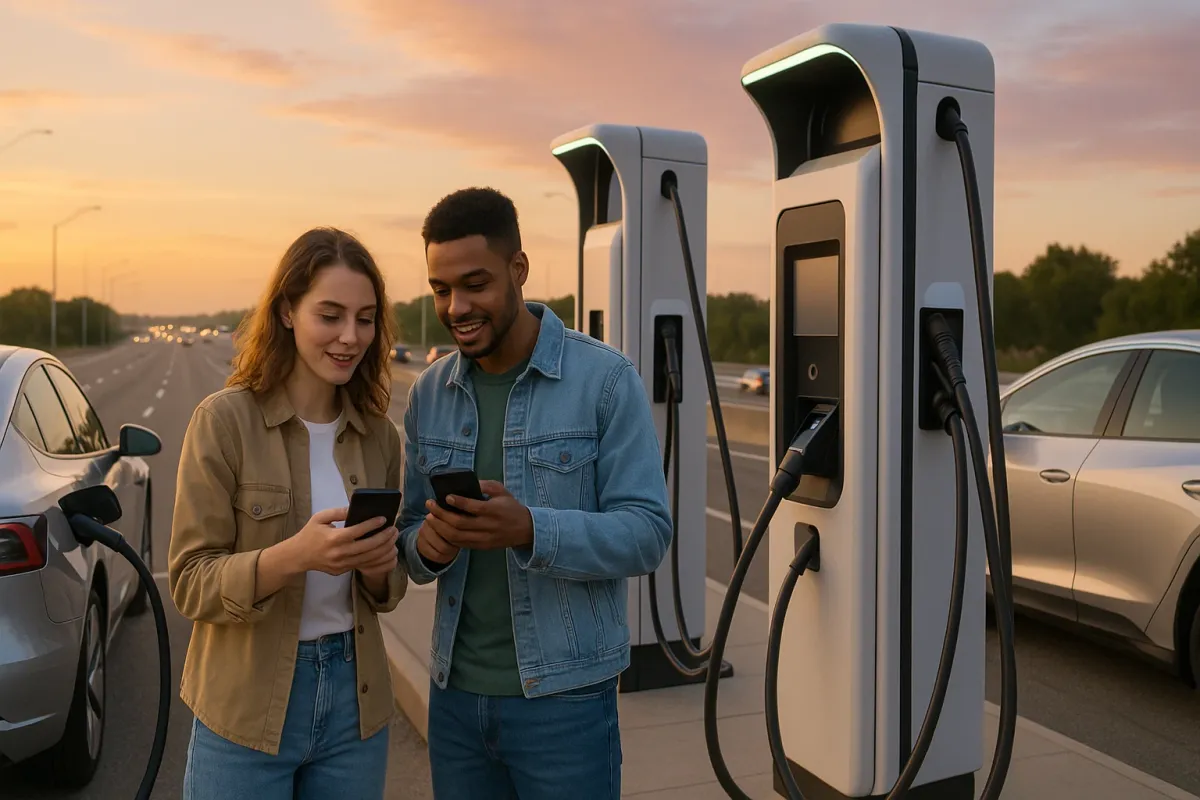
That combination—more fast chargers, a common plug standard, and public funding—means the EV experience is about to change in very practical ways for everyday drivers. If you’re shopping for a new car, thinking about going electric, or just trying to future‑proof your garage, the decisions you make in the next 12–18 months will matter a lot more than they did a few years ago.
Below are five concrete, tech‑focused moves that can help you ride this charging wave instead of getting swamped by it.
1. Treat The Plug Standard Like A “Port Of The Future” Decision
With most major automakers in North America committing to NACS (the Tesla‑style connector), the messy CCS vs. NACS plug war is effectively ending—just not overnight. New EVs from Ford, GM, Rivian, Volvo, Polestar, and others are either shipping with NACS ports or including adapters to use Tesla Superchargers. Meanwhile, legacy CCS chargers will remain on the road for years, especially at existing Electrify America, ChargePoint, and EVgo sites.
If you’re buying an EV in the next year, look at both the physical port on the car and the adapter roadmap. Does the manufacturer include a NACS or CCS adapter at purchase? Is there an announced date when you’ll gain access to Tesla Superchargers via software or hardware? This matters more than a 20‑mile difference in rated range because the “where and how” you charge affects your entire ownership experience. Think of it like buying a phone based on USB‑C vs. Lightning a couple of years before that battle ended.
2. Plan Around Charging Speed, Not Just “Battery Size”
Recent fast‑charging announcements—like 350 kW capable chargers expanding along key U.S. corridors and more 800‑volt architecture models from Hyundai, Kia, and Porsche—sound impressive on paper. But what matters to you is how fast your specific car can go from a low state of charge to a practical level, say 10% to 80%.
When comparing EVs, find the real‑world 10‑to‑80% time at a high‑speed DC charger, not just the max kW number. Some cars can briefly hit 250–300 kW but then taper quickly. Others may peak lower but maintain a flatter charging curve, making road trips smoother. As networks upgrade, cars that can use higher power will feel “new” for longer, while older 400‑volt designs may feel dated sooner. If you travel frequently, prioritize vehicles designed for 800‑volt charging and proven to handle repeated DC fast‑charge sessions without aggressive battery throttling.
3. Make Home Charging Smart Before You Make It Fast
The surge in public fast‑charging investment tends to overshadow the boring hero of EV life: home charging. Most owners still do the bulk of their charging overnight, and the newest smart wallboxes and load‑balancing systems are getting much better just as grids are tightening and electricity prices fluctuate.
Instead of rushing to install the biggest, fastest home charger you can find, start by checking three things: your home’s electrical capacity, your utility’s off‑peak or EV‑specific rates, and whether local incentives cover smart chargers that can schedule or throttle charging. A well‑ set‑up 32–40 A Level 2 charger, timed for cheap, off‑peak hours, is often more cost‑effective than a 48 A unit that strains an older panel. With more utilities piloting “managed charging” programs in 2025, smart chargers that can respond to grid signals may unlock bill credits or lower per‑kWh costs down the line. In other words, intelligence beats sheer amperage for most drivers.
4. Use Real‑Time Apps To Verify Chargers, Not Just Map Them
As networks expand quickly—especially with government‑backed NEVI stations coming online—quality can be uneven. New sites sometimes launch with software bugs, card readers that are picky, or hardware that hasn’t been road‑tripped in bad weather yet. This is where your phone becomes as important as your charge port.
Don’t rely solely on the built‑in car nav. Pair it with at least one community‑driven app (like PlugShare) and the first‑party apps from the networks you plan to use most (e.g., Tesla, Electrify America, EVgo). Before a long drive, check recent check‑ins and photos from actual users at each station. Look for patterns: repeated reports of broken stalls, unreliable payment readers, or slow speeds at specific locations. Save backup stations along your route in case your primary choice is full or offline. As networks race to add capacity in 2025, “verified by other drivers this week” is more trustworthy than “promised in a press release last year.”
5. Future‑Proof With Bi‑Directional and Vehicle‑to‑Home Readiness
One of the most interesting trends behind the current charging headlines is the quiet push toward bi‑directional charging—where your car doesn’t just consume power; it can also send it back to your home or the grid. Ford, Hyundai, Kia, and several Japanese brands are leaning into vehicle‑to‑home (V2H) and vehicle‑to‑load (V2L) features, while hardware makers and utilities are piloting systems that let an EV act as a backup battery during outages.
If you’re planning a home upgrade or shopping for your next EV, it’s worth checking whether the car supports V2H/V2L today or has clear plans to enable it via software and compatible chargers. Then, talk to your electrician about whether your panel and wiring can support a future bi‑directional unit, even if you install a conventional one now. As extreme weather events put more pressure on grids, cars that can keep your lights on and your fridge running will have a major real‑world advantage over those that can’t—especially once utilities start offering incentives for participating in “virtual power plant” programs.
Conclusion
The EV charging landscape in late 2025 is moving faster than at any point in the last decade. Automakers are converging on a common plug, Tesla’s once‑closed network is becoming a shared backbone, and public money is turning into real chargers along major routes. For car owners, that means the smartest moves aren’t just about picking a brand—it’s about choosing the right plug, the right charging speed, the right home setup, the right apps, and the right level of future‑readiness.
If you treat charging as core tech—on par with the engine in a gas car—you’ll be better positioned to buy an EV that still feels current in five years, not one that’s locked out of the best infrastructure upgrades arriving right now.