Why Low-Mileage Cars Still Need Serious Maintenance
Many owners assume low mileage means low maintenance. In reality, time is often more damaging than miles. Motor oil collects moisture and loses protective additives even if the car barely moves. Tires develop flat spots and sidewall cracks. Fuel can oxidize and form deposits that affect starting and idle quality. Meanwhile, rubber seals and gaskets can dry out when not regularly cycled with temperature and pressure changes.
Short, infrequent trips also prevent the engine and exhaust from fully warming up. That leaves condensation in the oil and exhaust system, increasing corrosion risk from the inside. Hybrid and modern start-stop systems are even more sensitive: the 12‑volt battery and high-voltage systems depend on specific operating temperatures and charge cycles they may not reach if the car only runs for a few quick errands. Understanding that time-based wear exists helps you prioritize maintenance even when your mileage doesn’t look “due.”
Actionable Step 1: Maintain on Time, Not Just on Miles
If your car’s odometer creeps up slowly, use time-based intervals from your owner’s manual, not just mileage. Most manufacturers specify oil changes every X miles or Y months—whichever comes first. For low-use vehicles, those months matter more than you think. A car that only sees 2,000–3,000 miles a year may still need an annual oil change to remove moisture, fuel dilution, and acid buildup that form just from running occasionally.
The same rule applies to brake fluid, coolant, and transmission fluid. Brake fluid absorbs moisture from the air, reducing boiling point and increasing corrosion inside lines and calipers over time, not distance. Coolant loses corrosion inhibitors on a calendar schedule. Transmission fluid may age from heat cycles and oxidation, even with few shifts. Build a maintenance calendar (digital reminder on your phone works well) for time-based services and stick to it, even if the service advisor says “you haven’t driven much.” You’re protecting systems that degrade quietly in the background.
Actionable Step 2: Drive Longer, Less Often—The Right Kind of Use
If your car isn’t a daily driver, focus on quality of operation when you do take it out. Very short trips—like a 5-minute drive to the store—are hard on engines because they don’t fully warm up. Fuel enrichment on cold start, condensation in the crankcase, and unburned deposits in the exhaust build up over time. Instead of many tiny trips, plan occasional drives that last at least 20–30 minutes, ideally with a mix of speeds so the engine, transmission, catalytic converter, and exhaust system all reach full operating temperature.
Use these drives to exercise all the major systems. Apply a series of smooth, moderate brake applications to keep rotors clean and prevent rust rings. Cycle the automatic transmission through its gears or manually select a lower gear on hills to move fluid through more circuits. On all-wheel drive vehicles, avoid spending months in a single operating mode; occasional use keeps clutches and differentials from “freezing” in one position. For convertibles or cars with sunroofs, operate the roof mechanisms occasionally to keep seals flexible and linkages moving.
Actionable Step 3: Protect the Battery and Electronics from Sitting
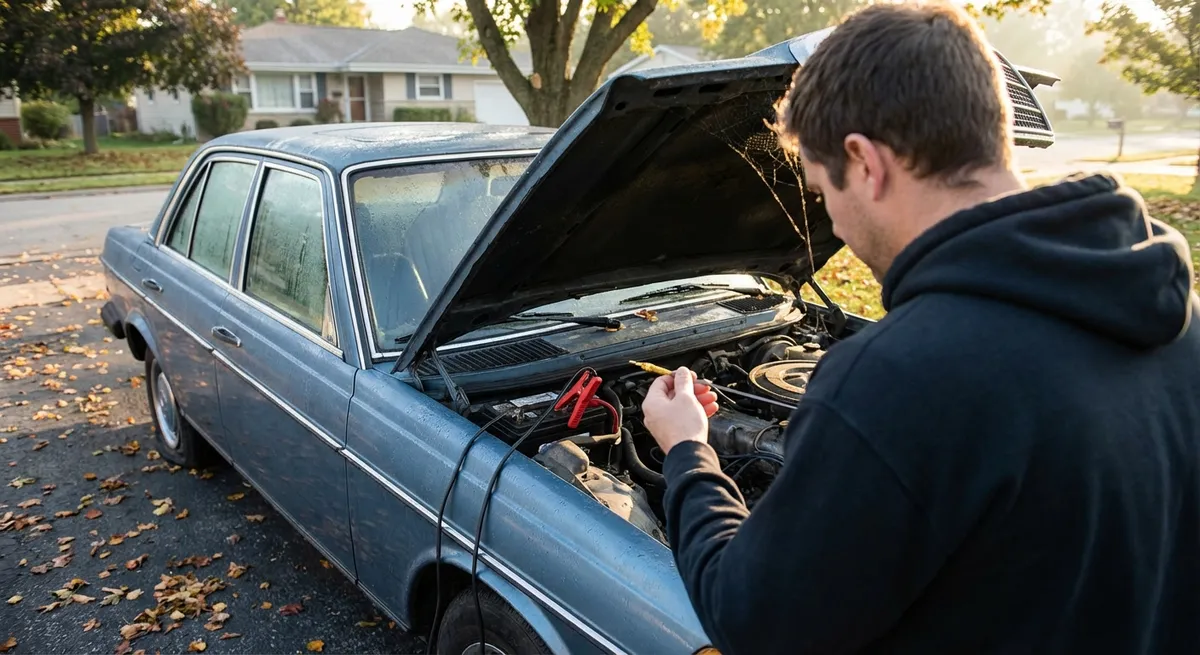
Modern vehicles have a lot of “always on” electronics—alarm systems, telematics, keyless entry modules—that draw a small but constant current even when parked. Over weeks, that parasitic draw can discharge the 12‑volt battery enough to affect starting. Letting a battery sit partially discharged leads to sulfation of the plates, which permanently reduces capacity and shortens its life. This is especially important on vehicles with start-stop systems or heavy electrical loads where battery health is critical.
If your car often sits for more than two weeks at a time, consider a smart battery maintainer (also called a trickle charger, but smarter). These devices monitor voltage and only add current as needed, avoiding overcharging while preventing deep discharge. For apartment or street parking where plugging in isn’t an option, plan at least one proper drive every week or two, long enough for the alternator to recharge the battery. Also, don’t ignore early signs of battery weakness: slow cranking, dim interior lights on start, or intermittent warning lights can be clues. Testing the battery annually—especially after three years of age—can prevent surprise no-starts.
Actionable Step 4: Store the Car Smartly—Tires, Fuel, and Interior
Where and how you park a rarely driven car has a direct impact on maintenance needs. Tires can develop flat spots if the car sits in one position for months, especially in cold weather or on high-performance, low-profile tires. If possible, move the vehicle slightly every few weeks so the contact patch changes, or increase tire pressure by a few PSI (within the sidewall limit) for long-term sitting to reduce deformation. For cars that will be parked for many months, some owners use tire cradles or stands to spread the load more evenly.
Fuel is another quiet troublemaker. Gasoline degrades over time, forming gums and varnish that can clog injectors and affect starting. If you know the car will sit for more than a month or two, filling the tank helps reduce moisture and condensation, and a quality fuel stabilizer can slow oxidation. Inside, protect soft-touch plastics, leather, and dash materials from UV damage by using a windshield sunshade and, if practical, parking in covered or shaded areas. A clean interior also helps prevent mold, odors, and pest attraction—vacuum food crumbs, remove trash, and avoid leaving damp items in the cabin.
Actionable Step 5: Inspect More Often, Not Less, When You Don’t Drive Much
Low use means you get fewer “natural” reminders that something’s wrong. When you drive daily, you quickly notice a strange noise, a new vibration, or a warning light. When you only drive occasionally, small problems can escalate unnoticed. Build a quick visual and functional inspection into your routine every month or so, even if you’re not heading out for a drive. A flashlight and five minutes can catch issues early.
Walk around and look for fluid spots under the vehicle. Check tire pressures and tread condition—sitting cars can lose air slowly or dry crack before they wear out. Pop the hood and look for frayed belts, cracked hoses, rodent damage to wiring, or corrosion around the battery terminals. Start the engine, listen for rough idle or unusual sounds, and cycle the key or start button enough to confirm that all dashboard warning lights illuminate briefly, then go out. For cars with advanced driver assistance systems (ADAS), occasional checks that parking sensors, cameras, and lane-keeping aids still operate correctly can catch sensor blockages or calibration issues after a long park.
Conclusion
A car that spends more time parked than driven doesn’t escape wear—it just experiences a different kind of aging. Time, temperature swings, and inactivity attack batteries, seals, fluids, and tires in ways that don’t show up on the odometer. By maintaining on time rather than miles, planning proper warm-up drives, protecting the battery, storing the car thoughtfully, and inspecting it regularly, you turn a “garage ornament” into a vehicle that’s genuinely ready when you need it. Light use doesn’t have to mean shortened life—just a smarter maintenance strategy.
Sources
- [NHTSA: Vehicle Maintenance](https://www.nhtsa.gov/road-safety/vehicle-maintenance) - U.S. National Highway Traffic Safety Administration overview of key maintenance practices and safety-related checks
- [AAA: How Often Should I Change My Oil?](https://exchange.aaa.com/automotive/maintenance-repair/how-often-should-i-change-my-oil/) - Explains time-based vs. mileage-based oil change intervals and why infrequent driving still requires regular changes
- [U.S. Department of Energy: Keeping Your Car in Shape](https://www.energy.gov/energysaver/keeping-your-car-shape) - Covers how proper maintenance and storage impact efficiency and reliability
- [Bridgestone: How Long Do Tires Last?](https://www.bridgestonetire.com/learn/maintenance/how-long-do-tires-last/) - Discusses tire aging, storage effects, and visual inspection tips
- [Battery Council International: Battery Maintenance Tips](https://batterycouncil.org/page/Battery_Maintenance) - Details on how storage, charging, and usage patterns affect 12‑volt battery life