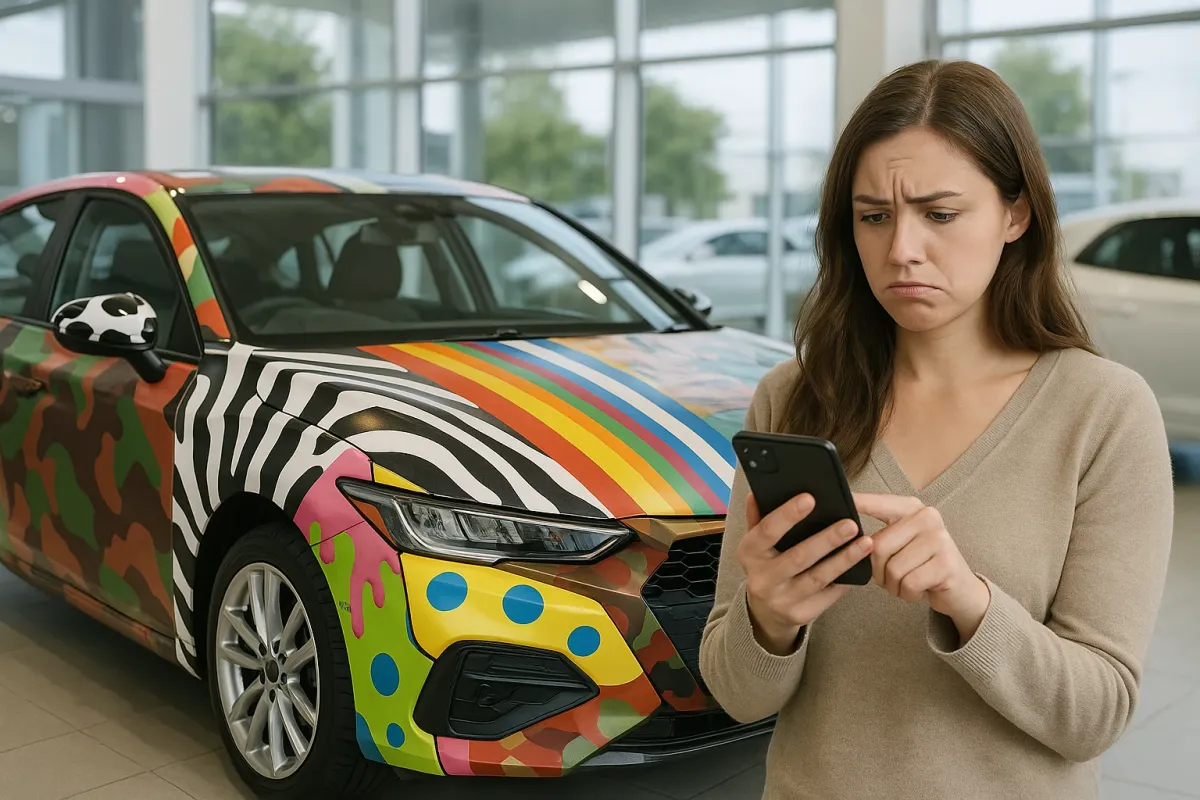
Inspired by today’s trend of people exposing terrible styling and makeup jobs online, it’s a good moment to rethink how we judge new cars. Automakers from Tesla to Toyota are pushing eye‑catching design and in‑car tech to win your attention on social media, but that doesn’t always translate into a car you’ll actually enjoy living with.
Here’s how to “review” a car in real life, so you don’t end up with the automotive version of a viral makeover fail.
1. Look Past the “Makeup”: Judge the Car’s Fundamentals First
Just like a heavy filter can hide bad skin, aggressive styling and wild interiors can distract you from flaws in the basics.
When you’re test‑driving a car—whether it’s a new Hyundai Ioniq 5, a Toyota RAV4 Hybrid, or a used BMW 3 Series—start by stripping the experience down to fundamentals:
- Driving position: Can you get comfortable quickly? Check seat height, steering wheel adjustment (reach and rake), and visibility. If you’re still fidgeting after 10 minutes, that’s a red flag.
- Ride quality: Find rough pavement and speed bumps. Does it feel composed or jittery? Sporty cars from brands like BMW or Hyundai’s N line can be firm, but they shouldn’t feel harsh or unsettled.
- Noise levels: On a 60–70 mph stretch, pay attention to wind and road noise. Loud cabins get old fast on commutes and road trips.
- Steering feel: Is it vague and video‑game‑like, or does it give you some sense of what the front tires are doing? EVs in particular vary wildly here.
- Braking: Try a few gentle and a few harder stops. Does the pedal feel natural, or is it grabby and unpredictable (a common complaint with some hybrids and EVs)?
If the foundation feels wrong, no package, trim, or wheel upgrade will fix it. Walk away, no matter how good the spec sheet looks.
2. Test the Tech Like You’re Already Frustrated
In the same way bad makeup becomes obvious in harsh light, bad in‑car tech shows itself the moment you’re stressed or in a hurry. A lot of 2024–2025 models lean hard on giant touchscreens and software updates, but not all of them are actually usable.
When you test a car, assume future‑you is late for work and in a bad mood:
- Climate controls: Can you change temperature and fan speed by feel, or are basic functions buried in menus? Many recent Volkswagens and some EV startups get this wrong.
- Core actions speed test: Time how long it takes to:
- Switch from navigation to audio and back
- Jump between CarPlay/Android Auto and the native system
- Turn off or adjust driver‑assist alerts (lane keep, beeps, etc.)
- Screen glare and fingerprints: In bright sun, can you still read the main display? Glossy screens might look great in photos but be miserable in real life.
- Voice control reality check: Ask it to do simple things: “Set temperature to 70,” “Navigate to nearest fast charger,” “Call [contact].” If it fumbles the basics, you’ll stop using it.
- Update risk: Ask the salesperson how updates work. Over‑the‑air (OTA) like Tesla, Ford, and Hyundai can be a plus, but only if the brand has a track record of improving—not breaking—features.
If a function is annoying in a 15‑minute drive, expect it to be infuriating in month six. Good tech should disappear into the background; if you’re constantly fighting it, keep shopping.
3. Bring Reality Into the Review: Cargo, Kids, Pets, and Gear
A look that kills on Instagram might flop in real life. Same for cars that photograph well but can’t handle your actual stuff. Before you fall for a sleek roofline or “coupe‑SUV” shape, stress‑test practicality.
Treat the test drive like a dress rehearsal for your life:
- Bring your actual gear: Stroller, golf clubs, work cases, musical instruments, dog crate—whatever you use weekly. Don’t guess; load it in.
- Check the openings, not just the volume number: Two SUVs can both claim ~30 cu ft of cargo, but a narrow hatch or high load floor (common in EVs with big battery packs) can make that space hard to use.
- Fold‑flat reality: Drop the rear seats. Is the floor flat or stepped? Are there weird protrusions? If you’re hauling bikes, furniture, or camping gear, this matters.
- Car seat trial: If you have kids or plan to:
- Install at least one actual seat
- Check rear‑facing clearance with the front seat in a comfortable driving position
- Test how easy it is to reach the anchors and buckles
- Pet‑friendly check: For dogs, look at:
- Rear door opening size
- Height of the load floor
- Ability to secure a harness or crate properly
Far too many people buy crossovers thinking “It’s an SUV, it’ll fit anything” and realize later the design prioritized style over usability. Don’t assume—verify.
4. Treat Efficiency Numbers Like Beauty Filters: Verify in the Wild
Official MPG and EV range figures are like polished promo shots: flattering, but not the whole truth. Especially now, with more plug‑in hybrids and EVs on the market—from Tesla’s Model Y to Toyota’s plug‑in Prius Prime—you need to know how a car behaves in your driving pattern.
During your test:
- Reset the trip computer at the start: Drive a loop that reflects your life—city, highway, some stop‑and‑go if that’s your norm.
- For EVs:
- Start with a reasonably full battery (60–80%).
- Watch the projected range vs. miles actually driven.
- Note how fast range drops at highway speeds; many EVs underperform their rated range there.
- For hybrids and plug‑ins:
- Ask to start with a charged battery.
- Do part of your drive in EV mode only, then mix driving with a low or depleted battery to see “worst‑case” MPG.
- Compare trip computer vs. advertised numbers: If your mixed loop is 20–25% worse than EPA estimates in mild weather, expect that gap to widen in winter or extreme heat.
This doesn’t mean you should chase perfection, but you should know whether a car’s real‑world numbers match your fuel or charging budget—and whether a slightly less flashy competitor actually saves you more over time.
5. Future‑Proof the Ownership: Think Three Years Ahead, Not Just Three Months
Viral beauty disasters blow up because no one thought about how that look would age outside a photoshoot. Modern cars can fall into the same trap—lots of wow factor, but questionable long‑term livability.
Before you sign:
- Check tire size and type: Oversized wheels (20–22 inches) on mainstream cars look great in photos but can:
- Wreck ride quality
- Make replacement tires massively more expensive
- Seat material and color: Light interiors look premium but may not survive kids, pets, or messy commutes. Ask:
- How easily does this clean?
- Is this real leather, synthetic, or cloth—what’s the wear reputation?
- Reliability track record: Look up the model and brand on:
- Owner forums
- Consumer Reports, J.D. Power dependability scores
- Reddit communities (filter for consistent themes, not one‑off horror stories)
- Warranty and coverage details: Especially crucial for EVs and hybrids. Understand:
- Battery warranty length and mileage
- What’s covered under corrosion and powertrain
- Whether software/infotainment glitches are handled under warranty
- Resale sanity check: See what three‑ to five‑year‑old versions of that model are selling for today. If they’re heavily discounted compared with rivals, ask why.
Your goal isn’t to predict every future problem, but to avoid obvious long‑term pain: super‑low‑profile tires on cratered roads, fussy interiors in messy lives, or first‑year models from brands with shaky software records.
Conclusion
Today’s feeds are full of people exposing dramatic makeover fails and over‑edited beauty shots—and the car world has its own version of that: aggressively styled, tech‑heavy models that photograph well but disappoint in the real world.
The fix is the same in both spaces: stop judging by the surface. When you review a car for yourself, focus on fundamentals, stress‑test the tech, load it with your real life, sanity‑check efficiency in your own driving, and think about how it will age over the next three to five years—not just how it looks in the showroom.
Do that, and you’ll end up with a car that doesn’t just go viral on delivery day—it quietly works for you, every single day you own it.