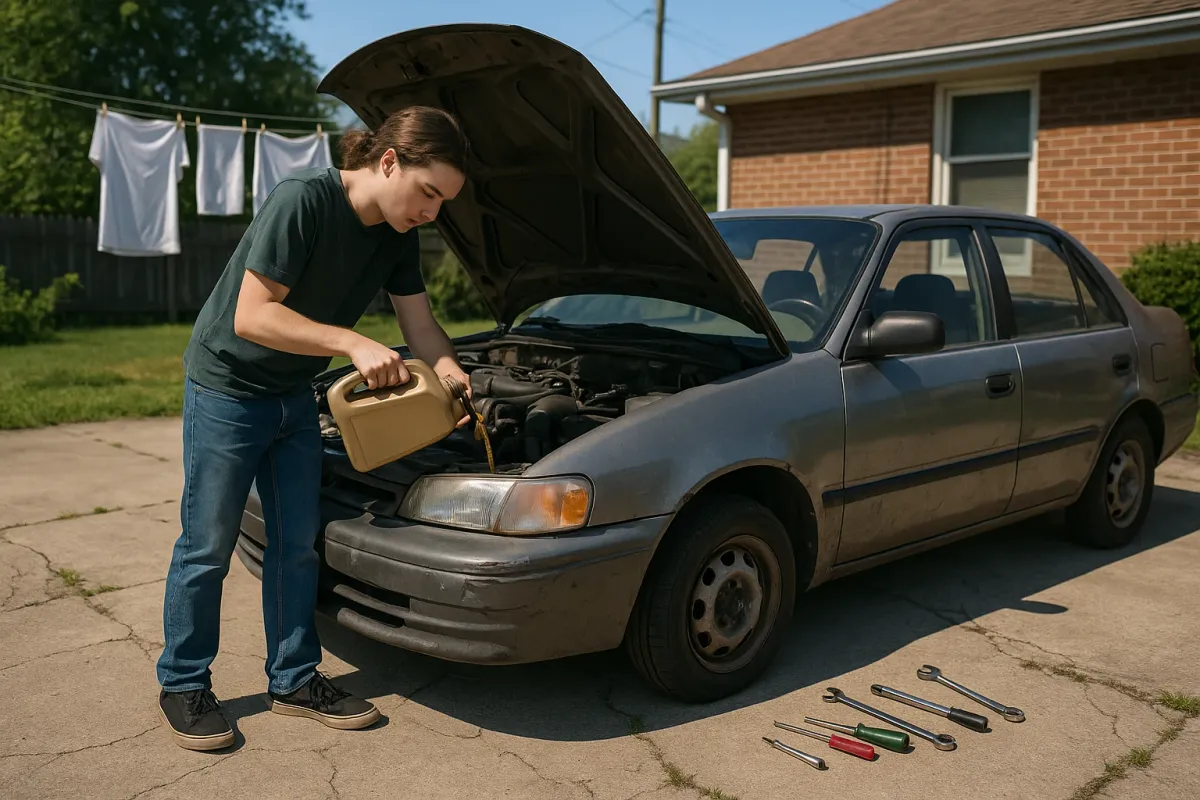
If money is tight, skipping an oil change or stretching a set of tires feels like the only logical choice in the moment. But as every budget-stretched parent quietly knew, the cheapest car to own is almost always the one you maintain. With living costs high and parts prices still elevated, the “maintenance vs. repair” gap in 2025 is wider than ever.
Below are five practical, budget-aware habits that treat maintenance like the real luxury: avoiding surprise breakdowns and thousand‑dollar repair bills.
1. Turn “Invisible” Fluids Into a Monthly Money-Saver
Oil, coolant, brake fluid, transmission fluid – they’re out of sight, so they’re easy to ignore, especially if you grew up in a household where you only opened the hood when something was smoking.
Timely fluid checks don’t require a mechanic or expensive tools. Once a month (or before a road trip), park on level ground, let the engine cool, and pop the hood. Check engine oil with the dipstick – it should be between the marks and not jet‑black and gritty. Peek at the coolant reservoir level (never open when hot), and look at brake fluid: it should be above the “MIN” line and not dark brown. These simple checks can flag slow leaks and overheating risks long before they cause a breakdown. Modern synthetic oils and extended‑life coolants are costlier up front but typically stretch change intervals, so you’re paying a bit more per service but less per mile. If you really need to save, follow the “severe service” interval in your owner’s manual, not TikTok or generic advice – that’s the schedule designed for real‑world stop‑and‑go, short‑trip driving most of us actually do.
2. Treat Tires Like Rent: Non‑Negotiable, Always On the Calendar
In that viral thread about growing up poor, plenty of people mention “never replacing things until they were truly dead.” Tires are where that habit gets dangerous fast.
Instead of waiting for a flat or sliding in the rain, build a 30‑second routine: once a month and before long drives, walk around the car. Look for cracks in the sidewalls, cords showing, or uneven wear (more worn on one edge). A cheap tread‑depth gauge or even a coin test will tell you if you’re under 3/32" – functionally worn out, especially in wet weather. Air pressure is where the real savings are. Underinflated tires create drag, burn more fuel, wear out faster, and overheat. Most gas stations still have cheap or free air; a $30 digital inflator at home pays for itself quickly with better MPG and longer tire life. Use the pressure on the door‑jamb sticker, not the sidewall max. Rotating tires on schedule (often every 5,000–7,000 miles) keeps wear even and can add thousands of miles of life to a set – a big deal when a replacement set can run $500–$1,200 in today’s prices.
3. Catch “Small Noises” Before They Become Big Bills
If you grew up in a house where money was tight, you probably remember adults turning up the radio when the car made a new noise. That habit is understandable – but expensive.
A new sound is almost always the cheapest it will ever be to fix when you FIRST hear it. A chirping or squealing on startup could be a loose belt or tired tensioner. A rhythmic clicking when you turn could be a CV axle. A grinding when you brake usually means you’ve gone past pads and are now chewing up rotors – a textbook “skipped maintenance turned repair” scenario. The same goes for dashboard lights. Modern cars are rolling computers; when the check‑engine light pops on, it may be something simple like a loose gas cap or an emissions sensor, but ignoring it for months can cause secondary damage. Many auto parts chains in the U.S. still offer free OBD‑II code scans; they’ll at least tell you the general area of the problem so you can make an informed decision instead of hoping it “goes away.” Create a simple rule: any new noise or warning light gets attention within one week. It doesn’t mean you must repair it immediately, but you at least diagnose it before it grows.
4. Make a “Preventive Budget” So Repairs Don’t Wreck Your Month
One of the strongest themes in that Reddit thread is how even small unexpected costs could derail an entire month for families who were barely keeping up. Car repairs are classic ambush expenses – but maintenance is one of the few big costs you can actually schedule in advance.
Start by adding up the predictable items in your owner’s manual for the next 12 months: oil changes, tire rotation, cabin and engine air filters, brake service intervals, maybe a transmission fluid change if you’re approaching the mileage. Get rough quotes from a local independent shop (usually cheaper than the dealer) or from your DIY cost (parts only). Divide that total by 12. That number is your monthly “car maintenance rent.” Even if it’s just $40–$80 a month set aside in a separate savings bucket, it turns a $400 service into something you’ve already “paid for” across the year. If you share a car in your household, make this a line item in your combined budget, not an afterthought. The psychology matters: when maintenance is pre‑funded, you’re far less tempted to skip it or choose the cheapest, lowest‑quality parts that wear out sooner.
5. Learn One DIY Task per Year – and Keep It for Life
For a lot of people whose parents were too busy or stressed to teach car basics, opening the hood feels like opening a laptop – mysterious and high‑risk. But some of the most common maintenance tasks are genuinely simple, and learning even one per year can permanently lower your running costs.
Start with a cabin air filter or engine air filter: these often require nothing more than unclipping a plastic cover. Dealers frequently charge 3–5x the part cost for these items. Wiper blades are another easy win – no tools, just a bit of patience matching the right sizes. As you get more comfortable, you might take on oil changes, battery replacements, or spark plugs, depending on your vehicle layout and your comfort level. There are plenty of clear, model‑specific tutorials on YouTube; stick to reputable channels that show torque specs and safety steps, not just quick hacks. The key is to approach DIY like an annual skill upgrade, not a weekend personality transplant. Pick one simple task, learn it properly, and you’ve reduced your dependence on the shop for the rest of the time you own a car.
Conclusion
The Reddit stories about things that felt like “luxury” when you grew up poor are relatable because they expose a simple truth: stability itself can feel extravagant when you’ve never had it. With cars, stability is exactly what maintenance buys you. No heroic upgrades, no flashy mods – just a vehicle that starts, stops, and stays out of the shop as much as possible.
By treating fluids, tires, noises, budgeting, and basic DIY as non‑negotiable habits instead of optional extras, you’re not “spoiling” your car. You’re doing what generations of budget‑strapped drivers quietly did to keep their only ride alive. In 2025’s world of high parts prices and busy lives, that old‑school mindset might be the most modern maintenance strategy you can have.