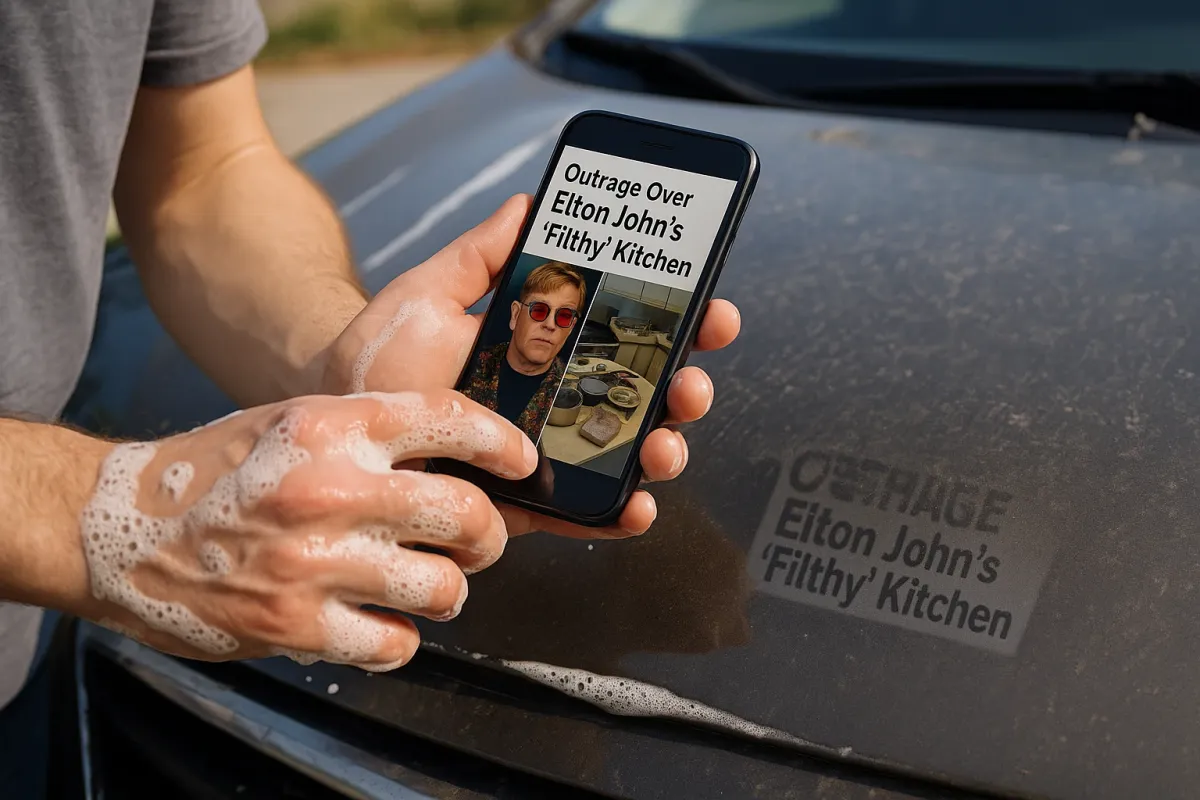
That same dynamic quietly exists with your car. Most breakdowns and big repair bills don’t come from dramatic failures — they start with one ignored “filthy” or worn‑out detail: a dark brake fluid reservoir, a crusty battery terminal, a neglected cabin filter, or a tire worn just past safe. You don’t notice it every day… until it’s all anyone (your mechanic, your passengers, your wallet) can focus on.
Using that viral Elton John moment as a reminder, here are five “small things” in maintenance that get judged harshly by reality — and how to stay ahead of them.
1. Treat Fluids Like That “Filthy” Kitchen Item Everyone Zooms In On
On social media, one grimy kitchen item overshadowed Elton John’s entire beautiful space. Under your hood, one neglected fluid can overshadow everything you’ve done right.
Engine oil, transmission fluid, coolant, brake fluid, and power-steering fluid don’t just “exist” — they carry away heat, debris, and moisture. When they’re old or contaminated, parts overheat, corrode, or seize.
Actionable checks:
- Engine oil:
- Check monthly or every 1,000 miles.
- Warm engine, park level, pull dipstick, wipe, reinsert, pull again.
- Look for: correct level, not jet black and sludgy, no metallic sparkle.
- Follow the maintenance schedule, not just the oil-life monitor if you do lots of short trips.
- Coolant:
- With engine cold, check the reservoir against MIN/MAX lines.
- Look for bright, uniform color (green, orange, pink depending on spec).
- Milky, rusty, or sludgy coolant is a red flag — get it flushed and checked for leaks or head gasket issues.
- Brake fluid:
- Look through the translucent reservoir. It should be fairly clear or light yellow.
- Dark brown/black or low level can indicate age or pad wear.
- Most makers recommend replacement every 2–3 years regardless of mileage because it absorbs moisture.
A 2‑minute monthly fluid check can save you from being “internet-level roasted” by your mechanic during a big, avoidable repair.
2. Your Battery Is the Hidden Appliance Everyone Assumes Is Clean and Fine
Like Elton John’s kitchen device people decided was “filthy,” your battery is something you don’t stare at… until it misbehaves. Modern cars rely more than ever on healthy voltage for start/stop systems, safety tech, and infotainment. A weak battery doesn’t always die gracefully — it can trigger weird warning lights, glitchy electronics, and no‑start mornings before work.
Actionable checks:
- Visual inspection (monthly):
- Look for white/green crust on the terminals and cables.
- Check the case for bulging, cracks, or signs of leakage.
- Make sure hold‑down hardware is tight; a loose battery can vibrate itself to death.
- Simple health test (seasonally):
- Many auto parts stores will load-test your battery for free.
- Ask for a printout and note “cold cranking amps (CCA)” compared to rated values.
- Preventative replacement timing:
- In hot or very cold climates, expect 3–5 years of life.
- If your battery is over 4 years old and you’ve had even one slow crank or random electrical freakout, plan replacement on your schedule — not when you’re stranded in a parking lot.
A clean, tightly secured, tested battery is the difference between “just drive” and “why is everything flickering like a haunted house?”
3. Tires: The “Floor” of Your Car That Quietly Shows All the Dirt
In the Elton John story, fans fixated on one grimy object instead of the overall room. With your car, road safety “judges” only one thing first: the four hand‑sized patches of rubber touching asphalt.
Tires don’t just wear—they communicate. Uneven patterns tell you about bad alignment, worn suspension, or incorrect pressure. Ignore the story they’re telling, and you risk blowouts, hydroplaning, and terrible braking performance.
Actionable checks:
- Pressure (monthly and before road trips):
- Use a quality digital gauge.
- Inflate to the number on the driver’s doorjamb sticker, not the tire sidewall.
- Underinflation = more heat, wear, and blowout risk; overinflation = less grip and longer stopping distance.
- Tread depth (every oil change):
- Use a tread-depth gauge or the penny test.
- At 4/32" you should start planning replacement; 2/32" is legally bald in most regions and unsafe in rain.
- Check across the width — if the inner or outer edge is much more worn, you likely need an alignment.
- Age and cracking:
- Even if tread looks OK, tires over ~6 years old can harden and crack.
- Check the DOT code on the sidewall (last 4 digits = week and year of manufacture, e.g., 3220 = week 32 of 2020).
- Visible sidewall cracks or chunks missing? Replace.
Tires are your first line of defense; treating them like a disposable afterthought is like cooking in a gorgeous kitchen with a filthy, dull knife.
4. Cabin Air & HVAC: The “Smell” Factor People Actually Notice
In Elton John’s kitchen backlash, people weren’t just talking about cleanliness—they were reacting to the idea of filth in a place that should feel clean and safe. Step into a car with a musty HVAC system or a fogged‑up windshield and the same thing happens: passengers quietly judge.
Your cabin air filter and HVAC system affect clear glass, allergy load, and how quickly your car demists in bad weather.
Actionable checks:
- Cabin air filter (once or twice a year):
- Usually behind the glovebox or under the cowl; YouTube your model for a quick how‑to.
- If it’s gray, full of leaves, or smells earthy, replace it.
- If you live in a city or drive in dusty areas, consider a higher‑grade filter (with activated charcoal).
- HVAC use habits:
- Use A/C regularly, even in cooler months — the system dehumidifies air and keeps seals lubricated.
- Before parking, run the fan on fresh air (not recirculate) for a minute to help dry the evaporator core and reduce musty smells.
- Fogging & visibility:
- Persistent fogging inside can indicate a blocked cabin filter, overly damp interior (wet carpets, leaks), or a failing heater core.
- Don’t ignore sweet smells (coolant) or oily films on glass — those are more than an annoyance.
A $20 filter and 15 minutes once or twice a year dramatically change how “fresh” your car feels—and how safely it clears its windows in bad weather.
5. Brakes: The One Area You Never Want To Be “Clapped Back” By Reality
When Elton John clapped back at trolls, it was just social media. When your brakes “clap back,” it’s with longer stopping distances and potential collisions. Drivers often wait for grinding noises before taking brakes seriously, but by that point you’re already chewing into rotors and losing performance.
Actionable checks:
- Listen and feel (every drive):
- Squealing on light braking can mean wear indicators are touching rotors.
- Grinding = metal on metal — immediate service needed.
- Pulsation in the pedal under steady braking usually points to warped or uneven rotors.
- Visual peek (monthly):
- Look through the wheel spokes if you can.
- You want to see at least a few millimeters of pad material (not just the metal backing plate).
- Deep grooves or heavy rust on the rotor face are reasons to get a pro inspection.
- Brake fluid behavior:
- Spongy pedal feel, needing more distance to stop, or the pedal slowly sinking at a stop each suggest hydraulic issues.
- Don’t “top off” brake fluid as a routine habit; dropping level often means pad wear or a leak that should be checked.
Brakes are the maintenance line you never cross on “wait and see.” Plan inspections around mileage or time, not noise.
Conclusion
Elton John’s kitchen drama was a reminder that people love to zoom in on one “filthy” detail and ignore everything else. Your car works the same way — except the judge isn’t the internet, it’s time, physics, and your repair bills.
If you turn those easily ignored details into a quick, repeatable routine — fluids, battery, tires, cabin/HVAC, and brakes — you’ll:
- Catch problems early instead of at the tow‑truck stage
- Spend less on surprise repairs and more on upgrades you actually want
- Keep your car feeling tight, safe, and “ready” every time you get in
You don’t need a full shop to do this. Set a recurring reminder on your phone once a month, spend 15–20 minutes doing these checks, and treat any “filthy” or suspicious findings as your cue to act. That’s how you keep your car Auto Ready — long before anyone else gets the chance to zoom in and judge.