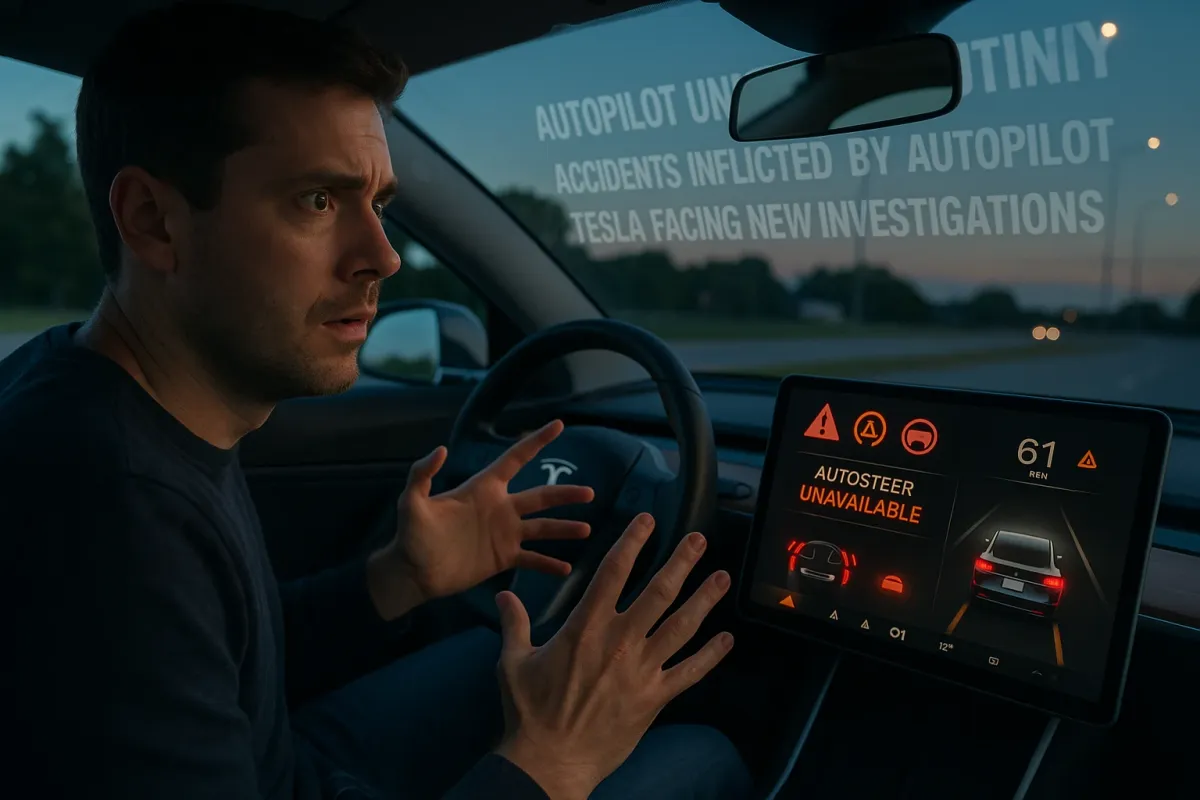
If you own a modern car—or you’re shopping for one—this isn’t just a Tesla story. It’s a preview of what’s coming to every driveway: more software, more driver‑assist features, more over‑the‑air updates, and more fine print. Here’s how to make sense of the current Autopilot/FSD drama and turn it into practical steps to keep yourself safer and better prepared for the next wave of auto tech.
Know Exactly What Your System Does (And Doesn’t Do)
Tesla’s ongoing investigations—and recent software changes that add more driver monitoring and stricter disengagement rules—underline a basic problem: many drivers think “Autopilot” and “Full Self‑Driving” mean more than they actually do. Regulators and safety groups have repeatedly said these are Level 2 driver‑assist systems, not self‑driving cars, and competitors are going out of their way to use more cautious naming for that reason.
Whatever you drive, start by treating any “assist” feature as a helper, not a replacement. Pull out the owner’s manual or app and look up each system by its brand name: things like Lane Keeping Assist, Adaptive Cruise Control, Traffic Jam Assist, Highway Drive Assist, Super Cruise, BlueCruise, ProPILOT Assist, etc. Check three things for each: where it’s intended to work (highways only, certain mapped roads, low‑speed traffic), what it actually controls (steering, speed, lane changes), and how it alerts you when it’s reaching its limits. Then, on a quiet stretch of familiar road, safely test each feature one at a time so you recognize what “normal” feels like—plus how it warns you before giving control back.
Treat Over‑The‑Air Updates Like Software Releases, Not Magic
Tesla has normalized over‑the‑air (OTA) updates: safety tweaks, Autopilot behavior changes, even entirely new features now arrive as downloads instead of dealer visits. Other automakers are following quickly—Hyundai, Ford, Mercedes, BMW, Volkswagen and others are rolling out more OTA‑capable models every year. The current Autopilot scrutiny shows how much these updates can quietly change how your car behaves on the road.
Approach OTA updates like you would phone or laptop software. Before you hit “install,” read the release notes in your app or infotainment screen; note any changes to driver‑assist, braking, or steering behavior. Schedule updates for times when you won’t immediately jump on a long drive, so you can feel things out on a short, familiar route first. If your car offers options to adjust the “aggressiveness” of lane centering, following distance, or automatic lane changes, revisit those settings after any big update. And if something feels off, document it: record short dashcam clips (if available), note the date and conditions, and be ready to share that detail with your service center or the automaker.
Use Driver‑Assist Features To Reduce Workload—Not Attention
Regulators looking at Tesla’s Autopilot crashes frequently cite a pattern: drivers mentally “checking out” while the system quietly handles most of the work—until it suddenly can’t. Even systems with eye‑tracking, such as GM’s Super Cruise or Ford’s BlueCruise, are designed under the assumption that you’ll still be ready to step in instantly, which is a tough ask if you’ve been relaxed for miles.
The safest way to use any assist tech is to let it lower your workload, not your awareness. On long highway drives, use adaptive cruise to maintain speed and distance, but keep your hands ready and your eyes scanning traffic as if you were driving normally. Let lane‑keeping help with minor corrections, but don’t rely on it to rescue you around faded lines, country roads, or tight construction zones. If you feel yourself zoning out, treat that as a signal to take a break, not an invitation to lean harder on the tech. And be honest with yourself: if you tend to reach for your phone when the system is on, you’re exactly the type of driver today’s investigations are targeting—shut the features off until you can trust your own habits.
Protect Yourself With Data: Cameras, Logs, And Settings
One consequence of Tesla’s high‑profile crashes and the current legal cases around Autopilot use is that data is now part of ownership reality. Teslas have built‑in event data recorders and camera logs; other brands are adding similar capabilities. When something goes wrong, the question is quickly: what was the system doing, and was the driver paying attention?
Use that to your advantage. If your car supports a built‑in dashcam or “drive recorder,” turn it on and keep a reasonably sized storage device plugged in. Learn how to manually save clips when something unusual happens—sudden braking, lane wander, a weird cut‑in from another driver—so you have your own record if there’s a dispute later. Dive into your driver‑assist settings and choose conservative defaults: longer following distance, gentler acceleration, and clear audible warnings instead of just visual alerts buried in the cluster. If your brand offers an app‑based log of drives and alerts, review it once in a while; repeated warnings for “hands off wheel” or inattentive driving are not just nagging—they’re early signs you’re using the systems outside their design.
Let Headlines Guide Your Next Purchase, Not Scare You Off Tech
As Autopilot and FSD stay under the microscope, every major automaker is quietly recalibrating its roadmap. Mercedes is going for tightly defined, heavily regulated Level 3 “eyes‑off” systems in limited conditions. GM and Ford are expanding their hands‑free highway networks but keeping “eyes‑on” requirements. Asian brands are bundling more advanced driver‑assist into affordable trims. The result: your next car will almost certainly come with more tech than your current one, regardless of brand.
Use today’s news cycles as a buyer’s checklist, not just doomscroll material. When you shop, ask very pointed questions: Is this system Level 2 or Level 3, and what does that mean for my responsibility? Does it require me to watch the road at all times? How does it monitor that? Where, precisely, is hands‑free allowed—does it work on any highway or only on pre‑mapped routes? Can safety‑critical behavior be changed by OTA updates, and will I be notified clearly when it does? Prioritize cars that explain these answers clearly in plain language; if the salesperson or the brochure leans on buzzwords and avoids specifics, assume you’re buying into confusion—not confidence.
Conclusion
The current storm around Tesla’s Autopilot and Full Self‑Driving isn’t just about one company—it’s a stress test for the entire auto industry’s rush toward automated driving. As regulators dig in and software updates quietly reshape how cars behave on the road, informed owners have a real edge.
Know what your car’s systems actually do, treat updates like serious software changes, use driver‑assist to reduce effort without reducing attention, protect yourself with data and conservative settings, and let today’s headlines sharpen your questions the next time you’re in a showroom. Auto tech is evolving fast, but if you stay curious and hands‑on, you’ll be ready for whatever the next update—and the next model year—brings.