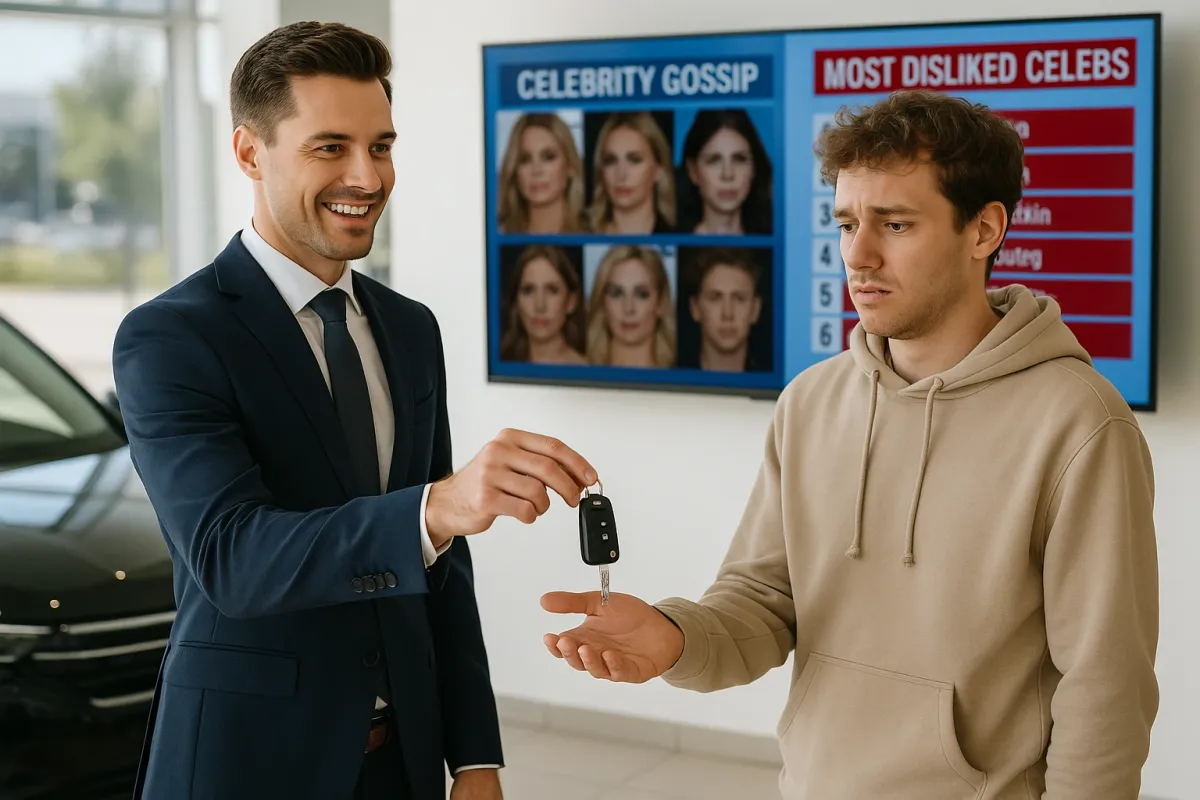
Car buying works the same way—except you’re the one who pays when you ignore the red flags. Dealerships, automakers, and even specific models build reputations over time. When you’re shopping for a new or used car in today’s market—where prices, interest rates, and tech features are all over the place—treat it like the internet treats celebrities: look at the pattern, not the hype.
Below are five practical ways to use that “reputation radar” when you buy your next car, so you don’t end up driving home with the automotive equivalent of a year’s most disliked star.
Stop Believing the “PR Version” of a Car
Celebrities have publicists; automakers have marketing departments. Those glossy TV spots and sponsored TikToks showing SUVs conquering mountains or EVs gliding through futuristic cities are the celebrity interview of the car world—polished, scripted, and designed to make you forget the messy bits.
Instead of buying the PR version of a car, go straight to the “comment section” equivalents. Read long-term tests from outlets like Edmunds, Car and Driver, or MotorTrend to see what breaks after 20,000+ miles. Filter owner reviews on sites like Cars.com and Reddit by “Lowest rating” first, then look for patterns (repeated transmission issues, infotainment glitches, poor dealer support). Pay attention to model-year changes: an updated 2025 model may have fixed problems that sank the 2023 version. Finally, when you test drive, bring a short checklist based on what you read—if owners complain about wind noise or laggy touchscreens, specifically check those items yourself.
Treat Dealer Reputations Like a Viral “Call-Out Thread”
Public call-outs turned a lot of celebrities into 2025’s most disliked names—same with dealerships. You may see a killer ad, but behind the scenes the store could be notorious for surprise fees, pressure tactics, or shady finance tricks. Before you ever set foot on the lot, audit the dealership’s online footprint like you’re about to write a viral expose.
Start with Google and Yelp, but don’t stop at the star rating—sort by “Newest” and scan for recurring complaints about add-ons, bait-and-switch pricing, or long wait times for service. Check the Better Business Bureau (BBB) for unresolved disputes. Search the store name plus terms like “lawsuit,” “class action,” or “scam” to catch local news stories. If you’re buying a brand-new car, look at J.D. Power’s dealer satisfaction scores for that brand in your region. Then use that intel: email or text the sales department and say upfront, “I’m only interested in working with a store that does no market adjustments and no mandatory add-ons. Can you confirm that in writing?” Their answer—and how fast they give it—will tell you if you’re dealing with a future “most disliked” candidate.
Watch for Image-Over-Substance Models
Some celebrities are everywhere—not because they’re the best at what they do, but because they’re incredibly good at staying on camera. Similarly, some cars blow up on Instagram or YouTube because of styling, a big screen, or a viral feature, while hiding serious compromises in reliability, safety, or ownership costs.
Before you fall for a “hot” model (especially new EVs, crossovers, and off-road–styled trims), run a basic reality check. Cross-reference IIHS and NHTSA safety ratings; a cool-looking SUV is worthless if it underperforms in crash tests. Price out insurance quotes before you decide; some “sporty” trims bump premiums more than you expect. Check real-world fuel economy or range from independent tests, not just the EPA sticker or brand marketing. If it’s an EV or plug-in hybrid, look at current charging network reliability and what’s changing right now—many brands are switching to Tesla’s NACS standard, so make sure your future charging options won’t be a nightmare. Finally, ask yourself if you’re paying extra for looks and social media clout while losing features you actually care about, like cargo space, visibility, or a physical volume knob.
Don’t Let One Viral Horror Story Overrule the Whole Crowd
On lists of disliked celebrities, sometimes one viral incident dominates the narrative—even if the person’s overall track record is decent. Car shoppers fall into the same trap: they hear one nightmare story about a specific brand or model and swear it off for life, even when the data says today’s version is solid.
Balance anecdote with statistics. Use broad data sources like Consumer Reports reliability scores, J.D. Power Vehicle Dependability Study, and TrueDelta or CarComplaints to see how many people report issues and what kind. Check if problems are clustered in certain years (for example, first-model-year releases often have more bugs). Talk to independent mechanics or body shops and ask, “What brands/models give you the most headaches?” and “Which newer models have improved?” When you see that a brand with a rough past has invested heavily in quality and is trending up, don’t dismiss it solely because of a story your uncle told you about a 2008 model. The smartest buyers treat each model year like a new season of a show: same name, but the script can be very different.
Build Your Personal “Block List” Before You Shop
In the same way people quietly build their own internal lists of celebrities they’re done with, you should maintain a private “never again” and “handle with care” list for car buying. That doesn’t just mean brands; it can include specific engines, transmissions, and dealer groups that have burned you—or lots of other owners—before.
As you research, keep a simple note on your phone with sections like “Avoid,” “Only if heavily discounted,” and “Green flag brands/dealers.” Drop in engines known for expensive issues (e.g., certain early turbocharged small-displacement units), transmissions with widely reported failures, and dealer groups with repeated complaints about bogus fees. Also track positive standouts: brands with strong warranty coverage, transparent pricing policies, or above-average parts availability. When you start shopping, use that list as a filter on listing sites—skip anything that hits your red flags instead of talking yourself into a “deal” on a car that made its own version of the most disliked chart years ago. This simple system stops impulse buys and keeps you anchored to long-term ownership reality, not showroom vibes.
Conclusion
Celebrity “most disliked” lists are harsh, but they’re built on something real: reputations that form over time, backed by patterns of behavior. The car world is no different. Automakers, models, and dealerships all build track records—good or bad—and ignoring them can cost you thousands over the life of a vehicle.
If you shop beyond the marketing, audit dealers like the internet audits celebrities, and keep your own running “block list” of cars and sellers to avoid, you’ll sidestep a lot of drama. The goal isn’t to find a perfect, drama-free brand—it’s to choose a car whose flaws you understand, can afford, and can live with. That’s how you keep your next ride off your personal “most disliked” list.