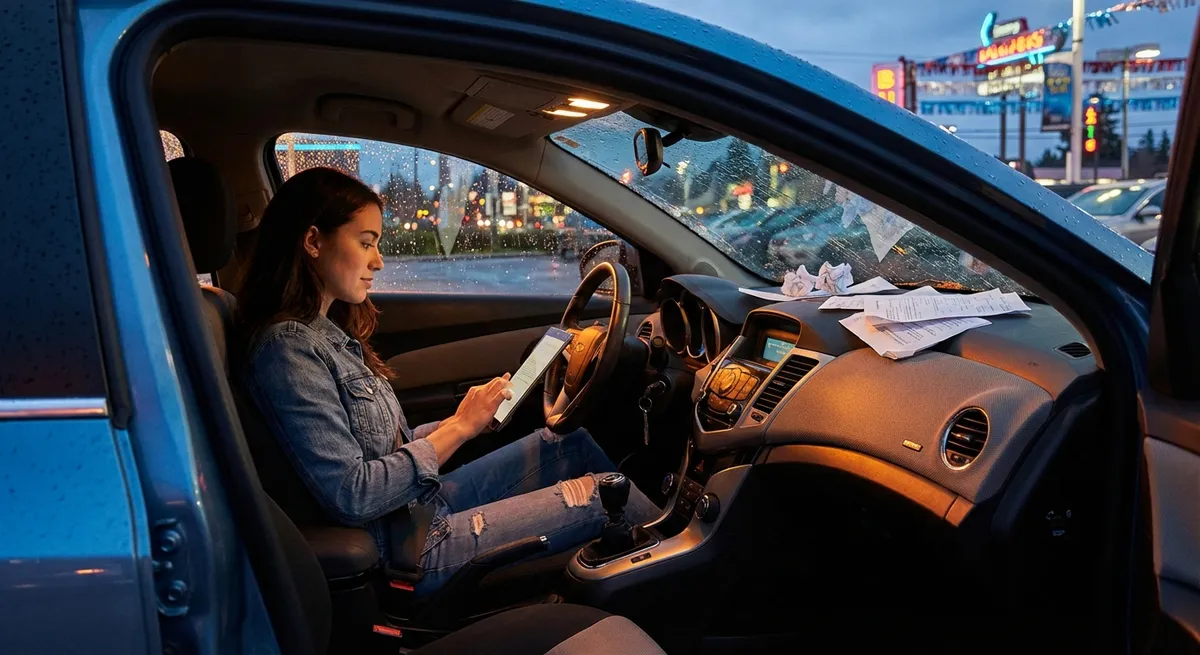
This guide walks through how to use car reviews like a pro and turn them into real-world decisions. These five practical, actionable points will help you filter hype, spot long‑term red flags, and pick a car that fits your actual life, not just your wishlist.
1. Compare “Test Route” Behavior to Your Real Driving
Most professional reviews are based on carefully chosen routes—twisty back roads, well‑paved highways, or controlled city loops. That’s useful, but your life is probably more random than a press event.
To get value from a review, listen for where and how the car was tested. If the reviewer only mentions “mountain roads” or “smooth interstate cruising,” ask yourself how that compares to your daily use. If you commute in bumper‑to‑bumper traffic, pay extra attention to comments about low‑speed ride comfort, start‑stop smoothness, visibility in tight spaces, and how easy it is to park. If you often drive on rough or poorly maintained roads, focus on feedback about suspension compliance, noise over bumps, and how stable the car feels at speed. Anytime a review feels vague—“rides well,” “handles nicely”—translate that into your reality: Will this feel stable at 70 mph on a windy day? Will my back hurt after 90 minutes of stop‑and‑go? The closer you tie the reviewer’s environment to yours, the more useful the review becomes.
Actionable point #1: When watching or reading a review, pause and write down your top three driving scenarios (e.g., rush‑hour city, weekend highway trips, gravel roads to a cabin). Only trust a review that clearly addresses at least two of those three.
2. Use Multiple Reviews to Cross‑Check Long‑Term Concerns
One review is an opinion. Several reviews that repeat the same point start to look like a pattern. That pattern often predicts how the car will feel after the “new toy” phase wears off.
Look for issues that keep popping up: harsh ride, fussy infotainment, confusing gear selector, poor real‑world fuel economy, or small annoyances like hard‑to‑reach controls. Reviewers may downplay them (“a minor quirk”), but owners live with those “quirks” every single day. Take special note of reviews that mention early build quality problems—squeaks, rattles, misaligned panels, intermittent sensor warnings. A single report doesn’t mean much, but if several outlets and owners comment on the same flaw, that’s a warning sign. Also, compare professional reviews with owner reports on forums or consumer sites. Pros tend to focus on performance and features; owners talk about things like fogged headlights, fading trim, or software glitches after updates. That combination gives a fuller picture than either group alone.
Actionable point #2: Before shortlisting a car, check at least three professional reviews and one owner-heavy source (forum, Reddit, or consumer site). If the same complaint appears three times, treat it as real and decide whether you can live with it.
3. Translate Review Jargon into Everyday Experience
Reviewers love phrases that sound good on camera but don’t necessarily mean much on the road. Learning how to decode them helps you figure out what a car will actually feel like.
- “Sporty handling” often means a firmer ride, more road feel, and sometimes less comfort on broken pavement.
- “Light steering” can be great for parking but might feel vague at highway speeds.
- “Direct steering” usually means sharper response but may require more attention to keep the car tracking straight.
- “Minimal body roll” sounds great in corners, but the suspension may feel stiff during daily driving.
- “Premium cabin materials” may refer to touchpoints (steering wheel, armrests) while cheaper plastics hide lower down—important if you have kids or load the car a lot.
- “Lively engine” can also mean the engine has to rev high (and get noisy) to feel quick.
Any time you encounter a buzzword, convert it into a sensation: comfort, noise, effort, visibility, fatigue. Those are the things that matter when you’re tired, running late, or stuck in rain at night.
Actionable point #3: Make a two‑column list: “What I like to feel in a car” (quiet, stable, soft, firm, light, heavy steering) and “Common review phrases.” When you read or hear those phrases, map them to your feelings list to see if the car aligns with your preferences.
4. Focus on Costs and Convenience, Not Just Features
Reviews often highlight impressive features—digital dashboards, driver assists, panoramic roofs. Those are nice, but ownership is shaped far more by what the car costs to keep on the road and how easy it is to live with.
Look for reviews that mention service intervals, reliability expectations, and real‑world fuel or energy consumption. For hybrids and EVs, pay attention to what reviewers say about charging speed, range in cold weather, and how accurate the range estimate is. For gas cars, note the recommended fuel grade (regular vs. premium), because that affects your monthly budget. Also catch details like trunk load height, rear‑seat access, and how flat the cargo floor is with seats folded. Those practical details determine how easy it is to haul strollers, bikes, or gear. Convenience also includes tech usability: Are climate controls buried in a touch screen? Does the reviewer complain about slow boot‑up or laggy menus? Will you need a subscription for features like connected navigation, remote start, or advanced driver assistance?
Actionable point #4: When evaluating a car review, note five ownership‑related details: expected fuel/energy costs, service frequency, tire size (larger wheels can mean more expensive tires), ease of loading cargo, and any subscription‑based features. Use that list to compare between models, not just their power or gadget count.
5. Use Reviews to Build Your Own Targeted Test Drive Plan
The most powerful way to use reviews is not to copy their conclusions but to design a smarter test drive. Let the review tell you where to push and what to question.
If a review praises highway refinement, make sure you actually get the car on a highway, even for a brief stretch, and note noise, tracking, and passing power. If someone mentions a “stiff around town” ride, drive over speed bumps, patched asphalt, and broken city streets. If the infotainment is described as “a bit fiddly,” spend 5–10 minutes in the parking lot pairing your phone, entering a destination, and adjusting climate settings. Take note of how intuitive it feels without help. If visibility is criticized—thick pillars, small rear window—do multiple lane changes, back into a space, and try parallel parking. You want to know whether you can place the car confidently using mirrors and cameras. Bring a second person if you often drive with family; ask them about rear‑seat space, headroom, seat comfort, and ease of entry/exit.
Actionable point #5: Before visiting a dealership, write a “test drive checklist” of at least seven items based on issues raised in reviews (ride comfort, tech usability, visibility, parking, highway noise, seat comfort, braking feel, etc.). At the dealership, drive specifically to test those points, not just to see if the car feels “nice.”
Conclusion
Car reviews can be powerful tools, but only if you treat them as data, not verdicts. The flashy headline and dramatic driving shots are the start, not the end, of your decision process. By matching test conditions to your real life, cross‑checking multiple sources, decoding jargon, focusing on ownership realities, and turning all of that into a smart test drive plan, you turn scattered opinions into a clear, personal decision.
You’re not just buying the car that tested well for someone else. You’re choosing the one that will work, quietly and reliably, for the way you drive, day after day.
Sources
- [Consumer Reports – How to Test-Drive a Car](https://www.consumerreports.org/cars/buying-a-car/how-to-test-drive-a-new-car-a5907814938/) – Practical guidance on making a test drive more revealing and structured.
- [Edmunds – Tips for a Smart Test Drive](https://www.edmunds.com/car-buying/how-to-test-drive-a-car.html) – Explains what to pay attention to beyond first impressions and appearance.
- [U.S. Department of Energy – Fuel Economy Guide](https://www.fueleconomy.gov/feg/findacar.shtml) – Provides official fuel economy data to compare with real-world results mentioned in reviews.
- [IIHS – Vehicle Ratings](https://www.iihs.org/ratings) – Independent crash test and safety ratings that complement safety impressions from car reviews.
- [J.D. Power – Vehicle Reliability Studies](https://www.jdpower.com/cars/ratings/quality-reliability) – Data-driven insights into long-term quality and reliability across brands and models.