This guide walks through five practical, season-focused maintenance habits that actually move the needle on reliability, safety, and long-term costs. They’re simple enough for everyday drivers, but detailed enough for enthusiasts who like to stay ahead of problems instead of chasing them.
Know How Temperature Swings Affect Fluids and Rubber
Your car is full of materials that expand, contract, and degrade differently as temperatures rise or fall. Understanding that behavior helps you make smarter, seasonal decisions instead of just following a generic schedule.
In hot weather, engine oil thins out more quickly and can oxidize faster, especially if you do a lot of stop‑and‑go driving or short trips that keep the engine hot but not fully “cleaned out.” In cold weather, that same oil thickens, and a marginal battery or weak starter suddenly becomes a problem because the engine takes more effort to turn over. Rubber components—belts, hoses, wiper blades, and tires—also stiffen in the cold and soften in the heat, which can expose cracks, leaks, or dry rot you didn’t notice in mild weather.
As seasons change, get in the habit of visually inspecting belts for glazing or fraying, hoses for bulges or seepage at connection points, and tires for sidewall cracking or uneven wear. Pay attention to new seasonal noises: a squeal on cold start could be a belt slipping; a groan in extreme heat might be a stressed power steering system. Treat those changes in sound and feel as early warnings, not background noise. Making these inspections part of your pre‑season routine turns “mystery failures” into predictable, preventable maintenance.
Match Tires and Pressures to the Season, Not Just the Car
Tires are your only contact patch with the road, and the way they behave changes dramatically with temperature and weather. Yet most drivers set pressure once and forget it, or run “all‑season” tires year‑round without understanding the trade‑offs.
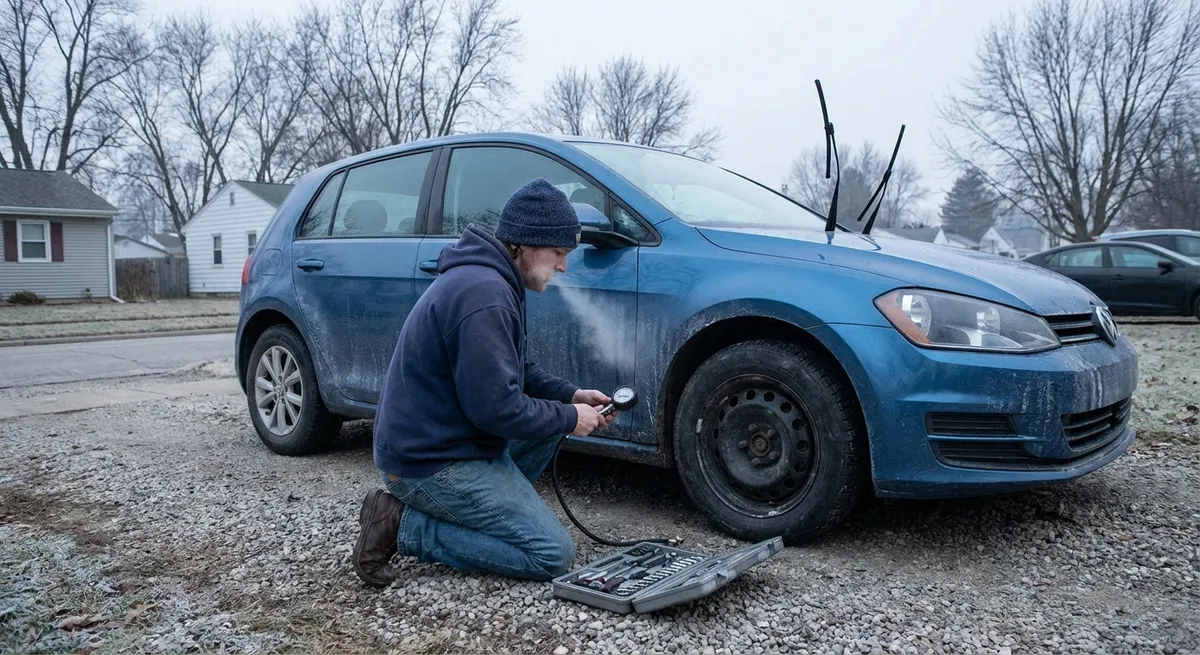
Tire pressure drops roughly 1 psi for every 10°F decrease in temperature. That means a set correctly inflated at 80°F can be several psi low by the time winter hits. Underinflated tires run hotter, wear faster, and increase stopping distance—especially dangerous on wet or icy roads. On the flip side, overinflated tires in high heat reduce the contact patch, which hurts grip and can make the ride harsh and unstable over bumps.
Check pressures at least once a month and every time there’s a big temperature swing (around 20°F or more), always when the tires are “cold” (the car hasn’t been driven more than a mile or two). If you live where temperatures consistently drop below 45°F, consider switching to winter tires instead of relying on all‑seasons; their rubber compound stays flexible in cold, dramatically improving braking and control. In hot climates, a quality summer or performance tire will resist heat and grip better, especially during spirited driving. Seasonal tire choices and pressure habits aren’t just about performance—they’re a safety system as critical as your brakes.
Protect Cooling and HVAC Systems Before Extreme Weather Hits
Cooling systems are stressed hardest in summer, but poor maintenance often reveals itself in winter when you also rely on that same system for cabin heat and defrosting. Likewise, your AC system is easiest to check proactively before the first major heat wave, not after it fails on the hottest day.
Coolant does more than prevent overheating; its antifreeze additives protect against corrosion and help manage temperature in both extreme heat and cold. Over time, those additives break down, and the system can start forming scale or rust internally, restricting flow. Before summer and winter, check coolant level in the reservoir, look for discoloration, and inspect around the radiator, hoses, and water pump for dried coolant residue or crusty buildup—these are signs of slow leaks. Follow the manufacturer’s interval for coolant replacement, but if you drive in harsh conditions (towing, desert heat, steep terrain), you may benefit from shorter intervals.
For HVAC, run your AC periodically even in cooler months to keep seals lubricated and prevent minor leaks from turning into major ones. Before hot season, verify that the AC can cool effectively at idle; if it only feels cold while driving, you may have low refrigerant or an airflow issue. In winter, ensure your heater and defroster clear the windshield quickly and that the blower works on all speeds. A dirty cabin air filter can choke airflow and strain the blower motor, which is an easy, inexpensive part to change but a costly one to ignore if it fails.
Build a Seasonal Battery and Electrical Check Habit
Batteries fail more often at the first real cold snap or during intense heat waves, but the damage usually started months earlier. Seasonal checks help you catch a weak electrical system before it leaves you stranded in a parking lot or driveway.
In hot weather, high under‑hood temperatures accelerate the chemical breakdown inside the battery, shortening its life. In cold weather, a partially weakened battery loses even more cranking power, just when thickened oil makes the engine harder to start. Before temperature extremes, inspect the battery terminals for white or blue‑green corrosion, make sure the clamps are tight, and gently clean buildup with a battery brush or a mixture of baking soda and water (with the engine off and proper safety precautions). If your battery is more than three years old, especially in a harsh climate, have it load‑tested at a shop or parts store—many will do this free.
Beyond the battery, look at how seasonal moisture affects your electrical system. Heavy rain and road salt can attack ground connections and exposed wiring. Check exterior lighting regularly, especially brake lights, turn signals, and low beams, since shorter days and bad weather make visibility critical. If you notice intermittent electrical issues that seem tied to heavy rains or car washes, that’s a strong hint of moisture intrusion or a failing seal that should be traced and corrected before it corrodes connectors or control modules.
Adjust Your Maintenance Schedule to Climate, Not Just Mileage
Owner’s manuals often list “normal” and “severe” service schedules, but many drivers underestimate how often they fall into that “severe” category. Climate and driving patterns can push your car firmly into the harsher schedule, even if you don’t feel like you drive it hard.
Frequent short trips where the engine rarely reaches full operating temperature, high heat, extreme cold, dusty environments, or lots of towing and stop‑and‑go traffic all count as severe use. In these conditions, oil accumulates moisture and fuel dilution more quickly, brake components run hotter, and filters clog sooner. If that sounds like your daily routine and you also live in a climate with strong seasonal swings, reviewing your service schedule at the start of each major season is a smart move.
Use seasonal checkpoints—first heat wave, first frost, beginning of rainy season—as reminders to review your maintenance log. Ask yourself: Has it been more than 6 months (or the recommended mileage) since your last oil change? Has the brake fluid ever been replaced, especially if you live in a humid area where it absorbs moisture faster? Do you see more dust or pollen certain times of year, suggesting your engine and cabin air filters need more frequent attention? Adjusting intervals slightly based on climate and seasons is usually cheaper than waiting until parts are visibly failing or warning lights come on.
Conclusion
Seasonal maintenance isn’t about buying extra services—it’s about timing the right work before weather magnifies small weaknesses into big problems. By understanding how temperature and conditions affect fluids, rubber, tires, cooling and HVAC, electrical systems, and your overall service intervals, you can align your maintenance to your climate instead of following a one‑size‑fits‑all schedule.
Turn the change of seasons into a built‑in reminder: inspect, adjust, and refresh what your car depends on most under the upcoming conditions. That habit alone will make your car feel more predictable, safer, and more enjoyable to drive, no matter what the forecast looks like.
Sources
- National Highway Traffic Safety Administration – Vehicle Maintenance - Federal safety guidance on essential car maintenance and seasonal checks
- AAA – Car Care: Seasonal Maintenance - Practical tips from AAA on adjusting maintenance for weather changes
- U.S. Department of Energy – Fuel Economy: Keeping Your Car in Shape - Explains how proper maintenance and tires affect efficiency and performance
- Bridgestone – How Temperature Affects Tire Pressure - Details the relationship between ambient temperature and tire pressure
- Consumer Reports – Car Batteries: How Long They Last and When to Replace - In‑depth look at battery lifespan, climate impact, and testing practices