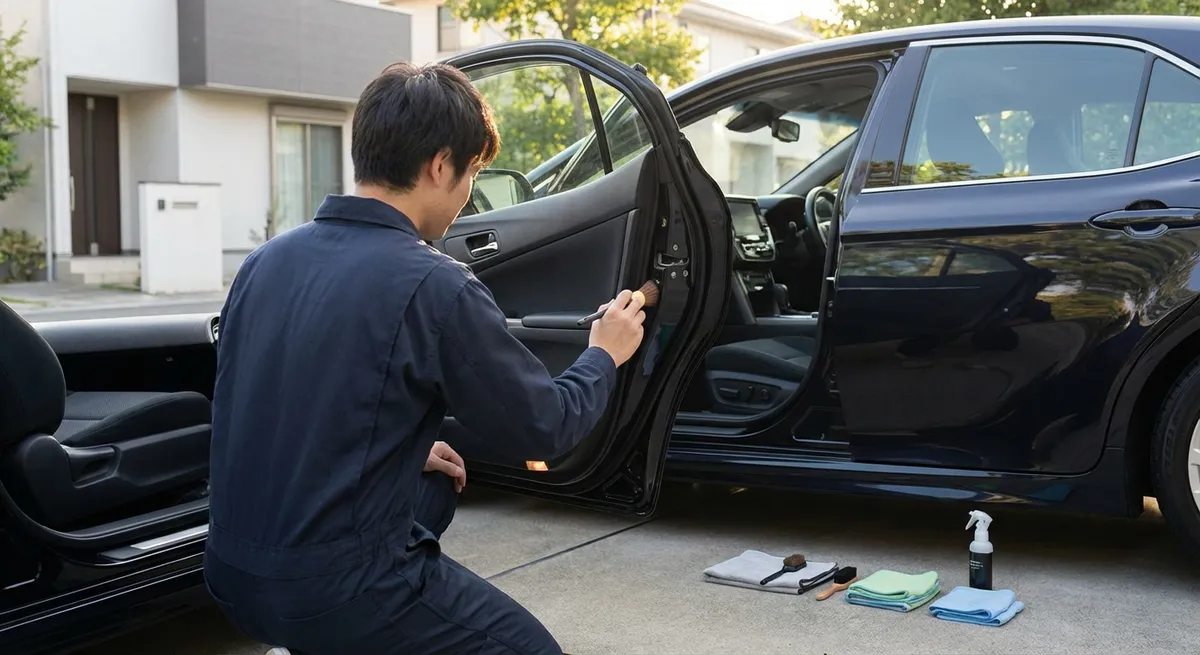
This guide focuses on five often-overlooked areas of maintenance that pay off with better reliability, sharper driving feel, and lower long-term costs. They’re all doable for everyday drivers and still interesting enough for automotive enthusiasts who care about how a car feels, not just how it looks.
1. Treat Your Brake System as Performance Hardware, Not Just a Safety Item
Most people only think about brakes when they squeal or a warning light pops up. But your brake system is one of the biggest performance components on the car. How it’s maintained affects stopping distance, pedal feel, and even how confident you feel at highway speeds.
Brake fluid is hygroscopic—it absorbs moisture over time. That moisture lowers the boiling point of the fluid and can corrode internal components. For spirited drivers or those in hilly areas, old brake fluid can mean a spongy pedal during repeated hard stops. Many manufacturers recommend replacing brake fluid every 2–3 years, but enthusiasts often do it more frequently, especially if towing or driving in mountainous regions.
Pads and rotors should be checked visually, not just “waited out” until a grinding noise appears. Uneven pad wear, heat spots on rotors, or small cracks on drilled rotors are early warning signs worth addressing. If you feel pulsing through the pedal when braking, that can be rotor thickness variation or deposits, not necessarily “warped” rotors—but it still calls for inspection.
An often-missed step: cleaning and lubricating the caliper slide pins and pad contact points whenever brakes are serviced. Neglected pins can cause uneven braking, pulling to one side, or premature pad wear. If you’re comfortable with basic tools, you can inspect these yourself between major services.
Takeaway: Think of your brake system as a vital performance package. Fresh fluid, healthy pads and rotors, and properly maintained hardware keep your car stopping shorter and feeling more precise.
2. Stop Ignoring the “Invisible” Filters That Control Air, Smell, and Efficiency
Oil and air filters get some attention, but two often-overlooked components can dramatically change how your car feels: the engine air filter and the cabin (pollen) filter.
The engine air filter has a direct impact on combustion efficiency. A clogged filter restricts airflow, forcing the engine to work harder for the same power. That can dull throttle response and hurt fuel economy. Most manufacturers provide a mileage interval, but your environment matters more—dusty, sandy, or polluted areas can clog a filter much faster than normal. A quick visual check (holding the filter up to light) is often more useful than blindly following the sticker on your windshield.
The cabin filter, tucked behind the glovebox in many modern vehicles, is even more underrated. It traps dust, pollen, and airborne particles before they enter the cabin. When it’s dirty, you’re more likely to notice a weak HVAC system, increased window fogging, and musty smells that won’t go away even with interior cleaning. If you have allergies or drive in heavy traffic, a fresh cabin filter can dramatically improve comfort and perceived air quality.
For enthusiasts, upgraded filters (like charcoal-activated cabin filters) can reduce fumes and outside odors during spirited drives or long commutes. Just avoid inexpensive, low-quality knockoffs—poor filtration can let debris into the HVAC system and cause fan noise or premature blower wear.
Takeaway: Engine and cabin filters are simple, inexpensive parts that have outsized influence on comfort, responsiveness, and even how “fresh” your car feels day-to-day.
3. Respect Fluids Beyond Oil: Transmission, Coolant, and Differential Care
Oil changes get all the attention, but every major fluid in your vehicle has a job—and a lifespan. Ignoring them doesn’t usually cause instant failure; it slowly degrades shifting quality, cooling performance, and drivetrain longevity.
Automatic and dual-clutch transmissions rely on fluid for lubrication, heat control, and proper shifting. Over time, fluid breaks down from heat and shear, causing harsher shifts, delayed engagement, or shudder under acceleration. Some vehicles are marketed as having “lifetime” transmission fluid, but many technicians and independent shops recommend servicing these fluids at intervals (often 50,000–100,000 miles) based on driving style and use. If you tow, sit in heavy traffic, or drive aggressively, fluid service becomes even more important.
Coolant (antifreeze) is not just colored liquid that keeps the engine from freezing. It contains additives that prevent corrosion in aluminum blocks, radiators, and heater cores. As those additives wear out, the system becomes more susceptible to internal corrosion, scale buildup, and overheating—issues that are expensive to fix. Staying within the coolant replacement interval (and using the correct type specified by the manufacturer) helps prevent those headaches.
If you drive a rear-wheel-drive, AWD, or 4x4 vehicle, differential and transfer case fluids often live forgotten lives until a noise appears. Fresh fluid helps protect gears and clutches under load, especially in high-torque or off-road applications. For enthusiasts who launch hard or drive in low-traction conditions, these services are not optional if you care about driveline smoothness.
Takeaway: Treat all fluids as consumable performance parts. Staying ahead on fluid changes reduces long-term repair risk and keeps the drivetrain feeling tight and predictable.
4. Keep the Undercarriage and Suspension from “Aging Out” Early
The way your car rides, steers, and tracks down the road isn’t just about shocks and struts; it’s the entire network of bushings, ball joints, tie rods, and mounts. Many of these parts degrade gradually, so the car feels “fine” until you experience a similar vehicle in top condition—and realize how much sharpness you’ve lost.
Rubber bushings harden and crack over time from heat, UV, and constant movement. When they do, you may notice vague steering, clunks over bumps, increased vibration in the cabin, or uneven tire wear. Enthusiasts might chalk it up to “old car character,” but much of that can be dialed out with careful inspection and targeted replacement of worn components.
Regular undercarriage inspections—either by you with a flashlight and safe jack stands, or during professional services—can spot torn boots on ball joints and CV axles, leaking shocks, rust on structural components, and loose exhaust hangers. In snowy climates or coastal areas, salt and moisture can accelerate corrosion, making underbody washes and rust protection more than cosmetic.
Wheel alignment is another overlooked maintenance item that directly affects steering feel and tire life. Hitting potholes or curbs can knock alignment out of spec, leading to a car that pulls, feels twitchy at speed, or wears the inside or outside edges of the tires. Getting an alignment after suspension work—or anytime the car doesn’t track straight—helps maintain that “on rails” feeling.
Takeaway: A solid-feeling car comes from healthy suspension and underbody components. Routine inspections and alignments keep handling crisp and help expensive parts (and tires) last longer.
5. Use Tires and Battery Care as Your Early-Warning System
Tires and the battery are often treated as simple consumables, but they’re also diagnostic tools. Paying closer attention to them can reveal early problems with alignment, charging systems, and even driving habits.
For tires, tread depth alone doesn’t tell the full story. Uneven wear patterns—cupping, feathering, or one shoulder wearing faster—can signal worn suspension parts, misalignment, or incorrect tire pressures. Regularly checking pressures when the tires are cold (not immediately after driving) and comparing them to the door jamb placard helps maintain grip, fuel economy, and proper load capacity. Enthusiasts who adjust pressures for better response should still stay within safe operating ranges recommended by the vehicle and tire manufacturers.
Rotating tires at consistent intervals (often 5,000–7,500 miles, or per the owner’s manual) helps even out wear and gives you a scheduled moment to inspect tread and sidewalls. Any bulges, cuts, exposed cords, or aging (small cracks in the sidewall) are reasons to replace, even if the tread looks acceptable.
Modern car batteries are more stressed than ever with electronics, start-stop systems, and accessories. A battery on its way out can cause strange electrical gremlins long before it fails to start the car—flickering lights, intermittent warning messages, or odd behavior from comfort systems. Having the battery load-tested periodically (especially after three years of use, or sooner in extreme climates) can help you replace it on your own terms rather than in a parking lot emergency.
Takeaway: Treat tires and the battery as both safety items and diagnostic tools. They often speak up first when something else in the vehicle needs attention.
Conclusion
The cars that stay enjoyable to drive aren’t just the ones that get regular oil changes—they’re the ones whose owners pay attention to details most people ignore. Fresh brake fluid, healthy filters, properly serviced driveline fluids, a solid suspension, and well-monitored tires and battery all work together to keep your car feeling tight, predictable, and “right.”
You don’t need a lift or a full tool chest to start leveling up your maintenance game. Begin by checking service records, scheduling the most overdue item on this list, and doing a basic visual inspection at home. Over time, these under-the-radar habits turn into a serious advantage: fewer surprises, better driving feel, and a car that stays worth owning far longer than the average.
Sources
- [National Highway Traffic Safety Administration (NHTSA) – Vehicle Maintenance](https://www.nhtsa.gov/road-safety/vehicle-maintenance) - Covers core safety-related maintenance practices and why they matter
- [AAA – Car Care: Maintenance Services](https://www.aaa.com/autorepair/articles/car-maintenance-services) - Practical guidance on fluid changes, brakes, filters, and tire care
- [U.S. Department of Energy – Fuel Economy: Keeping Your Car in Shape](https://www.fueleconomy.gov/feg/maintain.jsp) - Explains how proper maintenance affects performance and fuel efficiency
- [Bridgestone – Tire Maintenance and Safety](https://www.bridgestonetire.com/learn/maintenance/) - Detailed information on tire inspection, rotation, inflation, and wear patterns
- [Engine Manufacturers Association – Cooling System Maintenance](https://www.enginemanufacturers.org/engine-facts/cooling-system-maintenance/) - Technical overview of coolant function and the importance of proper replacement intervals