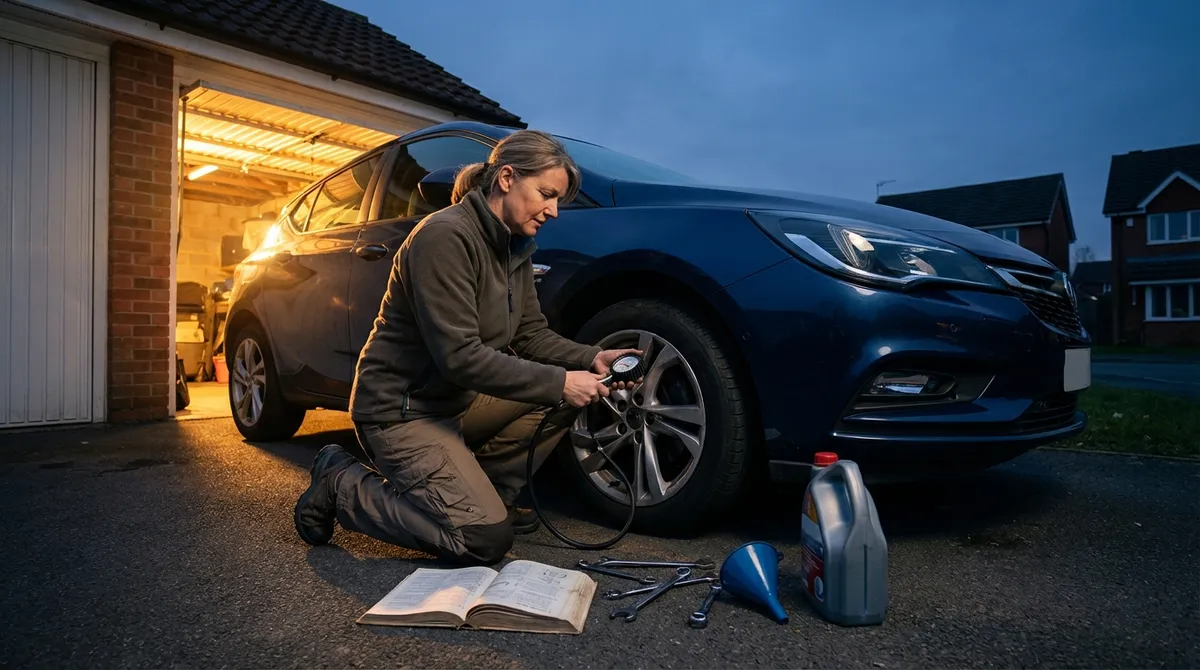
Below are five practical, often overlooked maintenance practices that pay off in long-term reliability, smoother driving, and higher resale value.
1. Treat Your Fluids Like Wear Items, Not Just “Top-Up” Items
Engine oil gets most of the attention, but it’s only one of several critical fluids quietly doing heavy work in the background. Transmission fluid, brake fluid, coolant, power steering fluid, and differential fluid all break down over time from heat and contamination.
Most owners wait for a problem—slipping shifts, mushy brakes, overheating—before thinking about these fluids, but by then the damage may already be done. A better approach is to treat fluids as wear items with planned replacement intervals instead of waiting for warning signs.
Start with your owner’s manual and look for “severe service” schedules, which are more realistic for most drivers (short trips, city driving, extreme temperatures). Even if the manufacturer calls some fluids “lifetime,” many technicians recommend proactive changes, especially for automatic transmissions and coolant, where overheating and internal varnish can lead to costly repairs.
If you’re an enthusiast, consider sending a small oil or transmission fluid sample to a lab for analysis. It’s inexpensive and can reveal early signs of internal wear, coolant contamination, or fuel dilution—information that helps you adjust intervals intelligently rather than guessing.
The practical takeaway: schedule fluid changes before performance drops. Clean fluid is cheap insurance; waiting until it’s dark, burnt, or sludgy is when it starts to get expensive.
2. Use Your Ears and Nose: Catching Issues Before the Scan Tool Does
Modern cars are filled with sensors, but your senses still give you the earliest, most valuable data. Many failures start with faint sounds or subtle smells long before a check-engine light appears. Learning what’s “normal” for your car is one of the simplest, most powerful maintenance habits you can develop.
Pay attention to new noises that change with speed or engine load—whining, grinding, rhythmic clicks, or rattles. A faint belt squeal on cold starts, for example, might indicate a worn belt or tensioner before it fails. A soft humming that increases with speed could be the first sign of a wheel bearing going bad.
Smells are just as important. A sweet, syrupy odor may indicate a coolant leak, especially if you notice fogging on the windshield or dampness in the footwell. A burnt smell after driving can point to an oil leak dripping onto a hot exhaust, a dragging brake caliper, or an overheating clutch.
Set aside a moment every week or two to walk around the car in a quiet spot: listen at idle, gently rev the engine, and take note of any new vibrations through the steering wheel or seat. Small, early clues often translate to simpler, cheaper fixes—replacing a belt or clamp instead of a ruined alternator or overheated engine.
For enthusiasts, treat this like pre-flight checks on an aircraft: a quick perimeter walk, a listen under the hood, and a short, focused drive with the stereo off can uncover issues long before they become tow-truck moments.
3. Keep Rubber and Plastics Alive: Protecting What Time and Weather Destroy
Engines and electronics get most of the attention, but aging rubber and plastic components cause a surprising number of breakdowns and annoying issues: vacuum leaks, cracked hoses, brittle wiring connectors, window seal leaks, and suspension noise. Heat, ozone, road salt, and UV exposure accelerate this aging process.
Start by visually inspecting under-hood rubber every few months: coolant hoses, vacuum lines, serpentine belts, and intake boots. Look for cracks, swelling, glazing, or soft spots. An inexpensive inspection light and a mirror help you see around tight corners and under components. Replace hoses or belts that are borderline instead of waiting for a roadside failure.
Door seals, window weatherstripping, and sunroof gaskets also deserve attention. Clean them with mild soap and water, then treat them with a rubber-safe protectant. This helps prevent leaks, wind noise, and stuck doors in winter. For cars parked outside, a periodic application of UV protectant on exterior plastics and trim slows fading and brittleness.
Suspension bushings are another commonly neglected item. Worn control arm or sway bar bushings can create vague steering, clunks, or tire wear that owners mistakenly blame on alignment alone. If you feel looseness in the steering or hear thuds over bumps, it may be time to have the suspension inspected, not just “the alignment checked.”
The payoff is subtle but real: fewer mystery noises, tighter driving feel, better weather sealing, and fewer “it just suddenly broke” moments that usually started as slow rubber decay years earlier.
4. Make Tire Care a Routine, Not a Reaction
Most people think of tire care as “rotate them when the shop suggests it” or “replace them when they look bald.” That approach leaves a lot of safety, performance, and money on the table. Treat tires as your car’s only contact with the road—because they are.
Check tire pressure at least once a month and before any long trip, using a quality digital gauge. Do this when the tires are cold (before driving far) and adjust to the spec on the driver’s door jamb, not the sidewall max rating. Underinflation not only hurts fuel economy but also overheats the tire, weakening its structure over time. Overinflation can reduce grip and cause uneven wear.
Tread depth isn’t just about passing inspection. Grip in rain and snow falls off long before a tire is technically “worn out.” Consider replacing all-season tires around 4/32" tread depth if you drive regularly in wet conditions and even earlier for winter tires in snow-prone areas. A simple tread depth gauge is cheap and much more accurate than the penny test.
Rotate your tires on a consistent mileage schedule, not “whenever I remember.” For many cars, 5,000–7,500 miles works well and can often be paired with oil changes. Regular rotations even out wear patterns, extend tire life, and can expose alignment issues early when unusual patterns start to appear.
Finally, do a quick visual check whenever you fuel up: look for nails, sidewall bubbles, or suspicious wear stripes. Catching a slow leak at the pump typically means a simple repair; discovering it when the tire blows on the highway often means expensive tire replacement and potential wheel damage.
5. Schedule “Baseline” Checks After Major Milestones or Ownership Changes
Cars drift out of spec slowly—alignment, battery health, cabin air quality, engine breathing—and because the changes are gradual, you adapt without noticing. A smart habit is to schedule “baseline” checks at logical milestones: when you buy a used car, after a big suspension or brake job, or every few years on a long-term keeper.
A professional alignment is one of the most overlooked baselines. Even if your steering wheel seems straight, a proper alignment can reduce tire wear, improve fuel economy, and sharpen handling. Do this after hitting a major pothole, curb, or after any significant suspension work.
Battery and charging system tests are another low-cost baseline. Modern cars are sensitive to low voltage, and a weak battery can cause intermittent electronic glitches long before it fails to start the car. Most parts stores and many shops can load-test your battery and alternator in minutes.
Airflow and filtration matter more than many owners think. Replacing both the engine air filter and cabin air filter on a schedule—not just when clogged—helps maintain performance, fuel efficiency, and HVAC effectiveness. A restricted cabin filter can make your blower work harder, strain the system, and fog windows more easily.
For enthusiasts, keeping a simple maintenance log (mileage, date, work done, parts used) turns these baseline checks into a trackable history. That history not only keeps you organized but also adds real value when selling or trading the car, showing buyers the vehicle was maintained with intention, not just reaction.
Conclusion
Long-lasting, trouble-free cars aren’t just the result of good luck or “reliable brands.” They’re usually the result of owners who pay attention early, treat fluids and rubber as consumables, and build a few smart habits into their routine.
By proactively managing fluids, listening and looking for subtle changes, protecting rubber and plastics, treating tire care as serious business, and doing periodic baseline checks, you stack the odds heavily in favor of a car that feels solid well past the mileage where many start to fall apart.
You don’t need to be a mechanic to do this—just consistent, observant, and willing to act before problems shout for attention.
Sources
- [National Highway Traffic Safety Administration (NHTSA) – Vehicle Maintenance](https://www.nhtsa.gov/sites/nhtsa.gov/files/811075.pdf) - Federal guidance on basic maintenance and safety checks, including tires and fluids
- [U.S. Department of Energy – Fuel Economy: Keeping Your Car in Shape](https://www.fueleconomy.gov/feg/maintain.jsp) - Explains how proper maintenance (tires, alignment, filters) affects efficiency and running costs
- [Consumer Reports – Car Maintenance and Repair Guide](https://www.consumerreports.org/cars/car-repair-maintenance-guide/) - Independent recommendations on maintenance intervals, fluids, and common service items
- [Bridgestone – Tire Maintenance Tips](https://www.bridgestonetire.com/maintenance/tire-maintenance-tips/) - Practical guidance on tire pressure, rotation, tread depth, and inspection
- [AAA – Vehicle Inspection and Preventive Maintenance](https://exchange.aaa.com/automotive/automotive-test-center/vehicle-inspection-and-preventive-maintenance/) - Overview of key inspection points and the value of preventive service