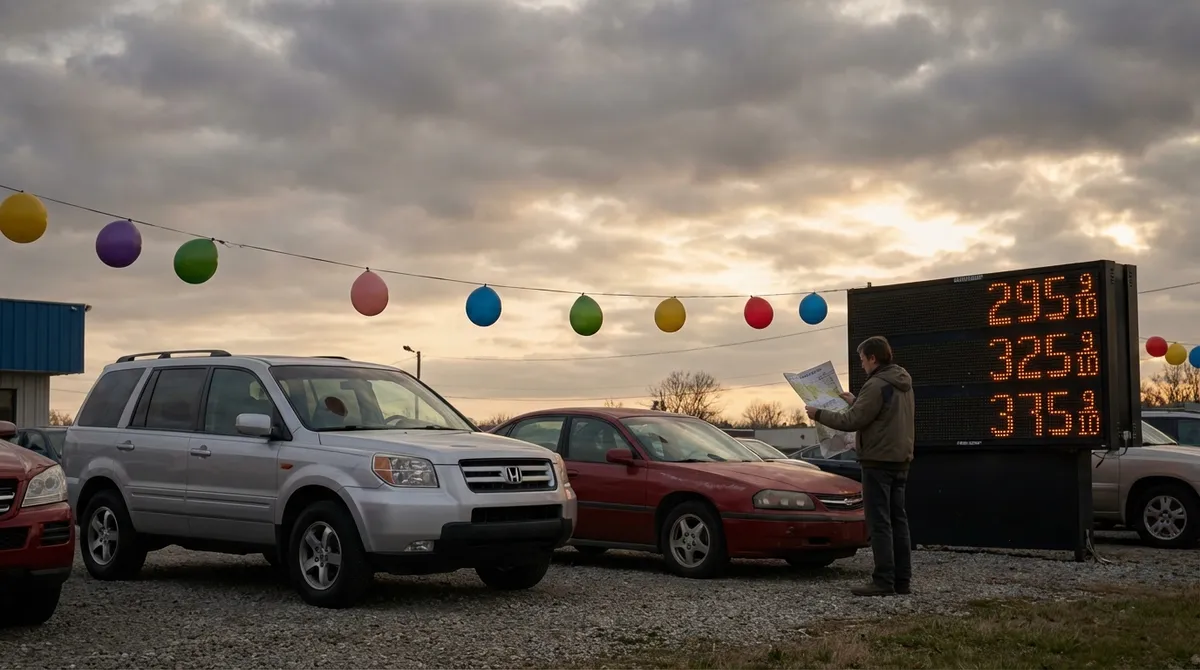
This guide focuses on the part most shoppers ignore: reading the market, not just the window sticker. If you understand model cycles, incentives, and supply trends, you’ll walk into any dealership (or private sale) with a real advantage—without needing insider connections or advanced math.
Understand Model Cycles Before You Fall in Love
Before you get attached to a specific car, zoom out and look at where it sits in its life cycle: brand‑new redesign, mid‑cycle refresh, or end‑of‑generation. That timing affects everything from pricing leverage to long‑term resale value.
Automakers typically run a model generation for five to seven years. Early in a generation:
- Prices tend to be firmer and incentives lighter.
- Resale values are usually stronger because the design will stay “current” longer.
- You pay more up front, but your car may feel modern for a longer period.
- Dealers often discount more aggressively to clear out inventory before the new version arrives.
- Incentives, low‑APR financing, and lease deals usually improve.
- You risk your car looking “old” sooner when the redesign launches, which can hurt resale slightly.
Late in a generation:
Actionable point #1: Check where your target model is in its cycle before negotiating.
Look up:
- When the current generation was introduced (search “[Car Name] current generation release year”).
- Whether a redesign has already been announced, teased, or leaked.
- If spy shots, auto show reveals, or manufacturer press releases mention an upcoming model year change.
If you want maximum deal power, aim for the last 12–18 months before a redesign. If you prioritize long‑term “freshness” and stronger resale, focus on the first two years of a new generation—even if discounts are slimmer.
Track Incentives and Not Just Sticker Prices
Many shoppers see the MSRP and assume that’s the real battlefield. In reality, monthly incentives quietly reshape the deals available—especially on mainstream brands and volume models. These offers come in the form of cash rebates, low‑APR financing, lease support, and loyalty or conquest bonuses.
Manufacturers adjust incentives based on:
- How quickly models are selling
- Inventory pile‑ups
- Seasonal demand (for example, trucks and SUVs around winter, convertibles near summer)
- Competitive pressure from rival brands
Actionable point #2: Monitor incentives for a few weeks before you buy, instead of jumping at the first “sale.”
Practical steps:
- Visit manufacturer websites’ “offers” or “specials” pages to see factory incentives for your region.
- Compare offers across nearby ZIP codes—occasionally, incentives differ by market.
- Track whether offers are improving, holding steady, or expiring at the end of the month.
If you see incentives suddenly increase on your target model, that’s often a signal that demand is softening or inventory is high—both are good for your negotiating position. Conversely, if incentives are light and shrinking, it may indicate strong demand and less flexibility.
Read Local Supply and Demand Like a Pro
Car buying isn’t just about the national market; it’s local. Two buyers in different metro areas can see completely different pricing on the same car because of regional demand, inventory levels, and dealer competition.
Local supply affects:
- How far below MSRP you can realistically negotiate
- How willing dealers are to trade inventory between stores
- Whether you can hold firm on your desired color/trim or need to compromise
Actionable point #3: Compare local inventory and competition before you ever set foot in a showroom.
Here’s how:
- Use dealer websites and national listing platforms to search your exact model within a 50–150 mile radius.
- Count how many listings match your preferred trim, drivetrain, and color—more choices usually mean more leverage.
- Note how long specific cars have been on the lot (many sites show “days listed” or “days on market”). Cars sitting 45–60+ days are excellent negotiation candidates.
- Check whether there are several same‑brand dealers within your region; more competition typically improves your bargaining power.
- Less movement off MSRP
- Longer waits for special orders
- Fewer dealer‑side add‑ons being removed or discounted
- Push harder on price and fees
- Ask for add‑ons (all‑weather mats, service credits, or accessories) at little or no cost
- Walk away more confidently, knowing there are alternatives nearby
If inventory is thin and days‑on‑lot are low, expect:
If inventory is heavy and aging, you can:
Time of Month and Season Still Matter—But Not the Way You Think
You’ve probably heard, “Buy at the end of the month,” or “Go in December for the best deals.” There’s some truth behind this, but it’s not magic. What really matters is how your timing intersects with dealer quotas, model turnover, and regional demand cycles.
Dealers and sales staff often work on:
- Monthly and quarterly sales targets
- Manufacturer bonus programs tied to volume
- Internal incentives around model‑year changeovers
- AWD SUVs and trucks may command stronger pricing before and during winter in colder regions.
- Sports cars and convertibles often soften in late fall and winter.
- Model‑year closeout events can start as early as late summer, depending on brand and supply.
Seasonality also plays a role:
Actionable point #4: Use timing as a tiebreaker—not your only strategy.
Practical usage:
- If you’re already close to buying, schedule visits near the end of the month or quarter to see if sales staff are more flexible.
- For seasonal vehicles (performance cars, convertibles), consider shopping in the “off‑season” in your climate.
- Watch when the next model year starts arriving locally; outgoing model year vehicles often get more aggressive pricing even if the changes are minor.
Don’t stretch your budget for a “deal of the year” if it forces you into the wrong car. Good timing shaves costs; it doesn’t rescue a bad fit.
Separate “Want Now” From “Best Value Window”
One of the biggest traps is confusing urgency with value. Life changes—new job, baby on the way, a car totaled in an accident—can force your hand. Sometimes you have to buy now. The key is recognizing when you don’t.
Your ideal purchase window might be:
- Several months before your lease ends (giving you time to shop calmly)
- After you’ve built a 10–20% down payment cushion
- Once loan pre‑approval makes your budget clear
- When your current car still has solid life left but is near the point where major repairs become more frequent
Actionable point #5: Create a personal “buy window” that lines up with market timing instead of waiting until something breaks.
Plan it like this:
- Assess your current car’s realistic timeline. Look at age, mileage, upcoming major services (timing belt, tires, brakes), and reliability history.
- Decide a target replacement range, for example “within the next 6–12 months.”
- Use that range to watch model cycles, incentives, and local inventory instead of waking up one day with a broken transmission and no leverage.
- Start test‑driving early so that when a strong market opportunity appears (big incentive bump, heavy inventory, year‑end programs), you’re ready to act.
Planning buys you the option to wait for better conditions—or to move quickly when a particular car is unusually well‑priced because it’s been on the lot too long.
Conclusion
Most car buyers spend 90% of their energy deciding what to buy and barely 10% on when and how to step into the market. Shifting even some of that effort toward understanding model cycles, incentives, local supply, timing patterns, and your own personal window can turn the same car into a much smarter purchase.
You don’t need insider access or advanced tools. You just need to treat the market itself as part of the car you’re shopping for. When you do, the numbers start working for you, not against you—and every trip to the dealership becomes a lot less stressful and a lot more deliberate.
Sources
- [Consumer Reports – Car Buying & Pricing](https://www.consumerreports.org/cars/buying-a-car/) – Independent guidance on timing purchases, incentives, and negotiation basics
- [Edmunds – How to Buy a New Car](https://www.edmunds.com/car-buying/how-to-buy-a-new-car.html) – Detailed breakdown of model‑year changes, incentives, and dealer behavior
- [Kelley Blue Book – Market Pricing and Car Values](https://www.kbb.com/car-advice/) – Explains how market conditions, incentives, and supply affect pricing and values
- [U.S. Bureau of Labor Statistics – New Vehicles CPI Data](https://www.bls.gov/cpi/factsheets/new-vehicles.htm) – Official data on new vehicle price trends across the broader market
- [National Automobile Dealers Association (NADA) – Data & Research](https://www.nada.org/data) – Industry‑level insights on inventory, sales trends, and dealer economics