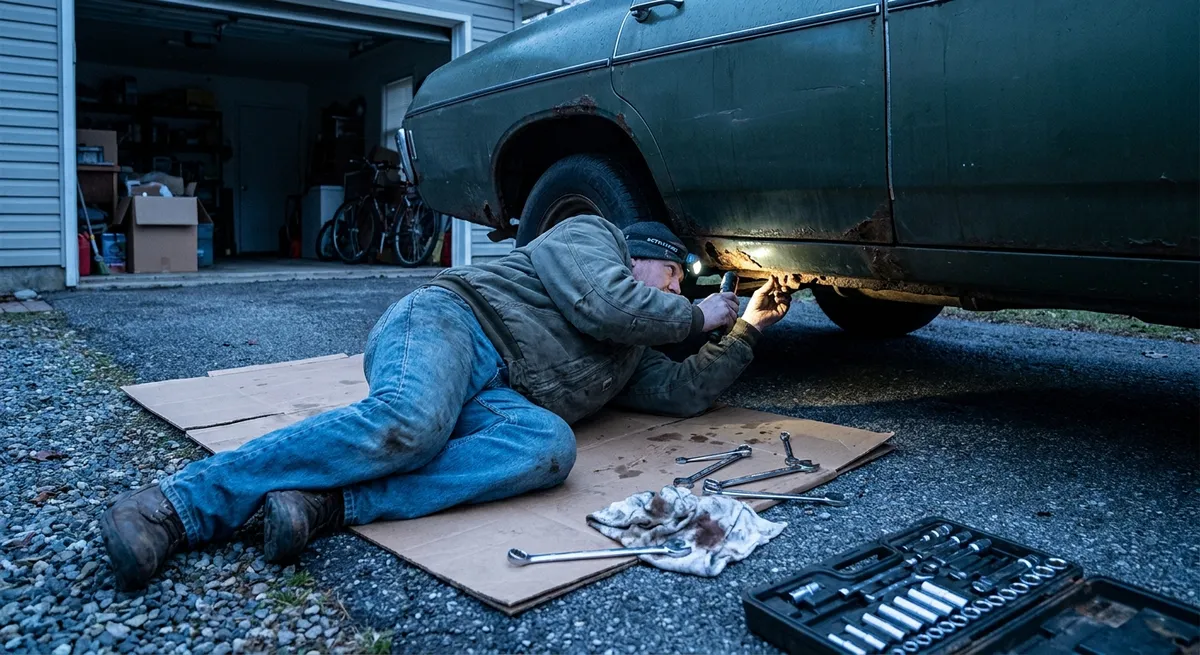
This guide walks through a simple underbody routine built around five practical, enthusiast-friendly actions you can repeat a few times a year—especially before and after harsh weather seasons.
Prep Smart: Safety, Tools, and When to Skip DIY
Before you slide under a car, basic safety matters more than curiosity. Start with a level surface—concrete or asphalt, not gravel. If you need extra clearance, use a properly rated jack and quality jack stands, never just the scissor jack that came with the car. Chock the wheels that remain on the ground, set the parking brake, and keep the transmission in Park or in gear for manual cars.
A basic toolkit is enough for inspection: a bright LED flashlight or headlamp, nitrile or mechanic’s gloves, a small mirror, a notepad or phone for photos, and a trim tool or flat screwdriver for undertray fasteners if your car has plastic covers. Work in daylight whenever possible and avoid wet or icy conditions where you can slip easily.
If your car has a known rust problem, severe frame rot, or you see fuel or brake fluid dripping, don’t keep investigating; that’s the line where you put the car back on the ground and call a professional. The point of this routine is to spot problems early, not to stretch your comfort zone into structural repairs.
Action 1: Check for Rust Before It Becomes Structural
Surface rust happens, especially in snowy or coastal regions, but the trick is catching it before it turns into flaking, scaly metal. Start by looking at frame rails (or unibody rails), suspension mounting points, jacking points, and subframes. Use your flashlight at a shallow angle; the low light angle makes flaky or layered rust stand out. Light orange or brown discoloration that still feels smooth is usually surface rust. Thick, scabby sections, holes, or metal you can push through with a screwdriver are serious.
Pay close attention to seams where two panels meet and weld areas—they trap moisture and salt. Also look at welds around control arm mounts and rear axle mounts; if these areas fail, handling and alignment can suffer. Document suspicious spots with photos and dates so you can track progression. For very light surface rust, a wire brush and rust converter can slow further corrosion, but if you see long cracks, bulging metal, or widespread scale, get a shop to inspect it. Catching rust early often turns a future thousand-dollar repair into a quick cleaning and treatment.
Action 2: Inspect Brake Lines, Hoses, and Components
Underbody checks are one of the few times you can really see your braking system. Follow the hard brake lines along the body, especially the areas where they pass over the rear axle or around fuel tanks and along pinch welds. Rusty, pitted, or heavily corroded lines are a red flag—these can burst under hard braking. Flexible rubber hoses at each wheel should be checked for cracks, bulges, or wet spots that may indicate leaks.
Look at the calipers and backing plates for rust buildup and flaking. If you can safely peek through the wheel or with the car lifted, inspect rotor faces for heavy scoring, deep grooves, or uneven rust rings. Rust on the outer edge is common; what you don’t want is a heavily corroded rotor surface where the pad actually contacts, or large chunks missing from the friction surface.
If you notice dampness near any brake fitting or on the inside of the wheel, don’t ignore it—brake fluid leaks are not a “monitor it later” item. Make notes about which corners have issues so you can give your mechanic a precise report, which can save diagnostic time and labor.
Action 3: Scan the Exhaust System for Leaks and Heat Damage
The exhaust lives in a brutal environment: high heat from the engine, water from condensation, and constant impact from road debris. Start at the catalytic converter and follow the piping back to the muffler and tailpipe. Look for dark soot marks around joints and flanges, which can indicate small leaks. Stress cracks often appear around hanger brackets and welds; if a hanger is missing or the rubber is torn, the extra movement can crack the pipe or muffler over time.
Tap lightly with a rubber mallet or your hand (only on a completely cool system) and listen for rattles or loose internal baffles. Check heat shields above the exhaust for corrosion and loose fasteners; shields that break free can buzz, rattle, or in worst cases, contact fuel or brake lines. On turbocharged cars, pay extra attention to the downpipe and any aftermarket clamps or V-band connections. Exhaust leaks before the oxygen sensors can affect performance, fuel economy, and emissions.
If you smell strong exhaust near the cabin while driving or see visible holes in the system, move quickly to have it repaired. Besides noise and performance loss, an exhaust leak can allow carbon monoxide to enter the cabin, especially in slow or stopped traffic.
Action 4: Look for Fluid Leaks and Compromised Undertrays
Underbody inspection is the easiest way to catch early oil, coolant, transmission fluid, or differential leaks. With your flashlight, trace any wet or shiny areas back to their highest point—fluid drips down and backward with airflow. Dark brown or black slicks usually indicate engine oil; bright green, orange, or pink often signals coolant; red or amber can come from automatic transmission or power steering fluids, depending on the car.
Pay attention to the area around the rear main seal, oil pan, transmission pan, and differential covers. A light mist or grime may simply be seepage, but active drips on the ground, especially after short drives, warrant attention. Also check rubber boots on CV axles and steering components; splits or heavy grease splatter around a joint mean the boot has failed and the joint is being contaminated.
Many modern cars use plastic undertrays and aero panels to reduce drag and protect components. Make sure they’re properly fastened—missing clips can cause panels to drag, scoop water, or tear off at highway speeds. Cracked or hanging undertrays also catch and hold debris, salt, and mud against the metal they’re supposed to protect. Replacing a few clips or a damaged panel is cheap compared to replacing corroded wiring or a punctured oil pan.
Action 5: Clean and Protect With Rinses and Targeted Coatings
Inspection finds problems; protection slows them down. After your underbody check—especially in winter climates—use a low-pressure hose or undercarriage rinse attachment at a self-serve wash to flush away salt, mud, and debris. Focus on wheel wells, around suspension components, and the lower edges of the frame rails or unibody. Avoid blasting high-pressure water directly into bearings, seals, or electrical connectors; use a broader spray pattern instead of pin-point pressure.
For cars that see winter roads or rough use, consider a quality rust-inhibiting spray on exposed metal, especially brake and fuel line brackets, subframes, and weld seams. Products that dry to a waxy or oily film can help keep moisture away from metal, but they need reapplication and should not be sprayed on hot components or moving parts like rotors, belts, or exhausts. Enthusiasts often apply these before winter and inspect in spring to assess how well they’ve held up.
If you drive in regions that use heavy road salt or on dirt roads, adding an annual professional underbody wash and inspection to your maintenance schedule can be worthwhile. It gives you a deep clean plus a second set of eyes on areas you might miss at home. Over time, a consistent rinse-and-protect routine can add years to the service life of your suspension hardware, exhaust, and chassis.
Conclusion
The underbody isn’t glamorous, but it quietly decides how long your car stays solid, safe, and enjoyable to drive. A simple weekend routine—inspecting for rust, checking brake hardware, scanning the exhaust, tracking down leaks, and rinsing plus protecting—puts you ahead of most owners and gives you the same information a good shop looks for on a lift.
Do this a couple of times a year, document what you see, and act quickly on early warning signs. You’ll spend less on surprise repairs, keep the car feeling tight and trustworthy, and preserve value if you ever choose to sell. In a world where most maintenance happens from the beltline up, taking care of the unseen parts underneath is one of the smartest moves an enthusiast can make.
Sources
- National Highway Traffic Safety Administration (NHTSA) – Vehicle Maintenance Tips - Federal safety guidance on maintaining critical systems like brakes and tires
- AAA – How to Extend the Life of Your Vehicle - Practical maintenance recommendations, including inspections and leak checks
- Car Care Council – Undercar Inspection Guidelines - Detailed checklist for undercar components such as brakes, suspension, and exhaust
- Consumer Reports – Fighting Rust on Your Car - Explains how rust starts, where to look, and what prevention methods work
- U.S. Environmental Protection Agency – Vehicle and Engine Maintenance - Describes how proper maintenance (including leak prevention) impacts emissions and vehicle health