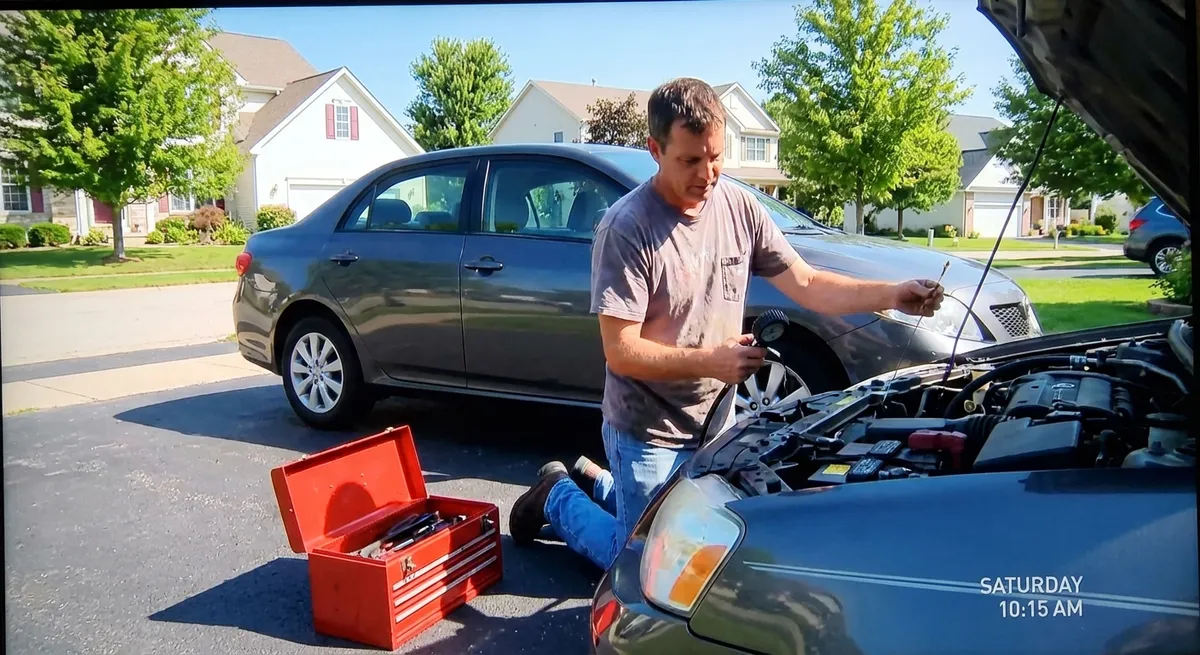
Think of car care as a “weekend rule”: a few small checks you can do in under 20 minutes that massively cut the odds of surprise breakdowns. These aren’t complicated procedures; they’re simple, repeatable habits that keep you ahead of costly problems and help your car feel newer for longer.
Make Your Tires Tell You the Truth
Most people only look at their tires when they look obviously flat. By then, you’ve already lost fuel economy, braking performance, and extra tread life. Instead, make tire checks a quick ritual: once every couple of weeks or every fill-up. Use a simple digital gauge to check pressure when the tires are cold, and compare the reading to the pressures listed on the driver’s door jamb, not the number printed on the tire sidewall. While you’re there, run your hand gently across the tread surface; if it feels smoother on one edge than the other, you may have an alignment or suspension issue starting to show. Uneven wear, bald inner edges, or “feathered” tread blocks are early warning signs that can be fixed cheaply now but become expensive if ignored. Also glance at the tire’s sidewalls for cuts, bubbles, or cords showing—these are all stop‑driving‑now problems, not “watch it later” ones.
Use Your Fluids as Early-Warning Sensors
Your car’s fluids are like lab tests for its health—look at them regularly and they’ll warn you long before parts fail. Start with engine oil: pull the dipstick on a level surface, wipe it, reinsert, and check both level and color. Slightly dark oil is normal; thick, sludge-like, or metallic-flecked oil is not. If you see a milky coffee color, that can signal coolant mixing with oil—a serious issue. Next, look at coolant in the overflow tank (never remove the radiator cap while hot). It should be near the “full” mark and relatively clear, not rusty, oily, or full of floating debris. Brake fluid should be between the min and max marks; if it’s extremely dark, it’s overdue for a change and can affect pedal feel. Power steering and transmission fluids (if accessible) should be checked according to your owner’s manual. Making a habit of visually checking these reservoirs once a month helps you spot small leaks, gradual consumption, or contamination before they become safety or reliability problems.
Treat Your Battery Like a Wear Part, Not a Mystery Box
Most drivers only think about the battery when the car refuses to start, but a battery almost never fails “suddenly.” It degrades over time, and it will tell you if you know where to look. Pop the hood and inspect the terminals every few months; any white, blue, or greenish crust around the posts is corrosion that increases resistance and stresses the starter and charging system. Clean it carefully with a battery brush and a baking soda solution, wearing gloves and eye protection. Give the battery case a quick glance for swelling, cracks, or leaks—signs it’s time for replacement, not just cleaning. If your cranking sounds slow on cool mornings, or interior lights dim noticeably when you start the engine, have the battery load‑tested at a parts store or shop; many will do it free. Also check the build date label: if your battery is 4–6 years old (or older) and you live in a climate with temperature extremes, budget for replacement before winter or peak summer, rather than waiting for it to strand you in a parking lot.
Listen to Your Brakes Before They Scream
Brakes rarely jump straight from “fine” to “dangerous”; they pass through a long, noisy, and sometimes smelly middle ground. Start by paying attention every time you roll up to a stop sign with the radio off and the windows slightly open. A light, consistent squeal when you brake can simply be wear indicators doing their job, telling you the pads are nearing replacement. A grinding sound, on the other hand, means the pad friction material may be gone and metal is contacting metal—that’s urgent and can quickly damage rotors. Feel for vibrations or pulsing in the pedal at moderate braking; that often indicates rotor warping, uneven pad deposits, or suspension issues. If the pedal feels soft or sinks slowly toward the floor, air or moisture may be in the brake lines or there could be a leak; park the car and have it inspected immediately. Also glance at the inside of your wheels occasionally: heavy, uneven brake dust on one wheel can signal a sticking caliper. Catching these signals early usually means a pad-and-rotor job instead of a full brake system overhaul.
Make a “Monthly Cabin Check” Part of Your Routine
The inside of your car can quietly sabotage your comfort and even your safety if you ignore it. Once a month, treat your cabin like a mini inspection bay. Start with the HVAC system: switch between hot and cold, face vents, defrost, and floor settings, and listen for strange noises from the blower fan. Weak airflow or a musty smell often points to a clogged cabin air filter, which is usually cheap and easy to replace yourself. Next, go through every light: headlights (low and high beam), turn signals, brake lights, reverse lights, and hazard lights. A burned-out brake or tail light is both a safety risk and an easy traffic stop to avoid. Test power windows, locks, mirrors, and seat adjustments, especially on doors you don’t use often—catching a slow or sticking mechanism early can keep you from having to deal with a fully failed regulator later. Finally, clear clutter from under seats and around pedals; anything that can roll under your brake pedal can turn into a serious hazard during an emergency stop.
Conclusion
You don’t need advanced tools, a lift, or a full afternoon to stay ahead of most maintenance surprises. By folding these quick checks into your regular routine, you’re essentially running your own low‑cost early warning system—one that extends the life of your car, keeps it safer, and reduces those “why now?” repair bills. Share this with someone who thinks maintenance only happens at the shop; sometimes the best preventative work happens in your own driveway, one weekend habit at a time.