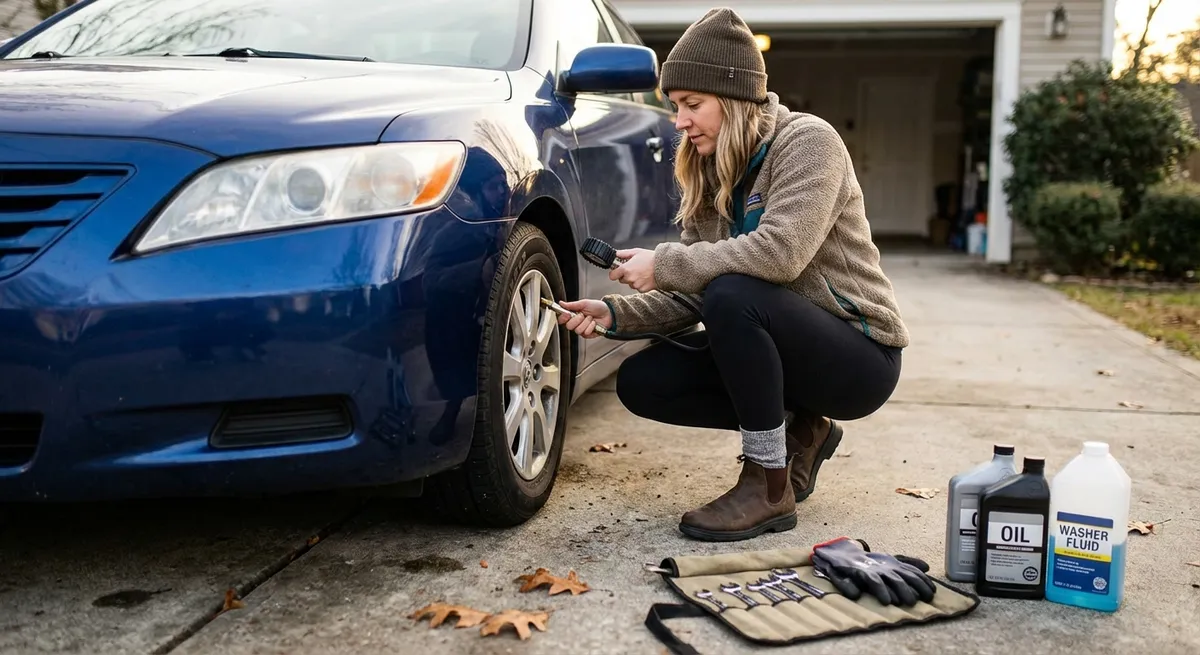
This isn’t a deep-dive mechanic’s checklist. It’s a realistic, five-part routine you can actually do in your driveway, with basic tools and no special training.
Walk-Around Inspection: Catch Problems Before They Get Expensive
Before you pop the hood, start with a slow, detailed walk-around. You’re looking for anything that doesn’t look, sound, or smell normal.
Move methodically: front, passenger side, rear, driver side, then underneath (as much as you can see safely). Look for:
- Fresh fluid spots where you park (clear, brown, red, or green puddles or drips)
- Uneven body gaps, loose trim, or underbody plastic panels hanging down
- Cracks or chips in headlights, taillights, or the windshield
- Exhaust pipe hanging low or rusted supports/brackets
- Loose splash shields or wheel well liners that could scrape at speed
Listen as you back up or pull forward slowly with the windows down: notice any squeaks, grinding, or clunks over bumps. If something catches your eye or ear, take a quick photo or video. That makes it much easier to explain to a shop later and track whether it’s getting worse.
This habit turns “I think something’s wrong” into “I noticed a small coolant drip on the right side last weekend, here’s a picture,” which is exactly the kind of information that leads to faster, cheaper fixes.
Tire and Wheel Check: Where Safety and Fuel Economy Meet
Your tires are the only part of the car that actually touch the road, and they quietly influence almost everything: braking distance, stability, comfort, and fuel economy.
Once a week (or at least once a month), do three quick tire checks:
1. Tire pressure (cold):
Use a simple digital or pencil gauge on each tire before driving far, while they’re “cold.” Compare to the pressure on the sticker inside your driver’s door jamb—not the number on the tire sidewall. If your car has TPMS, don’t rely on it to fine-tune pressure; it usually only warns when things are very low. Top off with a portable inflator or at a gas station. Properly inflated tires:
- Improve fuel economy
- Shorten stopping distances
- Wear more evenly, extending tire life
2. Tread depth and wear pattern:
Use a tread-depth gauge or the penny test. Insert a penny into the tread with Lincoln’s head upside down and facing you. If you can see the top of his head, your tread is worn out and braking performance—especially in wet weather—is significantly compromised. Also look for:
- More wear on the inside or outside edges (alignment issue)
- Smooth “bald” patches or cupping (suspension or balance problem)
- Cracks or dry rot on the sidewall (age-related tire failure risk)
3. Visual wheel and lug nut check:
Look for bent wheels, curb rash that’s cut deeply, or missing/loose lug nuts. Anything that looks obviously out of round or damaged should be checked professionally. A small impact that only “scraped the rim” can sometimes bend a wheel or knock alignment out of spec.
These checks take minutes but directly affect how the car stops, turns, and grips—especially when you need it most.
Under the Hood: Quick Fluid and Belt Snapshot
You don’t need to be a DIY mechanic to learn what “normal” looks like under your hood. Once you know the baseline, spotting early problems becomes much easier.
With the engine off and cooled:
- Engine oil level and condition:
- Milky or frothy oil can indicate coolant mixing with oil (possible head gasket issue).
- Strong fuel smell in the oil can indicate fuel system issues.
- Coolant level (in the reservoir, not by opening a hot radiator cap):
Use the dipstick if your car has one. Oil should be between the MIN and MAX marks. Very dark oil isn’t always an emergency if you’re near the next service interval, but:
The level should be between the “LOW” and “FULL” marks. If you’re steadily topping up coolant, you have a leak somewhere. Also note the color—different cars use different coolant types. Don’t mix types without checking the owner’s manual or manufacturer recommendations.
- Brake fluid and power steering fluid (if applicable):
Both should be within the marked ranges. A falling brake fluid level without visible leaks can mean your brake pads are wearing down, since caliper pistons extend farther as pads thin. Dark, very dirty brake fluid can indicate it’s due for a flush.
- Drive belt (serpentine belt):
- Cracks
- Fraying
- Missing chunks
- Excessive glazing (shiny, polished look)
Visually inspect for:
If a belt fails, you can suddenly lose the alternator, power steering, or even cooling system function—often far from home. Noticing a worn belt early turns a roadside breakdown into a scheduled shop visit.
Make a note in your phone of anything that’s at the “keep an eye on this” stage, and check it again during your next weekend reset.
Cabin & Controls: Find Issues You Don’t Notice While Driving
Inside the car is where you spend all your time, but it’s easy to ignore how things are aging. A quick interior check helps keep comfort systems working and cabin electronics from turning into a scavenger hunt of mystery issues.
Focus on:
- HVAC performance:
- Airflow is strong from all vents
- Temperature actually changes from hot to cold
- Defrost can clear fog reasonably quickly
Turn on heat and A/C (including max A/C and defrost) and make sure:
Weak airflow can mean a clogged cabin filter or blower motor issues. If the A/C isn’t cold enough, addressing it early can keep a small refrigerant leak from damaging the compressor.
- All exterior lights:
- Turn on headlights, high beams, fog lights, hazards, and turn signals.
- Use reflections against a garage door or wall, or ask someone to help check brake lights and reverse lights.
With the car parked safely:
A burned-out bulb is cheap to fix but easy to miss until someone almost rear-ends you at night.
- Dashboard warnings and indicators:
- Watch for which lights come on briefly (ABS, airbag, check engine, etc.), then go off.
- Anything that stays on or begins flashing consistently deserves attention, even if the car feels “fine.”
When you start the car:
Ignoring a subtle warning light can let a minor emissions issue grow into a major drivability problem.
- Switches and safety features:
- Power windows and locks
- Mirrors and seat adjustments
- Wiper speeds and washer spray
- Parking brake engagement and release
Test:
If your car has driver-assistance systems (lane keep, adaptive cruise, blind-spot monitoring), confirm they activate normally and aren’t constantly disabled by error messages.
The goal is to catch minor annoyances and glitches before they become habits you ignore—because those are often the breadcrumbs that lead to larger electrical or comfort-system repairs later.
Underrated Cleaning and Protection: Cosmetics That Protect the Car’s Value
“Cleaning” feels cosmetic, but done strategically, it doubles as long-term protection. Dirt, road salt, UV exposure, and moisture all accelerate wear, especially in climates with harsh winters or strong sun.
Aim for:
- Regular wash, especially after rain or snow:
- Helps slow rust formation
- Keeps sensors and cameras clear
- Preserves wheel finishes and paint
Road grime and salt trap moisture against metal and suspension parts. Even a basic rinse:
If you drive where salt is used, prioritize underbody rinses.
- Protect seals and plastic:
- Reduces squeaks and wind noise
- Helps prevent stuck doors in freezing weather
- Extends the life of weatherstripping that keeps water out
- Interior surface care:
- Use UV-protectant products that don’t leave a greasy film
- Condition leather seats periodically to prevent cracking and stiffening
Use a rubber seal conditioner on door, trunk, and hood seals a few times a year. This:
Wipe down high-touch areas (steering wheel, shifter, buttons, door pulls) with appropriate cleaners. For dashboards and leather:
Keeping the interior clean isn’t just cosmetic; it helps electrical switches and buttons last longer and preserves the car’s resale value.
- Trunk and cargo area sanity check:
- The spare tire (if equipped) is inflated
- The jack and tools are present and accessible
Remove unnecessary heavy items (old tools, sports gear, junk) that you’re hauling around for no reason. Excess weight hurts fuel economy and can shift during emergency maneuvers. While you’re in there, confirm:
A clean, protected car ages more slowly, is easier to sell, and feels better to drive every time you get in.
Conclusion
A smart maintenance routine doesn’t have to look like a full afternoon of wrenching or a complicated spreadsheet. A simple, repeatable weekend reset—walk-around inspection, tire check, under-hood snapshot, interior systems test, and basic cleaning/protection—covers the most failure-prone areas of everyday driving.
Done consistently, these five actions turn you from a reactive owner into a proactive one. You’ll spot issues earlier, spend less on surprise repairs, and keep your car feeling solid and trustworthy for a lot longer. Pick a day, set a reminder, and treat your car like your future self is the one who has to deal with any problems you miss—because that’s exactly what happens.
Sources
- [NHTSA – Tire Safety: Everything Rides on It](https://www.nhtsa.gov/sites/nhtsa.gov/files/811153_tires_safety_brochure.pdf) - U.S. safety guidance on tire pressure, tread depth, and inspection
- [U.S. Department of Energy – Keeping Your Car in Shape](https://www.energy.gov/energysaver/keeping-your-car-shape) - Explains how basic maintenance affects fuel economy and vehicle performance
- [AAA – Essential Car Maintenance Tips](https://newsroom.aaa.com/auto/repair-maintenance/) - Consumer-focused advice on routine checks and why they matter
- [Bridgestone – How to Check Your Engine Oil](https://www.bridgestonetire.com/learn/maintenance/how-to-check-your-engine-oil/) - Step-by-step visual guide to checking oil level and condition
- [Car Care Council – Motorist’s Car Care Guide](https://www.carcare.org/car-care-resource/car-care-guide/) - Broad, manufacturer-neutral reference on fluids, belts, and inspection basics