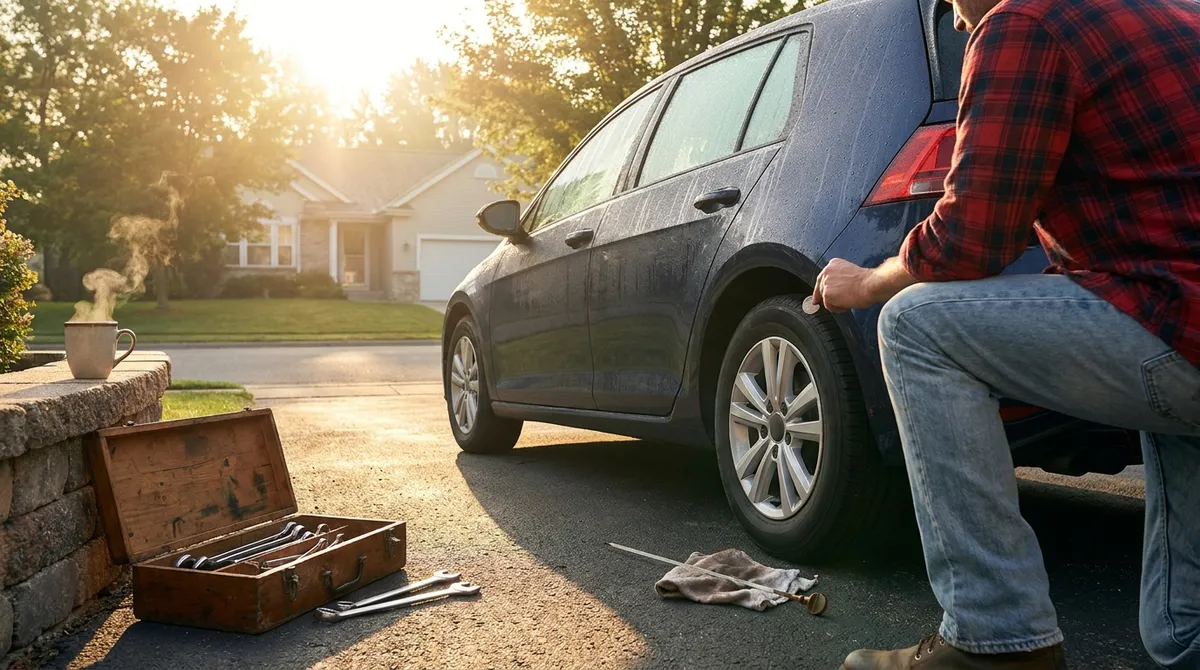
Below is a practical, enthusiast-friendly checklist you can reuse every month or two. Each point is something you can actually do at home with basic tools, a bit of patience, and the owner’s manual.
1. Tires That Talk: Reading Wear Before It Costs You
Your tires are the only contact between your car and the road, and they constantly tell you how the rest of the car is doing—if you know how to read them.
Start with tire pressure. Use a quality gauge (digital or analog) and compare readings to the pressure listed on the driver’s door jamb sticker, not the number on the tire sidewall. Check when the tires are cold, ideally before driving. Underinflated tires wear on the outer edges, run hotter, and hurt fuel economy; overinflated tires wear in the center and reduce grip.
Next, inspect tread depth. A basic check is the penny test: insert a penny into the tread with Lincoln’s head upside down. If you can see the top of his head, tread is about 2/32" or less—time for replacement. Enthusiasts may prefer a tread depth gauge to track wear more precisely, especially if you run performance or all-season tires in varied weather.
Pay attention to wear patterns:
- More wear on one edge than the other suggests misalignment.
- Cupping or scalloping can point to worn shocks or struts.
- Uneven wear between front and rear may mean you’re overdue for a rotation.
Actionable step: Add a recurring calendar reminder to check pressures and a quick tread inspection once a month and before any long trip. This habit alone can save you money on fuel, tires, and suspension repairs.
2. Under-Hood Basics: Fluids That Quietly Save Your Engine
A quick under-hood inspection is one of the highest-value habits you can build. It doesn’t require mechanical expertise—just awareness and consistency.
Start by parking on level ground and letting the engine cool. Then check:
- Engine oil: Pull the dipstick, wipe, reinsert, and check the level between the “min” and “max” marks. Oil that’s very dark and gritty, smells burned, or drops rapidly between changes may signal issues worth a mechanic’s look.
- Coolant: Check the level in the overflow reservoir, not by opening the radiator cap (especially when hot). The level should sit between the low and full marks. Look for discoloration, rust flakes, or oily residue—any of these are red flags.
- Brake fluid: The level in the reservoir should be between the min and max markers and generally should not drop quickly. Fluid that’s very dark may be due for replacement, especially on older vehicles or spiritedly driven cars.
- Power steering and transmission fluid (if applicable): Follow the specific method in your owner’s manual—some are checked with the engine running, some off, and some are sealed and dealer-service-only.
- Washer fluid: Simple but underrated; clear visibility is safety.
While you’re under the hood, visually scan belts and hoses. Look for cracks, fraying, swelling, or wet spots that might indicate leaks. Any sweet, burnt, or fuel-like smell under the hood is a clue you shouldn’t ignore.
Actionable step: Make an “under-hood walkaround” part of your oil-change cycle. Every time you change or top off oil, scan all major fluids and hoses and jot any concerns in a simple maintenance log.
3. Braking Check-in: Feel, Sound, and Sight Work Together
Brakes rarely fail without giving advance notice—but you must pay attention to what the car is telling you.
Begin with feel on a normal drive:
- A firm, consistent pedal that doesn’t sink is what you want.
- A pulsing brake pedal at speed can indicate warped rotors.
- A soft or spongy pedal often points to air in the lines or moisture-contaminated fluid.
- The car pulling to one side under braking could mean a sticking caliper or uneven pad wear.
- High-pitched squealing at low speed can be a pad wear indicator tab scraping the rotor—a built-in warning.
- Grinding metal-on-metal is serious; it usually means pads are worn down completely and are damaging the rotors.
Next, listen:
If your wheels have open spokes, you can often visually inspect the outer pad by looking through the wheel. You should see several millimeters of friction material on the pad. If you’re comfortable removing a wheel, you’ll get a much clearer view of both pad and rotor condition.
Don’t forget brake fluid condition. Most manufacturers recommend replacing brake fluid on a time basis (often every 2–3 years), not just mileage, because it absorbs moisture, which reduces braking performance and can corrode internal components.
Actionable step: On a quiet, straight road, perform a controlled stop from about 30–40 mph. Note pedal feel, noise, and whether the car tracks straight. Repeat this check every few months and before road trips.
4. Electrical and Lighting Health: Visibility and Reliability
Modern vehicles rely heavily on electrical systems, but basic checks remain straightforward.
Start with exterior lights. With the car parked in a safe spot:
- Turn on headlights, high beams, fog lights, and hazard lights.
- Walk around the car to verify each light works: low and high beams, front and rear turn signals, brake lights, reverse lights, and license plate lights.
- Ask someone to press the brake pedal while you check rear lights, or use a reflection (garage door, window) if you’re alone.
Dim headlights or yellowed lenses reduce nighttime visibility significantly. Many headlight restoration kits can be applied at home; they’re a worthwhile weekend project and can dramatically improve light output.
Inside the cabin, pay attention to warning lights. An illuminated battery light, ABS light, airbag light, or check engine light is not “background decoration”—it’s the car’s way of asking for attention. Even if the car drives normally, delaying diagnosis can turn minor issues into larger ones.
Battery health is another key point. If you notice slow cranking, flickering interior lights on start, or intermittent electrical weirdness, inspect battery terminals for corrosion (white or bluish buildup). Cleaning and tightening terminals can restore reliable operation and prevent no-start situations.
Actionable step: Once every month or two, do a full light check and a quick look at the battery terminals. Log any dashboard warnings and address them proactively, rather than waiting for inspection time.
5. Cabin, Filters, and Smells: Comfort as Early Warning
The “feel” of your car’s interior is more than comfort—it can be an early-detection system for several problems.
Start with the cabin air filter. A clogged filter reduces HVAC performance, can fog windows more easily, and makes your system work harder. Most are located behind the glove box or under the dash and are designed to be DIY-replaceable. If your vents smell musty or airflow is weak even at high fan speeds, the filter is a prime suspect.
Listen to your HVAC system. Clicking noises behind the dash when changing temperature or vent position can indicate a failing blend door actuator. Weak cooling or heating might point to low refrigerant, thermostat issues, or heater core problems—things you want to catch early.
Odors matter:
- Sweet, syrupy smells inside can signal a coolant leak, potentially from the heater core.
- Strong fuel smells—especially inside the cabin—should be treated as urgent.
- Persistent musty or moldy odors can sometimes be relieved by replacing the cabin filter and running the HVAC on fresh air (not recirculate) with the fan high for a while.
Inspect interior surfaces and seals. Check for damp carpets (especially under floor mats) after rain; moisture can point to clogged sunroof drains, bad door seals, or windshield sealing issues. Left alone, these can cause rust and electrical gremlins.
Actionable step: Pair a cabin inspection with your seasonal changeover (summer to winter and vice versa). Replace the cabin filter if it’s visibly dirty, note any unusual smells or noises, and verify that windows clear quickly when using defrost.
Conclusion
Consistent, simple maintenance habits are what separate “it runs fine for now” from “it just works, every day.” You don’t have to overhaul your schedule or become your own mechanic; you just need a repeatable routine that keeps you in touch with your car’s condition.
By checking tire health, monitoring key fluids, paying attention to brake behavior, verifying lights and electrical basics, and treating interior comfort as an early warning system, you dramatically reduce your chances of unexpected breakdowns and expensive repairs. In return, you get a car that feels more predictable, safer, and more enjoyable to drive—exactly what most enthusiasts want from a machine they rely on every day.
Sources
- National Highway Traffic Safety Administration (NHTSA) – Tire Safety - Official U.S. government guidance on tire maintenance, pressure, and tread wear
- U.S. Department of Energy – Fuel Economy: Keeping Your Car in Shape - Explains how basic maintenance like tire pressure and tune-ups affects efficiency and running costs
- AAA – Vehicle Maintenance Checklist - Practical, consumer-focused overview of regular vehicle checks and why they matter
- Bridgestone – Brake System Basics - Clear explanation of brake components, warning signs, and inspection points
- CarCare.org – Car Care Guide - Industry-supported resource with detailed maintenance guidance across all major vehicle systems