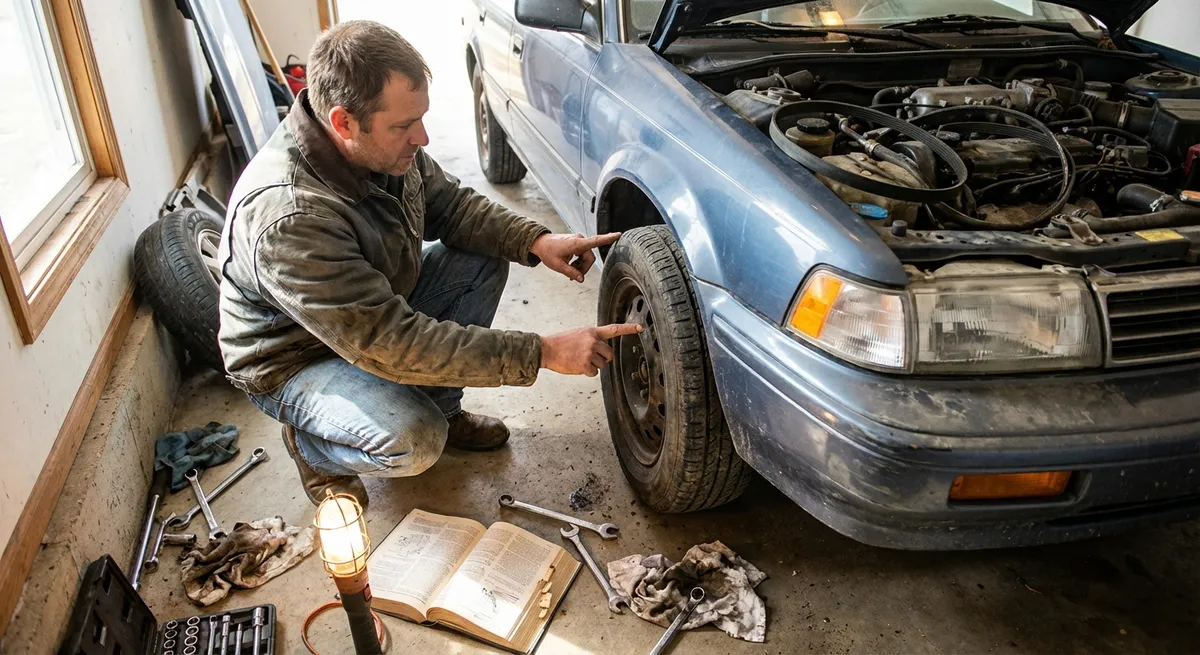
This guide focuses on practical, easy-to-spot signs any driver can watch for, plus what to actually do when you find them.
1. Tire Wear That Tells You How the Rest of the Car Is Doing
Your tires are often the first place real-world problems show up. Irregular wear is less about “bad tires” and more about what’s happening with alignment, suspension, or your driving habits.
Key patterns worth watching:
- Outer-edge wear: Common if you take corners aggressively or your alignment has too much positive camber. It can also mean you’re running underinflated tires.
- Inner-edge wear: Often linked to negative camber or worn suspension components (control arm bushings, ball joints) that let the wheel lean in.
- Center wear: Classic sign of overinflation—you’re riding too much on the center tread.
- Cupping or scalloping: Patchy “dips” around the tread usually suggest worn shocks or struts, letting the tire bounce instead of staying planted.
- Feathering: Tread blocks feel smoother on one side, sharp on the other. That often points to incorrect toe settings (alignment issue).
Actionable steps:
- Run your hand lightly across each tire’s tread (inside, center, outside) once a month.
- Compare what you see to diagrams from tire manufacturers or your owner’s manual.
- If you notice abnormal wear, don’t just rotate and forget—schedule an alignment and suspension inspection.
- Keep tire pressures at the factory-recommended psi (on the driver’s door jamb, not the tire sidewall).
Catching these patterns early can save a set of tires and reveal suspension problems before they become safety issues.
2. Brake Feel and Dust: Silent Warnings About Stopping Power
Brakes wear in ways you can feel, hear, and even see on your wheels. Most drivers wait for grinding noises; enthusiasts know the warning signs arrive long before that.
Signals worth paying attention to:
- Pedal feel changes:
- A pedal that feels mushier or longer can indicate air in the brake lines, moisture-contaminated fluid, or worn components.
- A firmer-than-normal pedal may show up with performance pads that need heat or sticky caliper slide pins.
- Pulling during braking: If the car pulls left or right under braking, you might have an unevenly worn pad, a sticking caliper, or a hydraulic issue.
- Visible pad thickness: Many calipers let you see the pad material without removing the wheel. When friction material is down to about 3–4 mm, it’s time to plan a pad replacement.
- Brake dust patterns:
- One front wheel consistently dustier than the other may indicate a sticking caliper or uneven pad wear.
- Sudden increase in dust after a pad change can simply mean a more aggressive pad compound, but pair that with noise or vibration and it’s worth checking.
- Vibration under braking: Usually points to warped rotors or uneven deposits on the rotor surface.
Actionable steps:
- When parked, safely look through the wheel spokes at your front brakes; note the pad thickness now so you can recognize changes later.
- Take a controlled test drive on a quiet road: do a few medium-pressure stops from 40–50 mph and focus on pedal feel, noise, and whether the car stays straight.
- Replace brake fluid on schedule (often every 2–3 years) even if it “looks fine”; moisture and heat break it down long before color tells the story.
- If you notice pulling, a soft pedal, or grinding, stop guessing and get a professional inspection—brakes aren’t a “wait and see” item.
3. Engine Bay Clues: Smells, Stains, and Sounds You Should Not Ignore
You don’t need to be a mechanic to spot early engine issues. A simple visual and sensory check once a month can surface leaks and problems long before warning lights appear.
What to look (and listen, and smell) for:
- Fluids under the car:
- Dark brown/black and slick: likely engine oil.
- Reddish or amber and oily: often transmission or power-steering fluid (if equipped).
- Bright green, orange, or pink and slightly sweet-smelling: likely coolant.
- Clear and odorless, near the passenger side front: usually condensation from the A/C—normal.
- Engine smells:
- Burning oil: oil leaking onto hot parts like the exhaust manifold.
- Sweet, syrupy smell: coolant leak or overheating.
- Sharp, chemical or acrid smell: may be overheated brakes, electrical issues, or a slipping belt.
- Unusual engine noises:
- Ticking that rises with RPM: could be low oil, valvetrain wear, or an exhaust leak near the manifold.
- Squealing at startup or with accessories on: often a worn or loose belt.
- Knocking under load: serious—can indicate detonation or internal engine issues.
- Hoses and belts: Look for cracks, glazing (shiny surfaces), bulges, or soft spots. Rubber should be firm but pliable, not brittle.
Actionable steps:
- After a drive, park and let the car idle with the hood open (if safe to do so), listening for new sounds and noting any smells.
- Once the engine is cool, inspect fluid levels using the dipsticks and reservoirs as described in your owner’s manual.
- Wipe up any spills or drips you see in the engine bay, then re-check the area in a day or two to identify active leaks.
- If you detect new smells, stains, or noises combined with a warning light or temperature rise, don’t keep driving “just to see”—get it checked quickly to avoid major damage.
4. Steering and Suspension Feel: How Your Car’s “Body Language” Changes
Suspension and steering don’t usually fail overnight—they degrade slowly. Enthusiasts who pay attention to how their car feels can catch worn parts long before they become dangerous or ruin tires.
Subtle changes worth noticing:
- Steering response:
- A “looser” or more vague feel on center, or needing small corrections to go straight, can indicate worn tie rods, steering rack issues, or alignment drift.
- Heavier-than-usual steering might mean low power-steering fluid (if hydraulic) or a failing electric power steering unit.
- Body motion over bumps:
- If the car bounces multiple times after a bump, your shocks or struts may be worn.
- Excessive dive under braking or squat under acceleration also points to weakened dampers.
- Noises over uneven roads:
- Clunks or thuds: often worn bushings, ball joints, or sway-bar links.
- Creaking or groaning: can be dry bushings or mounts needing replacement or lubrication.
- Uneven ride height: One corner sitting lower than the others can signal a tired spring, blown shock/strut, or even a damaged body mount.
Actionable steps:
- Drive a familiar route with known bumps and corners; pay attention to whether the car feels more “floaty” or less controlled than it used to.
- Perform the classic “bounce test”: push down firmly on each corner of the car and release. The body should rise and settle quickly, not continue bouncing.
- Have the suspension inspected whenever you install new tires or get an alignment—this is a natural checkpoint.
- Replace components in matched pairs (both front struts, both rear shocks, both lower control arms, etc.) to keep handling balanced.
5. Cabin Clues: HVAC, Smells, and Small Changes That Point to Bigger Issues
The inside of your car also provides useful maintenance signals—especially from the HVAC system, electronics, and interior surfaces. Ignore them, and you can end up with fogged windows, mold, or electrical headaches.
Important things to watch:
- HVAC performance:
- A/C blowing less cold than before can mean low refrigerant, a failing compressor, or a clogged condenser.
- Heat taking too long to come on may suggest a sticking thermostat or coolant flow issue.
- Musty or damp smells: Often a clogged cabin air filter or a blocked A/C evaporator drain. Moisture buildup can lead to mold and allergic reactions.
- Interior fogging: Persistent fogging, especially with a sweet smell, can indicate a heater core leak—coolant vapor entering the cabin.
- Dim or flickering interior lights: Possible signs of a weak battery, poor grounds, or charging-system issues.
- Window operation: Slower or noisy windows may mean motors or regulators are wearing, or window seals are drying out and causing extra drag.
Actionable steps:
- Replace the cabin air filter on schedule (or sooner if you drive in dusty or urban environments); it’s often a simple DIY job and keeps airflow strong and clean.
- Check the front passenger footwell carpet periodically—dampness can mean an A/C drain or heater core problem.
- If your defroster performance drops, clean the inside of the glass thoroughly and make sure the system is set to bring in fresh air, not recirculate, when clearing fog.
- Test all windows, locks, and key fob functions once in a while—small electrical glitches are easier to fix early than after they cascade into multiple failures.
Conclusion
Your car is constantly sending you information through how it rides, smells, sounds, and wears. When you treat wear patterns and small changes as early warnings—not annoyances—you turn maintenance into a proactive system rather than damage control.
Build a simple routine around:
- Periodic tire and brake checks
- Quick monthly engine bay inspections
- Paying attention to steering and suspension feel
- Watching HVAC performance and cabin clues
These habits don’t require special tools or deep mechanical knowledge, but they do pay off in longer component life, fewer surprise breakdowns, and a car that continues to feel tight, confident, and enjoyable to drive.
Sources
- National Highway Traffic Safety Administration (NHTSA) – Tire Maintenance – Government guidance on tire inflation, wear, and safety
- Tire Rack – Tire Wear Patterns – Detailed explanations and photos of common tire wear issues and what causes them
- Bridgestone – Brake System Basics – Overview of brake components, warning signs, and maintenance tips
- AAA – Vehicle Inspection Tips – Practical checklist for visual checks and early detection of common problems
- Environmental Protection Agency (EPA) – A/C and Refrigerants – Information on automotive A/C systems, refrigerants, and proper service practices