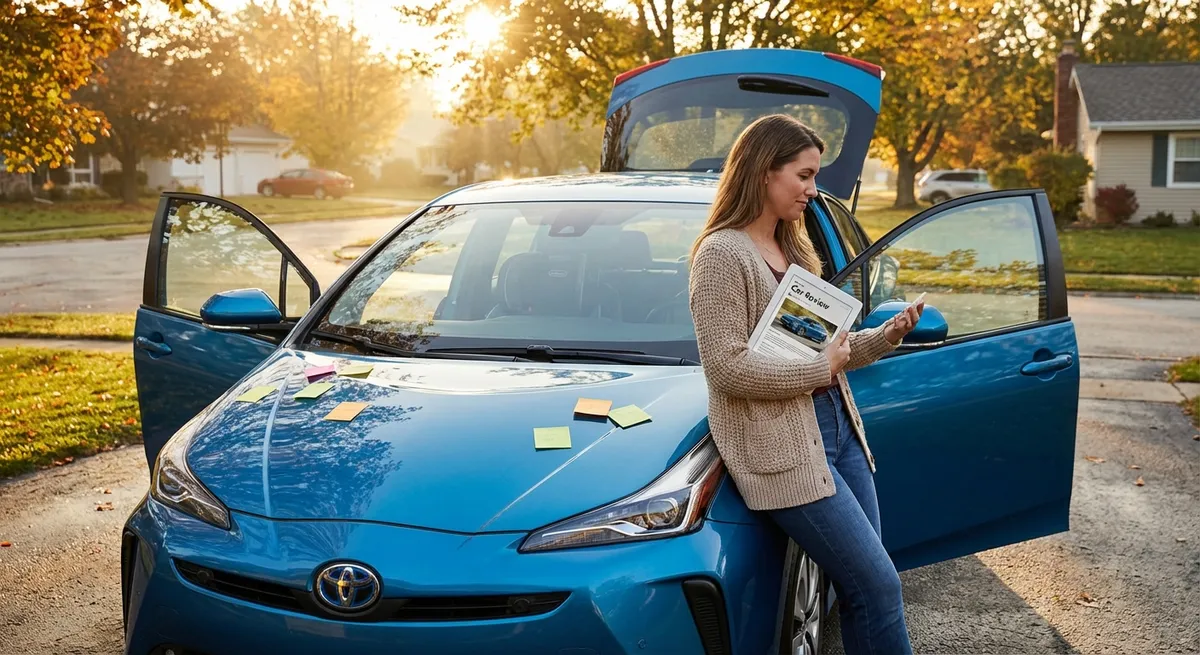
This guide focuses on how to use car reviews as a practical tool, not just entertainment. You’ll learn how to filter what matters, cross-check claims, and convert someone else’s road test into insights that actually fit your life—plus five clear actions you can take before you ever step into a showroom.
Focus on the Right Specs, Not All the Specs
Modern car reviews are packed with numbers: horsepower, 0–60 times, curb weight, cargo volume, braking distances. Helpful, but easy to misread if you’re not tracking what each figure really means for everyday driving.
For daily use, torque and transmission behavior often affect how “quick” a car feels more than peak horsepower does. A small turbo engine might look weak on paper but feel strong at low speeds where you spend most of your time. Pay attention to torque curves and how reviewers describe pull from low RPMs, not just headline power numbers.
Fuel economy ratings are another spec people skim. Instead of just scanning city/highway MPG, read how reviewers report real‑world fuel use. Mixed driving often gives a better indicator of what you’ll spend monthly. For EVs, the EPA range is a starting point, but reviews that mention highway range, cold‑weather performance, and charging consistency are more revealing.
Cargo and interior dimensions can be misleading too. A trunk with a big volume number might have an awkward shape that doesn’t fit strollers or bulky gear. When reviews mention “usable space,” split-folding seats, and loading height, those details typically matter more than a few extra liters on the spec sheet.
Actionable point #1: Make a short spec checklist tied to your life (commute length, highway vs. city ratio, family size, gear you carry). When reading any review, only highlight specs that affect those real scenarios and ignore the rest.
Read Beyond the Star Rating and Headlines
Star ratings and bold summary quotes are designed to be shareable and catchy, not comprehensive. “Fun to drive,” “refined,” “loud,” or “uncomfortable” are often subjective, and their meaning can vary widely between reviewers.
Start with the “pros and cons” section, but then dig into the reviewer’s explanation. If they say “firm ride,” look for context: is it jarring on broken city streets, or just taut compared with a soft crossover? If road noise is mentioned, check at what speed and on what surfaces—it’s a different story if the complaint is at 80 mph on coarse concrete vs. 50 mph around town.
Look closely at what the reviewer actually tested. Was it a fully loaded trim with big wheels and low‑profile tires, or a base model close to what you’d buy? Expensive options can drastically change ride comfort, handling, and even cabin noise. If your budget is closer to the entry trim, prioritize reviews that cover that configuration.
Also, note whether the review is a quick first drive or a long‑term test. First drives capture early impressions, often on curated routes. Long‑term tests and ownership reports reveal issues like seat comfort over time, infotainment glitches, interior wear, and fuel economy that settles in after thousands of miles.
Actionable point #2: When you read a review, write down three “pros” and three “cons” that are described with specific situations (speed, road type, trim level), not just opinions. Build your own comparison list across models using only these situation-tied notes.
Use Multiple Sources to Triangulate the Truth
No single review can give the whole picture. Different outlets use different test routes, tire brands, or even different fuel grades. Add in personal preference and you can see why impressions vary so much.
Start with one or two major outlets known for standardized testing—those that measure braking distances, acceleration, and fuel use under consistent conditions. These benchmarks help you compare models more fairly, especially within a crowded segment like compact SUVs or midsize sedans.
Next, layer in owner feedback from forums, user review sections, and brand‑agnostic communities. The tone can be mixed, but you’ll often see patterns: consistent mentions of transmission quirks, adaptive cruise behavior, or infotainment slowdowns that professional reviews might gloss over after a short test period.
Pay attention to reviews from different climates. A car praised in warm, dry regions might struggle in cold or snowy conditions, especially when it comes to EV range, battery preconditioning, defroster efficiency, and traction control tuning. Regional perspectives give clues about how a model handles the specific weather you deal with.
Actionable point #3: Pick at least three different review types for any car you’re serious about: one major publication, one long‑term or ownership report, and one forum/owner thread. Only trust a “deal-breaker” complaint if it appears across at least two of these sources.
Turn Review Notes into a Personalized Test-Drive Script
Many people step into a test drive and just “go for a spin” without a plan, then leave unsure how they actually feel. Reviews can solve this by giving you a checklist of things to try and questions to answer in your own drive.
If multiple reviewers mention a firm ride, deliberately drive over rough patches, speed bumps, and expansion joints during your test. If wind noise is noted, take the car on a highway section you know well and compare to your current car’s noise level. Link each reviewer’s comments to something you can reproduce, not just think about.
Seat comfort is another big one. When reviews talk about “supportive but firm” or “lack of lower back support,” don’t just sit for two minutes at the dealer. Take the longest test drive they’ll allow, adjust the seat several times, and notice how you feel at the end—especially lower back, legs, and neck.
Use reviews to target specific features: test voice commands the same way reviewers did, connect your own phone to the infotainment system, and check how many steps it takes to adjust climate, drive modes, or driver aids. If a review says “the system is buried in menus,” see whether that bothers you personally.
Actionable point #4: Before visiting a dealer, create a one‑page test‑drive “script” pulled directly from reviews—three things to feel (ride, noise, steering), three features to test (infotainment tasks, driver assists, phone integration), and one longer loop that mirrors your daily driving. Bring it with you.
Match Review Scenarios to How You Actually Drive
Reviews often include mountain roads, winding backroads, or high‑speed European highways that don’t look anything like your daily routine. That doesn’t make them useless—you just have to translate.
When a reviewer praises “high-speed stability,” think about whether you frequently drive at 70–80 mph on open highways. If not, that strength might not matter as much as low‑speed maneuverability or parking ease. On the flip side, if your commute involves long highway stretches, high‑speed confidence and lane‑keeping performance should be near the top of your list.
Similarly, a car described as “nimble and fun” might require more driver attention—great on backroads, tiring in stop‑and‑go traffic. If you’re mostly in city congestion, reviews that mention smooth low‑speed response, easy visibility, light steering, and comfortable seats in traffic are more relevant indicators of long‑term satisfaction.
Towing and load‑carrying are another area where context matters. If a reviewer says “adequate power when loaded,” look for details: Was it a full cabin and luggage, or towing near the maximum rating? If you camp, haul tools, or tow regularly, prioritize detailed towing impressions rather than general performance comments.
Actionable point #5: Write down your top three common driving situations (for example: 40‑minute highway commute, urban parking garage, weekend family trips). While reading any review, only highlight comments that clearly relate to one of those three scenarios, and ignore everything else.
Conclusion
Car reviews can either be noise—or one of the most useful tools you have before spending thousands on a vehicle. The difference comes from how you read them. When you focus on the specs that matter to your life, dig past the headlines, cross‑check multiple sources, convert notes into a structured test drive, and filter everything through your own driving reality, you turn other people’s experiences into a powerful shortcut.
Instead of asking “Is this a good car?”, you’ll start asking, “Is this car good for the way I drive?” That shift is where smarter, more confident, and longer‑lasting car decisions come from.
Sources
- [Consumer Reports – How to Test-Drive a Car](https://www.consumerreports.org/cars/buying-a-car/how-to-test-drive-a-car-a6317333355/) - Practical guidance on planning and executing an effective test drive
- [U.S. Department of Energy – Fuel Economy Guide](https://www.fueleconomy.gov/feg/findacar.shtml) - Official fuel economy data and tools to compare real-world fuel costs
- [Edmunds – How We Test Cars](https://www.edmunds.com/car-reviews/how-we-test-cars.html) - Explains standardized procedures behind professional car reviews and ratings
- [Car and Driver – Testing Explained](https://www.caranddriver.com/features/a15132206/car-and-driver-test-procedures) - Detailed breakdown of automotive performance and handling tests
- [IIHS – Vehicle Ratings](https://www.iihs.org/ratings) - Independent crash-test and safety ratings to complement review impressions on safety features