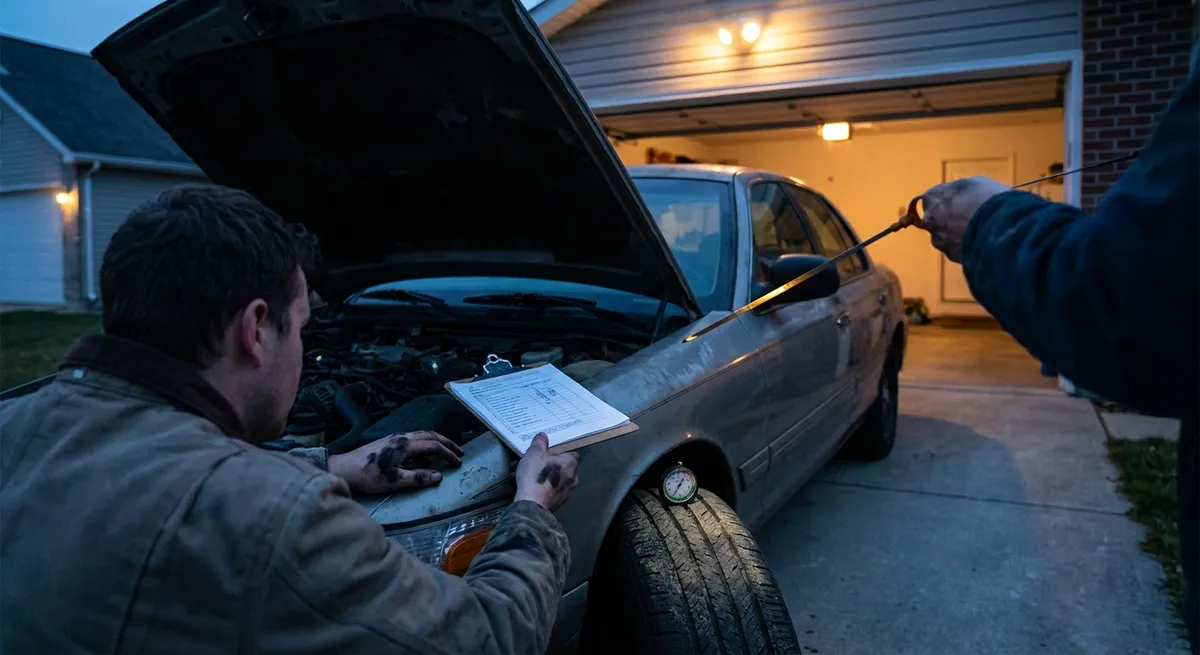
This guide focuses on practical, repeatable maintenance moves that any car owner can build into their routine. Each point is something you can either do yourself with basic tools or request precisely from a trusted shop—so you keep control of cost, safety, and how your car actually feels to drive.
Make Fluid Checks a Ritual, Not an Afterthought
Fluids are your car’s blood and nerves: engine oil, coolant, brake fluid, power steering fluid (if not electric), transmission fluid, and windshield washer fluid. The owner’s manual lists service intervals, but in real life, conditions like heavy traffic, short trips, towing, and hot or cold climates can shorten those intervals. That’s why a visual check matters as much as mileage.
At least once a month—or before any long trip—check engine oil level with the dipstick on a cold, level surface. Look not just at the level but also at the color and smell: gritty, very dark, or burnt-smelling oil may need earlier replacement. Inspect coolant in the reservoir (never open a hot radiator), verifying that the level sits between the “min” and “max” marks and that the fluid is clear, not rusty or sludgy. Brake fluid should be light to medium amber; dark fluid can signal moisture contamination and is worth flushing. For cars with a transmission dipstick, check color and odor: healthy fluid is usually red or pink and not burnt; brown, dark, or metallic-smelling fluid can hint at internal wear.
Treat these visual checks as early-warning systems, not just chores. If you notice a slow oil loss, a coolant level that drops between checks, or sudden changes in fluid appearance, you’ve bought yourself a chance to fix a problem while it’s still small—like a seeping gasket or hose—rather than waiting for an overheated engine or failed transmission.
Actionable move #1:
Create a monthly “fluid check” reminder on your phone, and log approximate mileage and anything unusual you see. Bring that log to your mechanic so conversations start with data, not guesswork.
Use Tire Management to Protect Safety and Fuel Economy
Tires quietly dictate how your car accelerates, steers, stops, and rides. Even powerful engines and advanced brakes can’t work properly if the tires are underinflated, worn, or uneven. Modern cars with TPMS (tire pressure monitoring systems) only alert you when pressure falls significantly; they’re not a substitute for a gauge.
Check tire pressure at least once a month and before highway trips, using a quality digital or dial gauge. Set pressure to the values on the driver’s door jamb sticker, not the “max” printed on the tire sidewall. Cold weather can drop pressure several PSI, while heat can raise it; small adjustments keep handling predictable and fuel economy optimized. While checking pressure, visually inspect each tire for sidewall bubbles, cracks, exposed cords, or embedded nails and screws. Run your hand lightly over the tread (when the tire is cool and the car is off) to feel for uneven wear—cupping, inside-edge wear, or center-only wear often signal misalignment, bad shocks, or incorrect pressure.
Rotate your tires at the interval recommended in the manual (commonly 5,000–8,000 miles), ideally aligned with oil changes so it’s easier to remember. Tire rotation evens out wear across all four corners and can extend tire life dramatically. Ask the shop to measure and note tread depth by tire position; that way, you can see how evenly they’re wearing and spot alignment issues early.
Actionable move #2:
Pair every oil change with a tire pressure check and rotation request. Keep a simple note on your phone with tread depths and rotation dates so you can plan replacement before you’re down to unsafe levels.
Listen and Smell: Use Your Senses as Diagnostic Tools
Your senses often detect a problem before a warning light does. Most cars develop a “normal” soundtrack and smell profile—once you know it, changes stand out. Ignoring new noises or odors is one of the fastest ways to turn a small issue into something expensive.
Pay attention to when a sound occurs: only when turning, only under braking, during cold starts, or at highway speeds. A rhythmic thumping that changes with speed can indicate a tire issue or flat spot; a metallic scraping during braking may mean worn pads or a stuck caliper; a high-pitched chirp at startup often points to a worn accessory belt or tensioner. Likewise, a sweet, syrupy smell can suggest a coolant leak; a strong fuel odor may indicate a fuel system or vapor leak; a rotten-egg smell under load may be a failing catalytic converter; and a hot, burning odor after driving could signal oil dripping on a hot surface or dragging brakes.
Don’t just describe noises as “weird” to your mechanic—be specific about circumstances: speed, temperature, steering angle, gear, and whether it happens on bumps or smooth roads. Even a quick 10-second voice note on your phone after you hear something unusual can capture details you’ll forget later. When possible, record the sound or show the shop exactly when and where you notice a smell.
Actionable move #3:
The moment you notice a new noise or smell, record a short note or audio/video clip on your phone, including speed, temperature, and driving condition. Share that context with your mechanic; it shortens diagnosis time and reduces “guess repairs.”
Treat the Electrical System as a Wear Item, Not a Mystery
Modern vehicles depend heavily on a healthy electrical system; weak batteries and poor grounds can cause strange, intermittent issues that look like sensor or computer faults. Many owners don’t think about the battery until the day the car won’t start, but batteries have a typical lifespan of 3–5 years depending on climate and usage.
Check the age of your battery by looking for the date code label on top or the side. If your battery is over three years old—especially in regions with extreme heat or cold—ask your shop to perform a load test during routine service. Inspect battery terminals occasionally for white or bluish corrosion, and ensure terminals are tight. Corrosion increases resistance and can cause dim lights, slow cranking, or random electronics glitches. A simple baking soda and water mixture, plus a dedicated battery terminal brush, can clean terminals at home, as long as you wear eye protection and gloves and disconnect the negative terminal first.
Also pay attention to electrical “micro-symptoms”: flickering interior lights, the radio resetting, slow window operation, or the instrument cluster behaving erratically. These can suggest low voltage conditions, alternator issues, or bad grounds. Scan for parasitic drains if the battery dies after the car sits a day or two; common culprits include aftermarket accessories wired poorly, sticking relays, or modules that don’t go to sleep.
Actionable move #4:
Make a note of your battery’s installation date and add a recurring yearly reminder starting at year three to get it tested under load, ideally before seasonal temperature extremes.
Keep Undercar and Brake Inspections Part of Your Routine
Many owners rarely see the underside of their car, which is where critical components live: suspension, steering links, exhaust, brakes, and fuel and brake lines. Even if you don’t wrench yourself, you can make undercar inspections a regular, non-negotiable part of professional service. This is especially important in regions with road salt, high humidity, or rough roads.
At least once a year—ideally during a tire rotation or alignment—ask the shop to inspect suspension bushings, ball joints, tie-rod ends, shocks/struts, and the exhaust system. Worn suspension parts can cause vague steering, uneven tire wear, clunks over bumps, and longer stopping distances. Leaking shocks or struts won’t always trigger a warning light, but they significantly affect handling and braking stability. Similarly, rusted or pitted brake lines and fuel lines can create future failure risks, especially in older or high-mileage vehicles.
For brakes, don’t wait for noise. Ask for actual measurements: pad thickness (in mm), rotor thickness, and condition (scoring, warping, rust lip). Having numbers lets you plan: pads at 7–8 mm may be fine for another year, while 3–4 mm means you should budget for replacement soon. This approach also discourages unnecessary upsells or vague “your brakes are bad” claims.
Actionable move #5:
During any visit that involves lifting the car (tire rotation, alignment, or oil change), explicitly request a written or photo-based undercar and brake inspection, including measured pad thickness and any rust or leak observations.
Conclusion
Durable, trustworthy cars aren’t just built; they’re maintained with consistent, low-effort habits that catch problems early. Routine fluid checks, thoughtful tire management, attentive listening and smelling, proactive electrical care, and regular undercar inspections turn maintenance from surprise bills into planned decisions. None of these require advanced mechanical skill—only a bit of structure and curiosity about how your car behaves.
Over time, these habits do more than prevent breakdowns; they keep your car feeling tight, responsive, and “honest” about its condition. That means safer drives, fewer emergencies, and more control over when and how you spend money on your vehicle.
Sources
- NHTSA – Vehicle Maintenance Resources – U.S. government safety guidance on key maintenance items like tires, brakes, and inspections
- U.S. Department of Energy – Fuel Economy and Maintenance – Explains how proper tire inflation and regular maintenance impact efficiency and operating costs
- Bridgestone – Tire Tread Depth & Safety – Detailed information on tread depth, wear patterns, and when to replace tires
- AAA – Car Battery Care and Replacement – Practical advice on battery life expectancy, testing, and failure signs
- Car Care Council – Service Interval and Inspection Tips – Consumer-focused overview of what to inspect and when for common vehicle systems