This guide walks through five practical, often-overlooked maintenance moves that keep your car feeling tight, predictable, and trustworthy. Each one is simple, but together they make a noticeable difference in how your car drives and how long key components last.
Point 1: Track Your Fluids Like a System, Not One-Off Tasks
Most owners think “oil change” and stop there. Enthusiasts know the car is a fluid ecosystem: engine, transmission, brakes, cooling system, steering, and sometimes differentials and transfer cases. Letting one part of that system degrade quietly stresses everything else.
Instead of treating each fluid as an isolated task, build a simple “fluid map” for your car:
- Engine oil – Check level monthly and before long trips. Look at color and smell: very dark, gritty oil or a burnt smell can signal overdue changes or overheating.
- Coolant – Inspect expansion tank level and color. Cloudy, rusty, or oily coolant points to internal problems like corrosion or gasket issues. Top up only with the correct type (OAT, HOAT, etc.) stated in your manual—mixing types can reduce corrosion protection.
- Brake fluid – Even if the level is fine, fluid absorbs moisture over time, lowering boiling point and corroding internal components. Most manufacturers recommend flushing every 2–3 years regardless of mileage.
- Automatic transmission or DCT fluid – If serviceable, don’t wait for harsh shifting or slipping. Follow time/mileage intervals even if the car “shifts fine.” Preventive changes are far cheaper than a rebuild.
- Power steering fluid (if hydraulic) – Dark or metallic-looking fluid hints at pump or rack wear. Fresh fluid can quiet whining pumps and extend seal life.
Action step: Create a simple spreadsheet or note with each fluid, capacity, recommended change interval (time and miles), and last service date. Review it twice a year. Thinking in systems turns “random maintenance” into a deliberate plan, which is exactly how you avoid sudden big bills.
Point 2: Protect Suspension and Steering Before It Feels Loose
Most drivers only notice suspension wear when the ride gets harsh, the car starts wandering, or tires wear oddly. By that point, you’re not just replacing one part—you’re chasing a chain of problems.
Instead, scan your suspension and steering proactively:
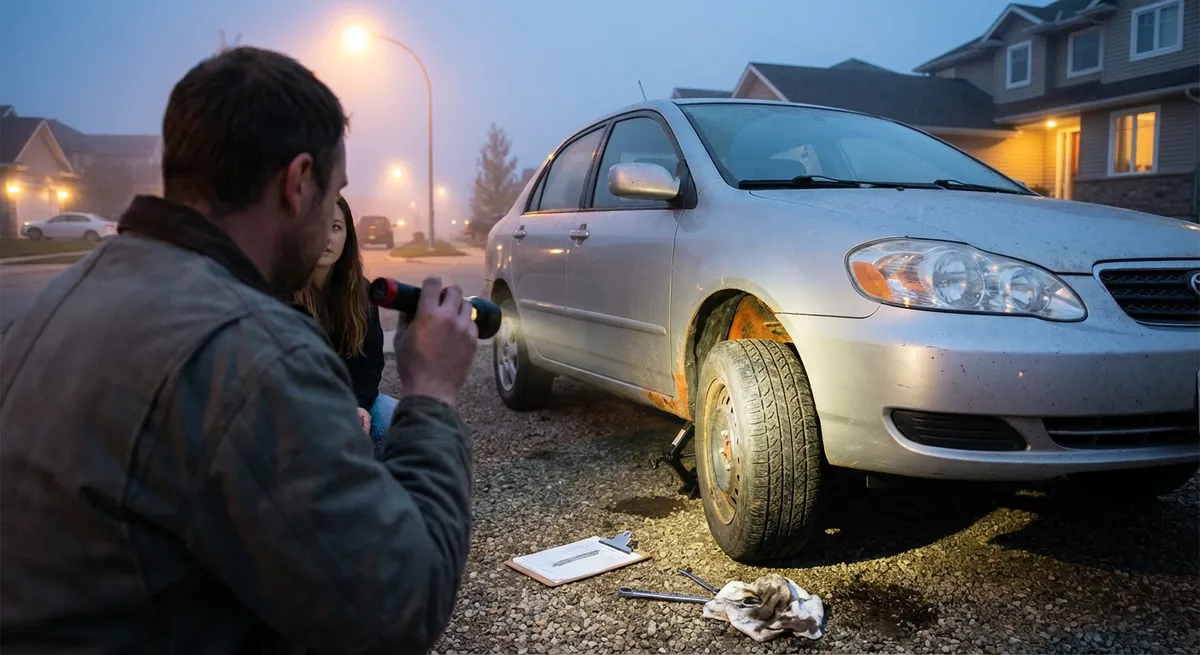
- Look for rubber fatigue – Bushings, control arm mounts, and sway bar links crack and soften before they fail. A flashlight inspection during tire rotations can reveal early cracking, torn boots, or leaking shocks.
- Listen over low-speed bumps – Clunks, creaks, or “hollow” noises in parking lots or over speed bumps often indicate worn sway bar links, strut mounts, or control arm bushings.
- Check steering response – With the car parked, turn the wheel slightly left-right. Excess free play, clunks, or delayed wheel movement can hint at tie rod or rack issues.
- Don’t ignore uneven tire wear – Feathered edges, cupping, or inner shoulder wear almost always trace back to alignment, worn shocks/struts, or bushings—not just “cheap tires.”
Action step: At least once a year, ask for a suspension and steering inspection plus alignment check together, not separately. Doing this when you install new tires is ideal. Catching a $40 sway bar link or $100 bushing early is much cheaper than letting it ruin a full set of tires and overwork your shocks.
Point 3: Treat Your Battery and Electrical System as Critical Infrastructure
Modern cars are rolling networks of computers. A battery that “still starts the car” can still be weak enough to cause intermittent issues: random warning lights, glitchy infotainment, failed sensor calibrations, or hard shifting in electronically controlled transmissions.
Most owners only replace the battery when it dies. That’s risky with feature-heavy vehicles.
Add a few preventative habits:
- Voltage and health checks – Many auto parts stores can load-test your battery for free. Do this once a year after the battery hits the 3-year mark, or before winter in colder climates.
- Inspect and clean terminals – Corrosion builds resistance, which starves modules of clean power. A simple brush, baking soda and water mix, and dielectric grease can restore proper contact.
- Protect from deep discharges – Regularly draining the battery (short trips only, always key-on accessories, sitting for long periods) shortens its life. Use a battery maintainer if the car sits for more than a couple of weeks.
- Check grounds and visible wiring – Loose ground straps or damaged harness insulation can mimic sensor failures. A quick under-hood inspection for loose cables or chafed wires is time well spent.
Action step: Treat the battery like a 4–5 year wear item even if it still “works.” Proactive replacement reduces the chance of being stranded and protects sensitive electronics from low-voltage misbehavior.
Point 4: Keep Airflow and Filtration at Peak Efficiency
Air and filtration don’t get the same attention as oil, but they quietly control how hard your engine, HVAC system, and even your fuel system have to work.
Key areas to stay ahead of:
- Engine air filter – A clogged filter forces the engine to work harder to draw air, which can reduce performance and fuel economy. Don’t just go by mileage—inspect visually. Dusty climates and city driving clog filters faster than highway use.
- Cabin air filter – A neglected cabin filter strains the blower motor, reduces HVAC performance, and can even lead to fogged windows because airflow is restricted. If it smells musty or looks dark and debris-filled, replace it.
- Mass airflow (MAF) sensor – If your car has one, a lightly contaminated sensor can cause rough idle, poor fuel economy, or lazy throttle response. Use only MAF-safe cleaner as needed—never touch the sensor element.
- PCV (Positive Crankcase Ventilation) system – Clogged PCV valves and hoses can increase oil consumption, foul intake tracts, and throw off mixture control. Many PCV systems have recommended inspection or replacement intervals.
Action step: Pair air filter and cabin filter inspections with every oil change or at least every other one. For enthusiasts, add a PCV system and MAF sensor check to your annual maintenance ritual. Clean airflow helps the car feel more responsive and protects internal components from contamination.
Point 5: Read Your Tires Like a Report Card, Not Just a Wear Item
Tires are more than rubber—they’re the most honest status report on how the rest of your car is doing. Instead of only checking tread depth, learn to read wear patterns, heat, and age.
Pay attention to:
- Tread depth across the tire – Use a simple gauge or a coin at multiple points. More wear on the inside or outside shoulders points to alignment, camber, or suspension issues.
- Cupping or scalloping – This “wavy” pattern often indicates worn shocks/struts or unbalanced wheels. The tire is bouncing instead of rolling smoothly.
- Feathering – A smooth feel in one direction and sharp in the other typically means improper toe settings or worn steering components.
- Sidewall condition and age – Cracks or dryness in the sidewall and tread blocks suggest aging rubber, even if tread depth looks acceptable. Most manufacturers recommend replacing tires around 6–10 years from the date code, regardless of tread.
- Heat and pressure trends – Regularly check pressures when cold. If one tire consistently loses more air, you may have a slow leak or rim issue. Underinflation leads to heat buildup, which accelerates wear and can risk failure.
Action step: Build a habit of doing a slow tire walk-around once a month: check pressures, look for unusual wear, and inspect sidewalls. When you spot a pattern on one tire, you’re often catching an early suspension, alignment, or wheel issue that would have become a much more expensive problem later.
Conclusion
Cars rarely fail from one big event; they wear down from small, ignored signals. When you think beyond the basics and give a “second look” to fluids, suspension, electrical health, airflow, and tire behavior, you’re not just maintaining a machine—you’re managing a system.
These five habits don’t require special tools or race-shop skills. They require attention, a bit of structure, and the willingness to inspect before something feels obviously wrong. Do that consistently, and your car will feel tighter for longer, cost less to keep on the road, and reward you with the kind of reliability that isn’t luck—it’s the result of smart, quiet maintenance.
Sources
- [U.S. Department of Energy – Fuel Economy: Maintenance](https://www.fueleconomy.gov/feg/maintain.jsp) – Explains how proper maintenance (fluids, filters, tires) affects efficiency and longevity
- [National Highway Traffic Safety Administration (NHTSA) – Tire Safety](https://www.nhtsa.gov/equipment/tires) – Covers tire aging, pressure, and wear patterns and their impact on safety
- [AAA – Vehicle Maintenance Checklist](https://exchange.aaa.com/automotive/maintenance/vehicle-care/) – Provides recommended service intervals and key components to monitor
- [Bridgestone – Understanding Tire Wear Patterns](https://www.bridgestonetire.com/learn/maintenance/tire-wear/) – Breaks down what different tread wear patterns say about alignment and suspension
- [Interstate Batteries – Battery Testing and Replacement Guidelines](https://www.interstatebatteries.com/resources/battery-care/when-to-replace-a-car-battery) – Details battery lifespan, testing methods, and signs of declining performance