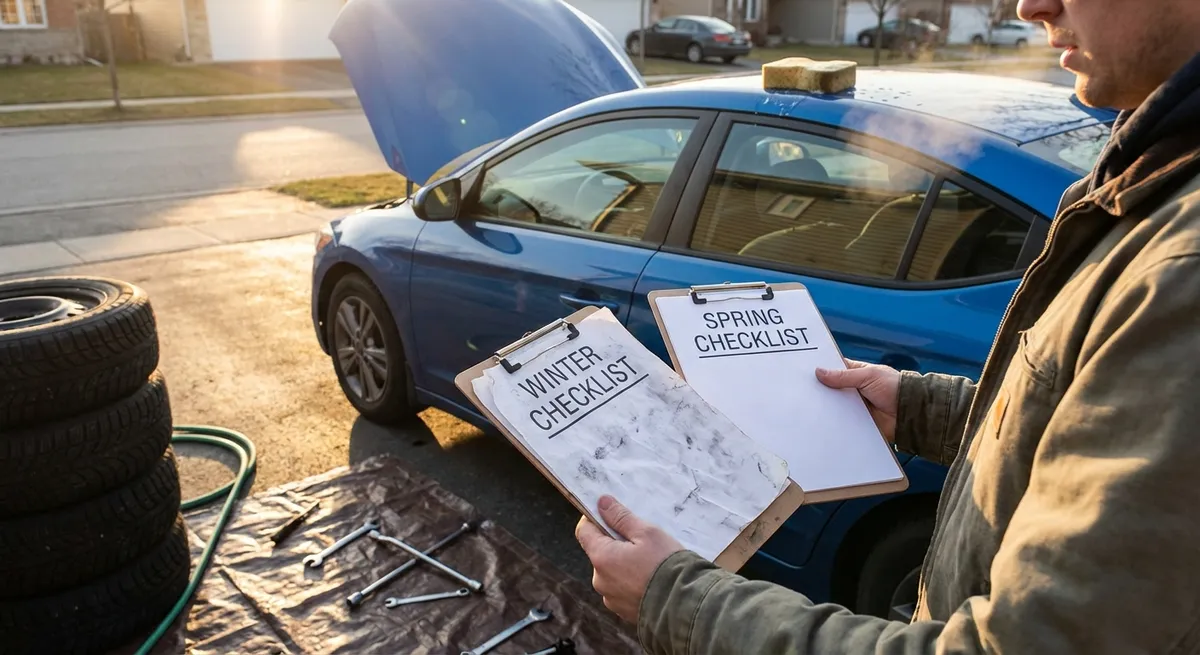
This seasonal game plan breaks maintenance into five practical, actionable habits you can follow through spring, summer, fall, and winter. It’s built for everyday drivers who still care about how their car feels, sounds, and survives the long haul.
Build a Seasonal Inspection Loop (So Nothing Sneaks Up on You)
A consistent, seasonal inspection is one of the most powerful habits you can build—even if you’re not a “car person.”
Use the start of each season (or every 3 months) as a reminder to do the same quick loop around your vehicle:
- Walk-around check: Look for uneven tire wear, sidewall cracks, loose trim, fogged or cracked headlights, and chips in the windshield before they turn into bigger issues.
- Under-hood glance: With the engine off and cool, visually check belts for cracks, hoses for bulges or leaks, and fluid reservoirs (coolant, brake, washer, power steering if applicable) for low levels or discoloration.
- Cabin health: Confirm all lights (headlights, high beams, indicators, reverse, brake lights) work, and test horn, wipers, and washer spray pattern. Replace wiper blades that streak or chatter—especially before rainy or snowy seasons.
- Brakes feel check: During a short drive, pay attention to pedal feel and response—spongy, pulsing, or noisy brakes are early warning signs you shouldn’t ignore.
- Service interval reset: At the start of each season, compare your odometer and months since last major service to your owner’s manual schedule, not just the dash reminder.
By repeating this loop every season, minor issues (like a tiny coolant leak or a weak battery) are far more likely to be caught before they turn into a breakdown on the side of the road.
Match Fluids to Climate and Driving Style
Fluids behave differently in summer heat and winter cold, and they wear out faster when the car is driven hard, tows, or sits in traffic. Matching fluid choices and intervals to your reality can add years of reliable life to your engine, transmission, and brakes.
- Engine oil:
- Follow the viscosity and specification in your owner’s manual—modern engines are sensitive to the wrong oil.
- In very hot climates or frequent towing/spirited driving, check if your manual allows a heavier grade or “severe service” intervals; that may mean more frequent changes.
- Coolant/antifreeze:
- Verify the coolant’s freeze/boil protection before summer and winter using a simple tester, especially in regions with temperature extremes.
- Never mix random coolants; stick to the type your manufacturer specifies, and change it at the recommended interval to maintain corrosion protection.
- Brake fluid:
- Brake fluid absorbs moisture over time, which lowers its boiling point and can lead to fade or internal corrosion.
- Even if the car “feels fine,” replacing brake fluid every 2–3 years (or as recommended) is cheap insurance, especially for heavy city driving or hilly regions.
- Transmission and differential fluid:
- For automatic and dual-clutch gearboxes, follow official intervals religiously—heat and stop‑start traffic accelerate breakdown of fluid.
- Enthusiastic driving or frequent towing? Consider following the “severe duty” schedule if your manual lists one.
Set a note in your phone for each fluid’s next due date or mileage so fluids become a plan, not a surprise.
Protect Tires and Alignment Through Every Season
Tires are where all your power, braking, and safety systems meet the road. Treat them as consumables you actively manage, not just objects you replace when bald.
Here’s a year‑round, practical approach:
- Pressure checks once a month (and before road trips):
- Check when tires are cold and set pressures to your door‑jamb sticker, not the sidewall number.
- Expect pressure to drop about 1 psi for every 10°F drop in temperature—fall and early winter are prime times to recheck.
- Rotate tires at 5,000–7,500 miles:
- Do it at least every oil change; more often if you’re running performance tires or notice uneven wear.
- Consistent rotation prolongs tire life, keeps handling predictable, and maximizes traction season to season.
- Seasonal tire choice (where applicable):
- In snowy regions, consider true winter tires instead of relying on “all-season” labels. Swap in late fall and out in early spring to avoid accelerated wear.
- Protect your alignment:
- After a hard hit (pothole, curb contact) or if you notice pulling, off-center steering, or scalloped wear, schedule an alignment check.
- Checking alignment at least once a year is smart if you drive on rough roads or run aggressive wheel setups.
The payoff: better grip in bad weather, quieter ride, improved fuel economy, and more predictable emergency maneuvers.
Defend Your Car’s Exterior and Undercarriage From the Elements
Cosmetic care is about more than looks—paint, seals, and the underbody protect metal and electronics from corrosion. Seasonal conditions can quietly destroy a car from the outside in if you ignore them.
Focus on a few key defenses:
- Wash schedule:
- In winter or coastal areas, wash more often to remove road salt or salt air; target the underbody and wheel wells.
- After pollen season or heavy tree sap exposure, wash promptly—these contaminants can etch into paint.
- Protective layers:
- Apply a quality wax or paint sealant a couple of times per year (spring and fall are great anchors). It adds UV and contaminant protection and makes future washes easier.
- For harsh climates or long highway driving, consider a ceramic coating or paint protection film in high-impact areas (front bumper, hood edge, door cups).
- Weather seals and trim:
- Clean and condition rubber door seals once or twice a year to prevent sticking, squeaking, and water intrusion.
- Inspect plastic cowls and grommets around the windshield and under the hood for cracks or gaps that could let water reach electronics.
- Rust prevention in road-salt regions:
- Use regular underbody rinses in winter. Consider a professional rustproofing or undercoating treatment if you plan to keep the vehicle long-term.
- Inspect drainage points (sunroof drains, door drains, trunk channels) to ensure water can escape.
Treat the body like armor—if it’s compromised, expensive components underneath become vulnerable.
Use Cabin Health as an Early-Warning System
The cabin isn’t just about comfort; it’s a sensor suite for what’s going on inside the car. Strange smells, sounds, and airflow changes are often early hints that something mechanical needs attention.
Make these habits part of your routine:
- Cabin air filter checks 1–2 times a year:
- Reduced airflow, lingering odors, and a constantly foggy windshield are common signs of a clogged cabin filter.
- Replace before high‑pollen season or before winter, when you rely heavily on defrost and heat.
- Listen for new noises:
- Seasonal temperature shifts can bring out new rattles, squeaks, or groans. Note when they happen (cold start, turning, braking) and mention that when you talk to a mechanic.
- Smell as a diagnostic tool:
- Sweet, syrupy smell: possible coolant leak.
- Burnt oil or rubber: potential fluid leak onto hot components.
- Musty/moldy A/C smell: bacteria or mildew in the HVAC system; may need a cabin disinfectant service or evaporator cleaning.
- Fogging and moisture:
- Persistent interior moisture or fogging can signal a bad door seal, clogged sunroof drain, or early heater core issue—especially in cold months.
- Electronics behavior:
- Flickering screens, dim interior lights, or erratic accessory behavior can hint at a weak battery or charging issue. Pay extra attention before extreme hot or cold seasons, which stress batteries.
By treating your senses—sight, sound, and smell—as diagnostic tools, you’ll often catch problems before they trigger a warning light or leave you stranded.
Conclusion
Seasonal maintenance isn’t about turning you into a full-time mechanic. It’s about using natural points in the year to run the same smart checks, make a few targeted adjustments, and keep your car ready for whatever the next few months bring.
If you build just these five habits—seasonal inspections, climate‑aware fluid care, intentional tire management, exterior protection, and cabin‑based diagnostics—you’ll drive a car that feels better, lasts longer, and is far less likely to surprise you in the worst conditions. Over time, this becomes less “maintenance” and more a simple, repeatable rhythm that keeps your car genuinely Auto Ready.
Sources
- National Highway Traffic Safety Administration – Vehicle Maintenance - Federal guidance on basic vehicle maintenance and safety-related checks
- AAA – Car Care Resources - Practical maintenance tips, seasonal prep advice, and tire care information
- U.S. Department of Energy – Fuel Economy: Keeping Your Car in Shape - Explains how proper maintenance (tires, fluids, tune-ups) affects efficiency and longevity
- Bridgestone Tires – Tire Maintenance Guide - Detailed information on tire pressure, rotation, alignment, and seasonal considerations
- Penn State Extension – Winter Vehicle Maintenance - Covers cold-weather-specific vehicle care, fluids, and corrosion prevention