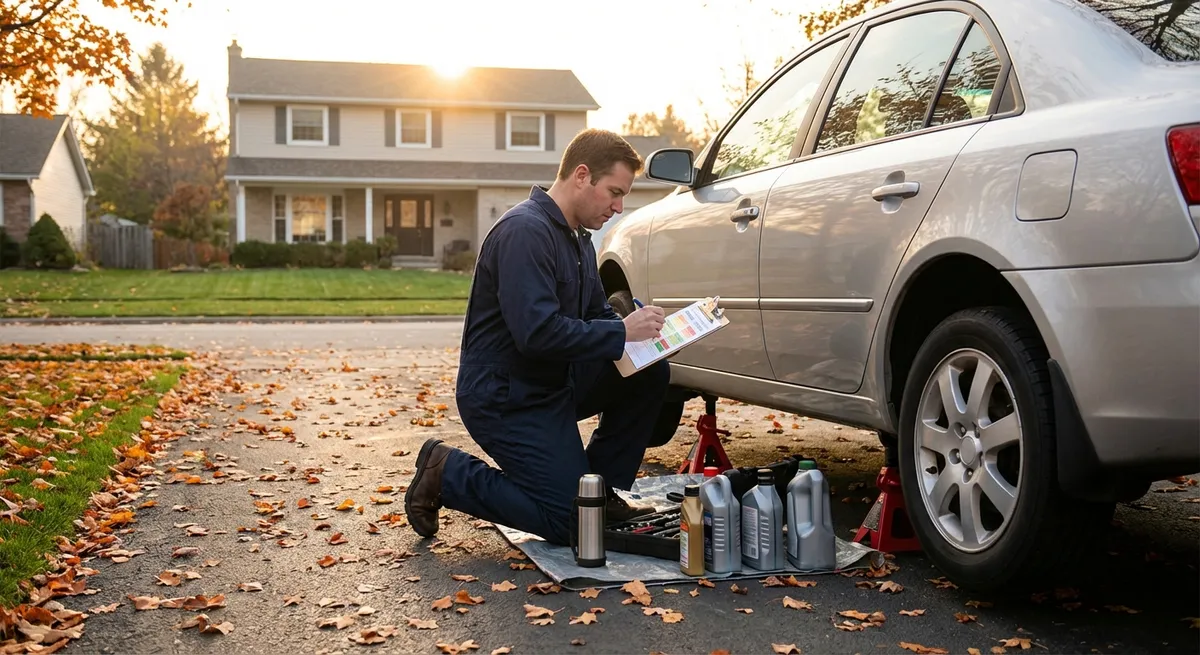
Below is a practical, enthusiast‑friendly framework built around five maintenance actions that matter all year, with clear details on what to do and how often to check them.
1. Build a Fluid Health Routine, Not Just an Oil Change Habit
Most people think “oil change” and stop there. Your engine and drivetrain rely on a full ecosystem of fluids that quietly age, oxidize, and collect contaminants over time.
Start by treating oil changes as a chance to do a quick fluid audit:
- Engine oil: Use the dipstick to check level and color monthly. Fresh oil is amber to light brown; thick, pitch‑black oil or strong fuel/chemical smells can suggest overdue changes, fuel dilution, or other issues. Follow your owner’s manual interval, not just a generic mileage sticker—modern synthetics and engines vary widely.
- Coolant: Look in the reservoir (not the radiator cap when hot). Fluid should be at the indicated mark and generally clear, not rusty or sludgy. Discoloration can hint at internal corrosion or contamination. Top up only with the correct coolant type; mixing incompatible coolants can cause gel‑like deposits.
- Brake fluid: Usually clear to light yellow. Dark, brownish fluid often means it has absorbed moisture, lowering its boiling point and potentially affecting braking under heavy use. Many manufacturers now recommend a brake fluid flush every 2–3 years.
- Transmission fluid (where dipstick is accessible): Check color and smell. Healthy fluid is generally red or pink and shouldn’t smell burnt. Harsh or delayed shifts can be a sign it’s time for service, even if “lifetime” fluid is claimed.
- Power steering and differential fluids (if applicable): Often overlooked, but critical for steering feel and drivetrain life. Inspect at least annually or at scheduled service intervals.
For enthusiasts, keeping a simple maintenance log (date, mileage, what you checked, what you changed) transforms guesswork into data. Over time, you’ll notice trends in consumption or discoloration that can warn you about developing problems before they get expensive.
2. Treat Tires Like the Performance Parts They Are
Tires are the only thing connecting all your horsepower to the road, yet they’re routinely neglected. Proper care improves safety, grip, comfort, and fuel economy at the same time.
Key habits to build:
- Check pressure monthly and before long trips. Use a quality digital gauge and adjust to the pressures listed on the driver’s door jamb, not the sidewall max number. Underinflation increases rolling resistance, heat, and wear; overinflation reduces grip and unevenly wears the center.
- Inspect tread and sidewalls: Look for nails, cuts, bulges, or cords showing. Use the penny or tread‑depth gauge test: most tires should be replaced at around 4/32" for wet performance and 2/32" is the legal limit in many regions—but wet and snow traction are already severely compromised far earlier.
- Rotate on a schedule: Typically every 5,000–7,500 miles (or at each oil change) unless your manual specifies otherwise. Rotations even out wear, maximize tire life, and can make handling behavior more predictable.
- Align when needed: If the car pulls to one side, the steering wheel is off‑center when driving straight, or you see uneven tread wear (feathering or excessive inner edge wear), have an alignment checked. Enthusiasts might even choose a slightly more aggressive alignment (within spec) to sharpen turn‑in.
- Seasonal tire strategy: If you live in a region with real winters, dedicated winter tires are a game‑changer for traction and stopping in cold conditions, even on dry pavement. Performance summer tires shine in warmer months but lose effectiveness in low temperatures.
Think of your tires as consumables that define your car’s character. A well‑maintained set of quality tires can transform braking distance and cornering confidence more than many bolt‑on “upgrades.”
3. Keep the Engine Breathing and Sparking Correctly
Your engine is essentially an air pump with precisely timed sparks. Anything that restricts airflow or weakens ignition will dull its response and efficiency.
Focus on these areas:
- Air filter: A clogged filter starves the engine of air, reducing power and economy. Inspect at every oil change; replace when you see heavy dirt, dust, or debris in the pleats. If you drive frequently on dusty roads or in construction zones, expect shorter intervals.
- Cabin filter: While not directly performance‑related, a clogged cabin filter can reduce HVAC efficiency and fog‑clearing ability, making driving less safe and more tiring. Swap it every 12–24 months or as recommended.
- Spark plugs: Modern plugs can last 60,000–100,000+ miles, but they don’t fail overnight—performance and fuel economy slowly degrade as gaps widen and electrode wear accumulates. Replacing them on schedule restores crisp throttle response and smooth idle. When removed, inspect old plugs: oily, fouled, or unusually worn plugs can hint at deeper engine issues.
- Ignition components: Coil‑on‑plug systems often fail one coil at a time, triggering misfires under load. If you’re chasing intermittent misfires, check coils and plug boots. Don’t ignore a misfire light; continued driving can damage the catalytic converter.
- Intake cleanliness: Over time, some engines build carbon on intake valves or throttle bodies, especially direct‑injection designs. If you notice rough idle or hesitation and your plugs and filters are fresh, a professional inspection and cleaning may be worthwhile.
Enthusiasts who log data (via OBD‑II tools or apps) can watch long‑term fuel trims, misfire counts, and knock activity to catch subtle issues early. For regular owners, sticking to the service manual schedule and watching for changing noises, vibrations, or smells goes a long way.
4. Protect the Undercar: Rust, Brakes, and Suspension Reality Checks
The underside of your car quietly absorbs the worst abuse—water, salt, potholes, gravel, and debris. Ignoring it is one of the fastest ways to lose both safety and value.
Build these inspections into your routine:
- Wash the underbody, especially in winter: Road salt and de‑icing chemicals accelerate corrosion. A simple rinse at a coin‑op or a car wash with an underbody spray helps slow rust on brake lines, subframes, and fuel systems.
- Look at brake components: Through the wheel spokes (or with the wheel off), check rotor surfaces for deep grooves or heavy rust, and pad thickness. Listen for squeals, grinds, or pulsation when braking; these often precede more serious wear. Soft or spongy pedal feel can signal air or moisture in the system.
- Inspect suspension bits: During tire rotation or a shop visit, ask for a look at bushings, ball joints, control arms, and shocks/struts. Worn suspension components cause vague steering, uneven tire wear, clunks over bumps, and can lengthen stopping distances.
- Watch for leaks: Any wet, oily spots under the vehicle (other than normal exhaust condensation) deserve attention. Common leak points include valve covers, oil pans, transmission pans, and differential seals.
- Rust hotspots: Wheel wells, rocker panels, frame rails, and brake/fuel lines deserve extra scrutiny in rust‑belt regions. Small surface rust can often be cleaned and treated early; ignored, it can quickly become structural.
A quick visual inspection when the car is on a lift for routine service is cheap insurance. For older cars or those driven hard, consider an annual “undercar checkup” with photos so you can track changes over time.
5. Make Electronics and Software Part of Your Maintenance Plan
Modern cars are rolling networks of sensors, modules, and code. Treating electronics and software as maintenance items is now as important as oil changes.
Here’s what to stay on top of:
- Battery health: Weak 12‑volt batteries can cause a flood of random error messages long before the engine fails to crank. Have the battery load‑tested annually after year three, or sooner in extreme climates. Clean corroded terminals and ensure ground connections are tight.
- Lighting and visibility: Regularly check all exterior lights—headlights, DRLs, turn signals, brake lights, reverse lights, and license plate lights. Poor visibility is both a safety and legal issue. Also inspect wiper blades every six months and replace at the first signs of streaking or chatter.
- Sensor cleanliness: Backup cameras, parking sensors, and radar sensors for driver‑assist systems can be blinded by dirt, snow, or ice. Make it a habit to wipe them off when you fuel up or wash the car. If driver‑assist features behave erratically after minor bumps or windshield replacement, re‑calibration may be needed.
- Software updates: Many newer vehicles receive over‑the‑air (OTA) updates, or updates installed at the dealer. These can improve reliability, fix bugs, enhance safety systems, or address charging and range behavior in EVs and hybrids. Check your manufacturer’s app or website periodically.
- OBD‑II scanning: A basic code reader or Bluetooth dongle paired with an app lets you read and clear check‑engine lights, track live data, and understand problems before heading to a shop. Even if you’re not doing your own repairs, knowing whether a code is minor (like an EVAP leak) or potentially serious can guide how urgently you respond.
Viewing your car’s electronics as critical infrastructure, not just convenience, helps you avoid mysterious glitches and intermittent failures that are often harder and more expensive to diagnose than straightforward mechanical wear.
Conclusion
A well‑maintained car doesn’t just avoid breakdowns—it drives better, feels more predictable, and stays enjoyable far longer. By turning these five areas into a recurring habit—fluids, tires, engine breathing and ignition, undercar protection, and electronics—you move from reactive repairs to proactive ownership.
You don’t need a full workshop to do this. A tire gauge, a good flashlight, a simple OBD‑II scanner, and a willingness to look and listen will put you ahead of most owners on the road. Treat your maintenance like a seasonal game plan, adjust it to your driving conditions, and your car will quietly pay you back in reliability, safety, and driving satisfaction every mile.
Sources
- U.S. Department of Energy – Tire Maintenance and Safety - Explains how proper tire care affects safety and fuel economy
- National Highway Traffic Safety Administration – Vehicle Maintenance - Federal guidance on core maintenance practices for safe driving
- AAA – Vehicle Maintenance and Repair - Practical maintenance tips and interval recommendations for everyday drivers
- Consumer Reports – Car Maintenance and Repair Guide - Independent advice on service intervals, fluids, and wear items
- Edmunds – Car Maintenance Guide - Model‑specific maintenance schedules and explanations of common services