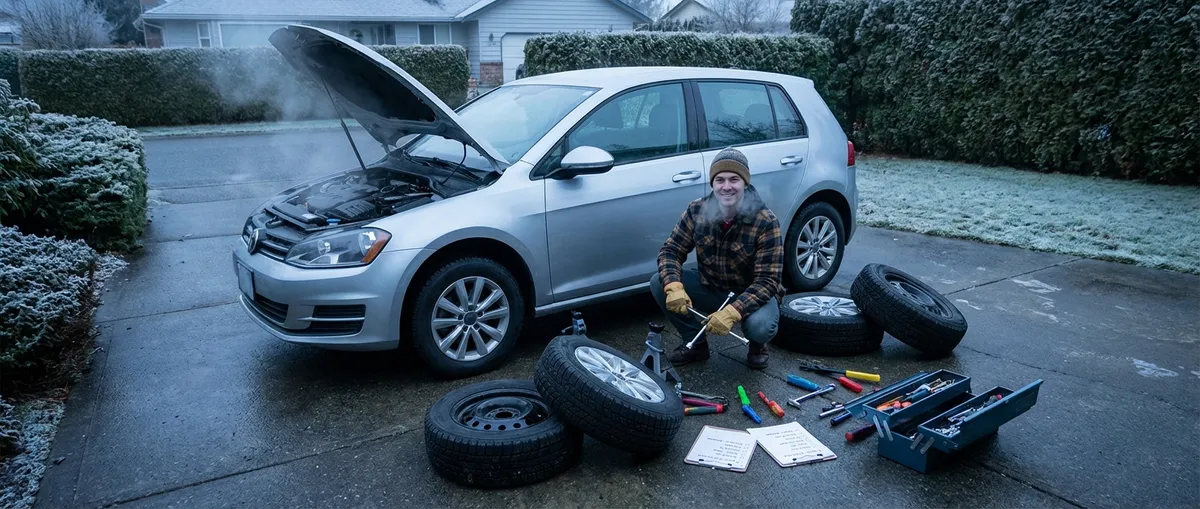
This blueprint walks through practical, enthusiast-level steps to keep your car prepared in every season, with five actionable habits you can start using right away.
Understanding How Seasons Stress Your Car
Every major system in your vehicle reacts to temperature and weather. Fluids expand and contract, rubber hardens and cracks, and metals corrode faster when moisture and road salts are involved. If you only service your car “when something feels wrong,” you’re already behind.
In hot months, high ambient temperatures amplify engine heat, accelerate fluid breakdown, and push your cooling system close to its limits. Tires overheat and can lose grip if they’re overinflated. In cold months, oil thickens, batteries lose cranking power, rubber components stiffen, and traction on wet, icy, or snowy roads drops dramatically. Meanwhile, humidity and rain attack your braking system, exposed metals, and underbody.
Recognizing these patterns is key: you don’t need a separate maintenance plan for each season, but you do need a flexible framework that adapts a few times a year. The following sections lay out that framework and focus on five high-impact habits: fluid checks, tire strategy, battery care, brake and underbody inspections, and visibility/lighting.
Actionable Habit #1: Rotate and Rethink Your Tire Strategy
Your tires are the only parts of your car that touch the road, and their needs change with the weather. Before each major season shift (spring and fall are good anchors), start by inspecting tread depth, wear pattern, and age. Uneven wear—more worn on the inner or outer edge—often points to alignment or suspension issues that get worse on rough, wet, or icy roads. If your tires are six years old or more, even with decent tread, the rubber may be aging and losing grip.
For drivers in mixed climates, an “all-weather” or dedicated winter tire strategy is worth serious consideration. Winter-rated tires (with the three-peak mountain snowflake symbol) use special compounds that stay pliable in cold temperatures, improving grip and braking performance on cold, wet, and snowy pavement. Conversely, high-performance summer tires excel in warm weather but can harden and lose traction as temperatures drop.
Seasonal tire rotations (front-to-rear and sometimes cross-rotations, depending on your car and tire type) help your set wear more evenly, which improves stability and extends tire life. If you regularly drive spiritedly or carry heavy loads, schedule rotations more frequently than your owner’s manual suggests. Tie rotations to your oil-change schedule so they become a predictable habit rather than an afterthought.
Actionable Habit #2: Create a Seasonal Fluid-Check Routine
Fluids are the lifeblood of your engine, transmission, steering system, and brakes, and seasonal swings put them under extra stress. Instead of waiting for a service light, build a simple visual check routine you run at least four times a year.
Engine oil behaves differently across temperature ranges. In cold weather, you want oil that flows easily to protect components on startup; in hot weather, you need it to resist thinning at high temperatures. Follow the viscosity grades recommended in your owner’s manual for your climate, and use seasonal transitions (like fall and spring) to check level, color, and smell. Dark oil isn’t automatically bad, but gritty texture or a burnt smell is a red flag.
Coolant is equally critical. Before summer and winter, confirm that coolant levels are within the marks on the reservoir and inspect for any dried crust or staining around hoses and clamps—signs of minor leaks that will become big problems under thermal stress. Brake fluid and power-steering fluid (if your car has hydraulic steering) should be clear to slightly amber; dark, murky fluid often indicates moisture contamination or age. Use these quick inspections to plan proactive flushes rather than waiting for a spongy brake pedal or whining steering pump.
Actionable Habit #3: Protect Your Battery from Temperature Extremes
Batteries often fail at the worst possible time, and temperature swings are usually to blame. Both heat and cold shorten a battery’s life, but in different ways: heat accelerates internal chemical degradation, while cold reduces available cranking power. The result is the same—your car struggles or refuses to start, usually on the first really cold morning or after a heatwave.
Adopt a basic battery health ritual as you move into extreme seasons. Visual inspection is the first step: look for corrosion around the terminals (a white or bluish powdery buildup), swollen battery cases, or cracked housings. Clean minor corrosion with a dedicated battery-terminal cleaner or a baking soda and water solution, making sure everything is dry and firmly tightened afterward.
If your car is more than three years into its battery’s life, ask for a load test during routine service, especially before winter. Many parts stores and service centers offer these for free. For vehicles that sit for extended periods—like sports cars or secondary vehicles—use a smart battery maintainer to keep the charge level stable instead of letting it cycle between near-dead and jump-started. That simple step alone can add years to a battery’s usable life.
Actionable Habit #4: Guard Your Brakes and Underbody Against the Elements
Brakes and your underbody face some of the harshest seasonal abuse. In winter, road salt and de-icing chemicals accelerate corrosion on brake lines, calipers, and the entire underside of your vehicle. In rainy seasons, constant moisture and temperature swings can lead to rotor rust, sticking calipers, and early failure of bushings and mounts.
Use your seasonal tire-rotation schedule as a trigger to inspect your brakes. With the wheels off, you (or your technician) can visually check pad thickness, rotor condition (look for grooves, severe rust, or cracks), and any signs of fluid seepage at the calipers or brake hoses. Squealing, pulsing pedals, or a longer stopping distance are lagging indicators; your goal is to spot issues before they reach that stage.
For drivers in snow-belt or coastal regions, underbody protection is essential. Regular undercarriage washes during and after winter help remove salt and grime that promote rust. If you plan to keep your vehicle long term, consider applying a quality rust-inhibiting coating to vulnerable metal areas. This is especially important for trucks and SUVs used on dirt roads or exposed to heavy spraying from wet, salted highways.
Actionable Habit #5: Maintain Clear Visibility and Strong Lighting
Visibility is a major safety factor that many owners neglect until something becomes annoying—like streaky wipers or dim headlights. Seasonal changes magnify those issues: summer sun can haze plastic headlight lenses; winter grime and salt coat glass; and spring/fall storms demand maximum wiper performance.
At the start of each season, inspect your wiper blades for cracks, stiffness, or streaking performance. Rubber degrades with both UV exposure and temperature swings, so even if you don’t use your wipers much, replacing them every 6–12 months is a smart move. Use a dedicated glass cleaner (not household ammonia-based cleaners, which can damage some tint films) and clean both inside and outside surfaces; interior haze is a common but overlooked cause of glare.
Headlights deserve equal attention. Cloudy or yellowed lenses dramatically cut your nighttime visibility. You can restore them using a headlight restoration kit or by having a professional service done. Also verify that all exterior lights—headlights (both beams), turn signals, brake lights, and reverse lights—are functioning. Seasonal time changes often mean more driving in darkness; checking your lighting before that transition ensures you’re not caught out with a weak beam or a dead bulb.
Conclusion
A car that feels “set and forget” in one season can become vulnerable in the next if you’re not adapting your maintenance habits. Instead of treating service as a reaction to warning lights or noises, use the natural rhythm of the seasons as your cue to act. By focusing on tires, fluids, battery health, brake and underbody protection, and visibility, you’re covering the parts of your vehicle most affected by weather and temperature swings.
These aren’t show-car upgrades; they’re practical, high-impact habits that keep your daily driver reliable, safe, and enjoyable—no matter what the forecast looks like. Build this seasonal blueprint into your calendar now, and your car will be ready whenever the road calls.
Sources
- NHTSA – Tire Maintenance, Safety, and Efficiency - U.S. government guidance on tire care, tread, inflation, and safety
- U.S. Department of Energy – Maintaining Your Vehicle - Covers basic maintenance practices that improve efficiency and reliability
- AAA – How to Care for Your Car in Hot Weather - Practical tips on fluids, cooling systems, and batteries in high temperatures
- AAA – Winter Car Care Checklist - Seasonal advice focused on preparing vehicles for cold climates
- Consumer Reports – How to Make Your Car Last 200,000 Miles - Long-term maintenance strategies and service intervals for durability