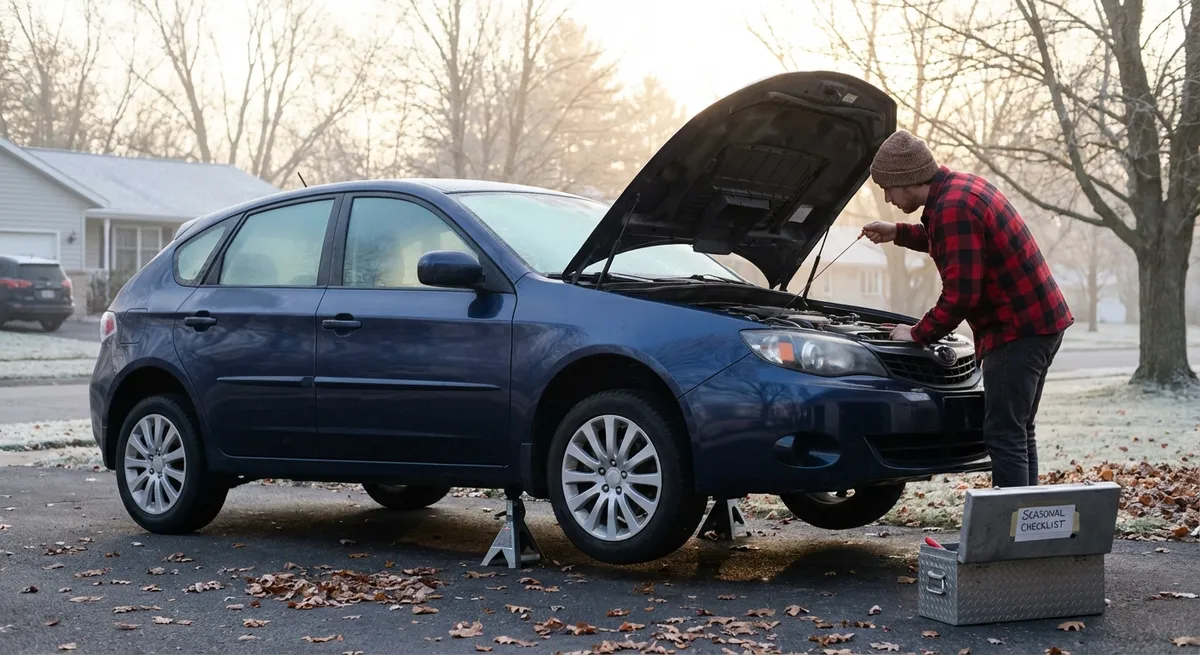
Build a Seasonal Inspection Habit (Not Just a Mileage Reminder)
Most drivers rely entirely on mileage-based reminders, but time matters just as much as distance. Rubber ages, fluids absorb moisture, and parts corrode even when the car sits.
Create a simple calendar-based routine: do a “big check” at the start of each season. That’s four times a year, even if you barely drive. Assign each season a theme so it’s easy to remember—for example: spring for underbody and suspension, summer for cooling and A/C, fall for brakes and tires, winter for battery and visibility.
During each seasonal check, walk around the car with a flashlight and a notepad. Look for fresh drips under the car, uneven tire wear, bulges in sidewalls, and any loose trim or splash shields. Pop the hood and check for cracked hoses, frayed belts, or green/white crust around battery terminals. Open the owner’s manual and line up what you see with the recommended inspection intervals. This small shift—looking at your car on a schedule rather than only when something feels wrong—is one of the most powerful maintenance habits you can build.
Protect the Engine: Oil, Air, and the Hidden PCV System
Engine longevity isn’t just about using the right oil; it’s about ensuring the engine can breathe and vent properly. Three areas matter most: fresh oil, a clean air filter, and a healthy crankcase ventilation system.
Follow your manufacturer’s oil interval, but adjust for your real life. Frequent short trips, towing, extreme heat/cold, or lots of idling are “severe service” and justify shorter intervals. If your car has an oil life monitor, treat it as a guide, not a commandment—changing oil a bit early under harsh conditions is cheap insurance.
Next, check the engine air filter visually every 6–12 months. A heavily clogged filter can restrict airflow, hurt performance, and make your engine work harder. If you drive in dusty areas or do a lot of highway miles behind trucks, expect to replace it more often than the manual’s upper limit.
Finally, don’t ignore the PCV (Positive Crankcase Ventilation) valve or system. This small, often forgotten component helps vent blow-by gases and moisture from the crankcase. If it clogs or sticks, you can get sludge buildup, oil leaks, and increased oil consumption. Many manufacturers list a PCV inspection or replacement interval buried in the maintenance schedule; if not, asking a trusted shop to verify its condition every 50,000–75,000 miles is a smart play—especially on turbocharged engines.
Give Your Tires and Brakes the Attention They Quietly Deserve
Tires and brakes are the only things standing between your car and whatever’s in front of you, yet they’re often treated as “set and forget” parts until a squeal or a tread warning light shows up. You can stay ahead of both safety and cost with a simple routine.
Check tire pressure at least once a month, and always when seasons change. A 10°F temperature drop can reduce pressure by about 1 psi, and underinflated tires run hotter, wear faster, and hurt fuel economy. Use the pressures on the door jamb sticker, not the max pressure printed on the tire sidewall. While you’re there, inspect tread for uneven patterns—feathering, inner edge wear, or cupping often signal alignment or suspension issues long before you feel anything unusual in the steering.
Brakes benefit from proactive checks, too. Listen for faint scraping or grinding at low speeds with the windows down, and pay attention to any change in pedal feel, shudder, or steering wheel vibration under braking. At least once a year, have the pads, rotors, brake hoses, and caliper slide pins inspected. In rust-prone climates, preventing seized calipers and corroded lines can save a lot of money. Don’t overlook the brake fluid: moisture buildup lowers its boiling point and can corrode internal components. A flush every 2–3 years is a strong baseline, even if your manual doesn’t emphasize it.
Guard the Cooling System and Transmission Before They Get Hot and Angry
Cooling systems and transmissions often work perfectly right up until they don’t—and then failures are sudden, expensive, and stressful. A little scheduled attention here goes a long way.
For the cooling system, look beyond just the coolant level. Check for dried coolant tracks around hose connections, radiator end tanks, and the water pump area (under pulleys, near timing covers). These white, pink, or green trails indicate minor leaks that can become major under load or in hot weather. Make sure the radiator fins are free of packed debris, leaves, and bugs—restricted airflow can quietly raise operating temperatures, especially when towing or climbing hills. Respect the coolant change interval; modern long-life coolants last longer than older formulas but still degrade and lose their corrosion protection over time.
Transmission maintenance depends heavily on the design. Some automakers label their fluids as “lifetime,” but many technicians and enthusiasts treat that as marketing, not engineering. If your vehicle has a published service interval, stick to it; if not, a 30,000–60,000 mile fluid change for conventional automatics and dual-clutch units is a conservative guideline. For CVTs, using the exact manufacturer-specified fluid is critical. When in doubt, consult the factory service information or a reputable independent shop that specializes in your brand. You’ll rarely regret fresh fluid in a working transmission; you’ll definitely regret ignoring it until it fails.
Preserve Comfort Systems: Cabin Air, Seals, and Electrical Health
A car that runs fine but feels miserable inside doesn’t get driven much, and cars that sit tend to develop more issues. Maintaining comfort systems isn’t just about niceties—it keeps you using the car regularly and prevents small problems from escalating.
Start with the cabin air filter. This inexpensive part protects your HVAC system from dust, pollen, and debris. A clogged filter can strain the blower motor, reduce A/C performance, and contribute to foggy windows. If you park under trees or in dusty areas, inspect it yearly; replace it if it looks dark, matted, or leaf-filled. While you’re at it, verify that the A/C drains are clear by checking for a small puddle of condensation under the car after running the A/C on a humid day.
Next, inspect door and trunk seals for cracks, flattening, or gaps. Worn seals let in water and noise, and trapped moisture can rust out floor pans or rear compartments. A light coating of rubber-safe silicone spray or dedicated rubber care product on seals a couple of times a year keeps them supple and less prone to tearing.
Finally, keep an eye on electrical health. Modern vehicles rely heavily on stable voltage for everything from engine management to advanced driver-assistance systems. Test the battery annually, especially once it’s past 3–4 years old, and clean any corrosion from terminals. Check that all exterior lights (including brake, reverse, and license plate lights) are working—besides safety and legality, voltage anomalies from bad bulbs or corroded sockets can sometimes trigger odd electrical behavior. Address intermittent issues early; chasing a random no-start or flickering dash is cheaper when it’s still an annoying quirk rather than a tow-truck event.
Conclusion
A car that feels tight, responsive, and trustworthy isn’t a product of luck or fancy parts—it’s the outcome of consistent, targeted maintenance. By shifting from “fix it when it breaks” to a simple seasonal rhythm, you make small, predictable investments instead of absorbing big surprises. Focus on the systems that quietly do the heavy lifting—engine breathing, tires and brakes, cooling and transmission, and the comfort and electrical pieces that keep you confident behind the wheel.
Treat your maintenance routine like an enthusiast: curious, observant, and slightly ahead of schedule. Your car will reward you with more reliable miles, better performance, and a driving experience that stays satisfying long after the new-car smell is gone.
Sources
- [U.S. Department of Energy – Tire Maintenance and Fuel Economy](https://www.energy.gov/energysaver/maintaining-your-vehicle) - Explains how proper maintenance, especially tire care, affects efficiency and longevity
- [National Highway Traffic Safety Administration (NHTSA) – Tire and Vehicle Safety](https://www.nhtsa.gov/equipment/tires) - Authoritative guidance on tire inspection, tread wear, and safety considerations
- [AAA – Car Maintenance Services and Advice](https://www.aaa.com/autorepair/articles/vehicle-maintenance-safety-inspections) - Overview of key maintenance items and recommended inspection practices
- [Edmunds – Car Maintenance Guide](https://www.edmunds.com/car-care/maintenance.html) - Practical breakdown of common maintenance intervals and components for modern vehicles
- [University of California, Davis – Automotive Fluids Basics](https://caes.ucdavis.edu/news/automotive-fluids-what-they-are-and-what-they-do) - Educational overview of automotive fluids and why periodic replacement is important