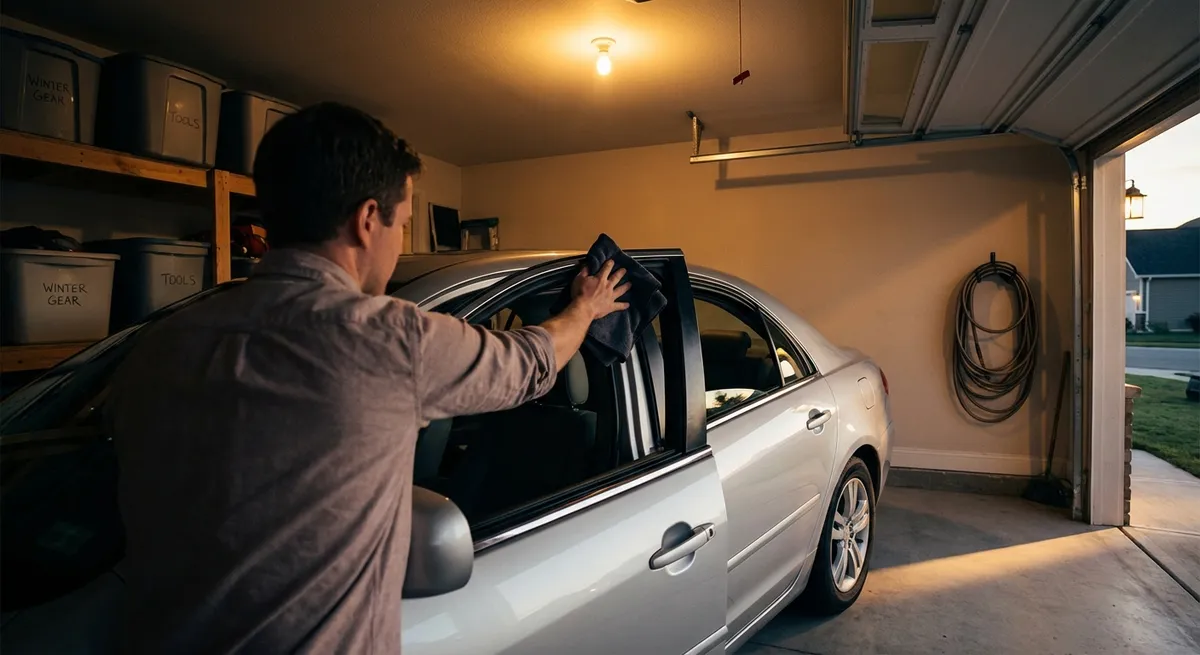
This isn’t about becoming a full-time DIY mechanic. It’s about five focused moves that car owners and enthusiasts can turn into a simple, repeatable routine.
1. Building a Baseline: The 10-Minute Monthly Walkaround
Before you can maintain anything well, you need a baseline. A monthly walkaround is your “health check” and early-warning system.
Do this once a month, ideally in good light:
- Tires: Look for uneven wear across the tread, bulges in sidewalls, and embedded nails or screws. Uneven wear often means misalignment, worn suspension parts, or incorrect tire pressure.
- Lights: Headlights, brake lights, turn signals, reverse lights, and license plate lights all matter for visibility and legal compliance. Replace dim or burned-out bulbs quickly; many are DIY-friendly.
- Glass and mirrors: Chips in your windshield can often be repaired cheaply before they crack and require replacement. Clean mirrors and check for looseness.
- Leaks under the car: Fresh spots where you park can indicate oil, coolant, transmission fluid, or power-steering leaks. Photograph the spot and compare over a week to see if it’s growing.
- Under-hood quick check: With the engine cold, open the hood. Look for cracked hoses, loose clamps, or frayed belts. Check fluid reservoirs that are meant to be visually inspected (brake fluid, coolant overflow, washer fluid).
Enthusiasts benefit even more from this habit: if you know what “normal” looks, sounds, and smells like, small changes (a new seep, a slight belt squeal, a faint fuel smell) stand out early—before they become breakdowns or track-day cancellations.
2. Fluids Done Right: Beyond Just an Oil Change Sticker
Most owners think “maintenance = oil change,” but the quality and timing of fluid care determine how your engine, transmission, and brakes age.
Consider these fluid basics:
- Engine oil: Follow the severe-service schedule if you do a lot of short trips, towing, high-speed driving, or live in extreme climates. Short trips that never fully warm the oil can be harder on an engine than long highway runs. Enthusiasts running hard or modifying engines should lean toward shorter intervals than the factory maximum.
- Coolant: Modern coolants last longer than older formulations, but they’re not lifetime fluids. Old coolant can lose corrosion inhibitors, leading to clogged passages and water pump issues. Check change intervals in your owner’s manual and respect them.
- Brake fluid: Hygroscopic brake fluid absorbs moisture over time, which reduces boiling point and can corrode internal components. Track drivers may change it yearly or more; everyday drivers should still follow the recommended interval (often 2–3 years).
- Transmission and differential fluids: These often get labelled “lifetime,” but that usually means “until warranty ends,” not “until physics stops applying.” Hard use—towing, spirited driving, or frequent stop-and-go—makes fresh fluid a smart investment.
Actionable move: Create a simple maintenance log (spreadsheet, notebook, or app) with mileage, date, fluid type, and where the work was done. That single record not only helps you time future service, it also boosts resale value for buyers who care.
3. Tires and Alignment: Protecting the Only Four Contact Patches You Have
Your tires and alignment settings are the only link between your car and the road. Treating them as disposable or “set and forget” quietly ruins handling, braking, and comfort long before the tread is technically worn out.
Key habits:
- Check tire pressures monthly and before long drives: Use a quality gauge on cold tires. Compare readings to the sticker inside the driver’s door jamb, not the sidewall max. Underinflated tires wear faster on the edges and overheat; overinflated ones reduce grip and ride quality.
- Rotate tires on schedule: Rotating helps all tires wear more evenly, which preserves predictable handling. Performance setups or staggered wheels may limit rotation patterns, but even front-to-back rotation (when possible) is beneficial.
- Get an alignment when the car starts “talking”: If the steering wheel isn’t straight, the car drifts, or you see uneven tread patterns, schedule an alignment. After hitting a major pothole or curb, it’s worth at least an inspection.
- Inspect sidewalls and tread blocks: Cracks, bulges, or deeply worn shoulders are red flags. For enthusiasts, cupping or feathering on the tread can indicate suspension issues or damping that's no longer up to the job.
Consistent tire care doesn’t just save rubber; it preserves how the car feels in every corner, on every on-ramp, rain or shine.
4. Suspension and Brakes: Keeping the Car Tight, Not Just Safe
Suspension and brakes age gradually, so many drivers don’t realize how “loose” or vague their car has become until something is completely worn out. Building a few checks into your routine keeps the car feeling precise and confidence-inspiring.
Practical checks and habits:
- Listen and feel for changes: Clunks over bumps, creaking at low speeds, or a steering wheel that shimmies under braking are all early indicators of worn suspension or brake components.
- Inspect brake components through the wheels when possible: You may be able to visually check pad thickness and rotor condition. Grooves, cracks, or severe rust on rotors, or very thin pads, signal upcoming work.
- Notice body motion: Excessive bouncing after going over a bump suggests worn shocks or struts. A healthy car should settle quickly, not float.
- Don’t cheap out on critical parts: For brakes and suspension, quality components—OEM or reputable aftermarket—pay off in predictable performance and durability. Enthusiasts may upgrade pads, rotors, or dampers, but even stock-spec quality parts are a big improvement over the cheapest option.
- Bed in new pads and rotors properly: After brake work, follow a proper bedding procedure (series of moderate stops to evenly transfer pad material to the rotor). This improves performance and reduces noise and vibration.
For spirited drivers, keeping this system sharp not only maintains safety margins, it preserves the feedback and control that make driving enjoyable.
5. Battery, Electronics, and Clean Power: Stopping Electrical Gremlins Before They Start
Modern cars are rolling networks of sensors, modules, and computers. Weak voltage or poor connections can produce weird, intermittent problems that are expensive to diagnose and repair. Being proactive with the basics saves headaches.
Key actions:
- Test your battery proactively: Don’t wait for slow cranks or a no-start in a parking lot. Many parts stores will test batteries for free. Replace aging units (typically around 4–6 years) before they become unreliable, especially in extreme climates.
- Clean terminals and secure connections: Corrosion on battery posts or loose clamps can cause voltage drops and random issues—from dim headlights to dash warning lights. A simple cleaning and proper tightening often fixes minor electrical oddities.
- Protect wiring from aftermarket chaos: When adding accessories (dash cams, chargers, lighting), use proper fuses, quality connectors, and safe routing away from moving parts. Avoid “vampire taps” into random wires when possible; use dedicated add-a-fuse circuits or professional installation.
- Monitor parasitic drains: If the car sits often and the battery dies regularly, have a shop check for excessive parasitic draw. Enthusiasts with multiple accessories, alarms, or tracking devices are especially prone to this.
- Keep software in mind: Some newer vehicles receive software updates for drivability, safety systems, and charging behavior (for hybrids/EVs). When at the dealership for other work, ask if any relevant updates are available.
Stable electrical power and clean connections make everything from ignition to infotainment work the way the engineers intended—quietly, reliably, and predictably.
Conclusion
High-impact maintenance isn’t about doing everything yourself or buying a pile of tools. It’s about the right habits: a regular walkaround, serious attention to fluids, intentional tire and alignment care, keeping suspension and brakes in shape, and protecting your electrical system from neglect and bad add-ons.
Turn these five moves into a quiet monthly ritual, and your car will reward you: fewer surprises, tighter driving feel, and a machine that ages slowly instead of suddenly “getting old” one expensive repair at a time.
Sources
- [NHTSA – Vehicle Maintenance Checklist](https://www.nhtsa.gov/sites/nhtsa.gov/files/documents/811090.pdf) - U.S. safety-focused guidance on basic inspection points and why they matter
- [AAA – Preventative Maintenance Guidelines](https://exchange.aaa.com/automotive/maintenance-repair/preventative-maintenance-guide/) - Practical intervals and explanations for common services and fluid changes
- [U.S. Department of Energy – Tire Maintenance and Safety](https://www.energy.gov/energysaver/maintaining-your-vehicle-tires) - Details on tire pressure, wear, and how they affect safety and fuel economy
- [Bridgestone – Wheel Alignment Explained](https://www.bridgestonetire.com/learn/maintenance/when-to-get-a-wheel-alignment/) - Clear overview of alignment symptoms, benefits, and timing
- [Consumer Reports – Car Battery Buying & Care Guide](https://www.consumerreports.org/cars/car-batteries/buying-guide/) - Evidence-based advice on battery lifespan, testing, and replacement timing