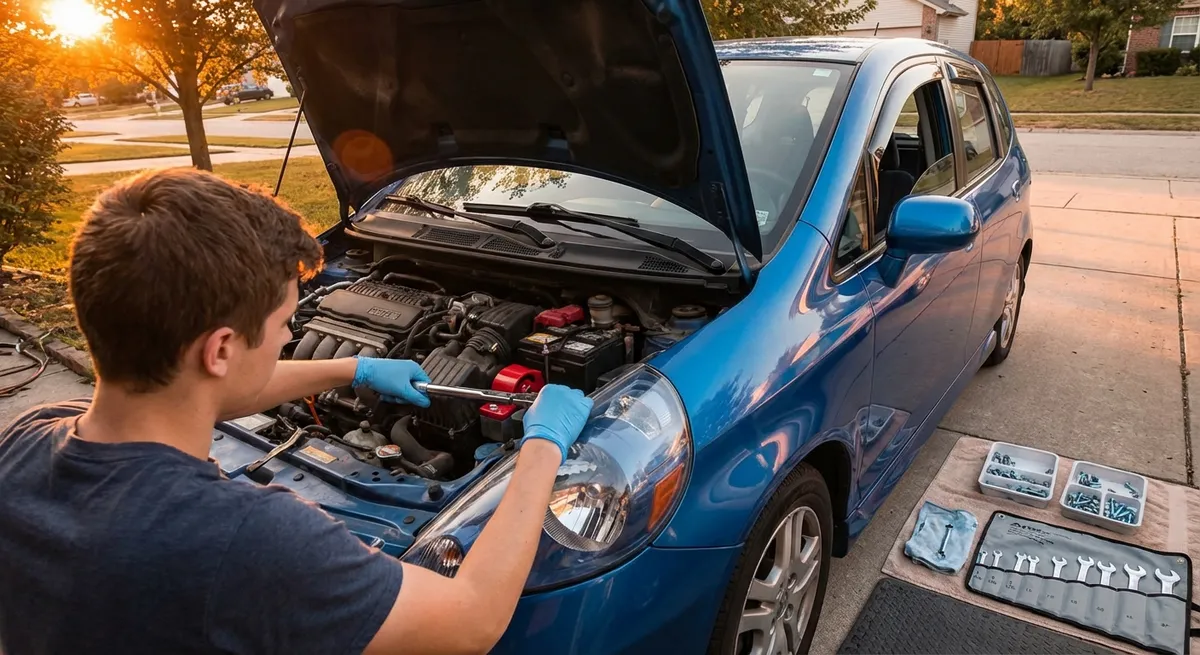
This approach isn’t about expensive mods or obsessive detailing. It’s about using noise, vibration, and feel as your early‑warning system—and then backing that up with a few smart, low-effort maintenance habits. The result: a car that feels smoother, lasts longer, and costs you less over time.
Build A “Baseline Drive” Routine
Pick a short, familiar loop—ideally a mix of city streets and a bit of highway—and use it as your reference route every month or so. Drive it with the radio off and the windows up, paying close attention to how the car feels: steering weight, brake response, engine smoothness, and any new rattles or hums. Notice how the engine sounds at a steady 40–50 mph, how the transmission shifts, and whether the car pulls slightly to one side under braking. This consistent baseline lets you catch small changes early, like a faint wheel bearing growl, a new vibration at a specific speed, or mushier brake feel. When something feels “off,” jot down speed, conditions, and sound location in your notes app so a shop (or you) can track the problem more efficiently. Over time, you’ll develop a surprisingly accurate sense of what’s normal for your specific car.
Treat Fluids As Wear Parts, Not Just “Topped Up”
Most owners only check fluids when a light comes on—or at best, at oil-change time. Instead, treat fluids (engine oil, coolant, brake fluid, power steering or electric steering service intervals, transmission fluid) as active wear indicators. Once a month, pop the hood in good daylight and look at both level and condition. Oil that suddenly looks darker or smells strongly of fuel can hint at short-trip driving, misfires, or fuel dilution; milky residue under the oil cap can signal moisture or coolant contamination. Coolant that’s rusty or “muddy” looking can indicate corrosion in the cooling system. Brake fluid that’s very dark suggests moisture absorption and possible fade under hard stops. Rather than waiting for a mileage or time interval, use these visual checks to decide whether to advance a fluid service slightly—especially if you drive in heavy traffic, extreme temps, or tow/haul regularly. Clean, fresh fluids are cheap insurance against silent wear in engines, transmissions, and braking systems.
Use Tire Behavior As An Alignment Health Check
Your tires are the easiest window into your suspension and alignment health—but only if you look at them properly. Every few weeks (or at each fuel fill if you’re motivated), visually inspect each tire with the front wheels turned so you can see both inner and outer shoulders. Uneven wear patterns tell a story: feathered edges can indicate toe misalignment, more wear on the inside or outside shoulder can mean camber issues, and cupping or scalloping often points to tired shocks or struts. Run your palm lightly across the tread; if it feels like a saw blade in one direction, you’ve got alignment or suspension problems starting. Combine this with a habit of monitoring tire pressure when cold, using the pressures on the door jamb rather than the tire sidewall max. Properly inflated, evenly worn tires don’t just last longer—they dramatically improve braking performance, steering feel, and cabin noise. When you see odd wear, don’t just rotate and forget it; schedule an alignment check and ask the shop to show you the before/after printout.
Make Brake Feel Part Of Your Safety Inspection
You don’t need a lift to get a good sense of brake health—just a bit of structure in how you test them. On an empty, straight road, do a series of controlled stops: one gentle from 30 mph, one medium from 40–50, and one fairly hard (not panic) stop if conditions allow. Pay attention to pedal travel, firmness, and any pulsing or vibration in the pedal or steering wheel. A soft pedal that firms up after a quick pump may point to adjustment or air in the system; a pedal that slowly sinks under steady pressure can hint at a master cylinder issue. If the car pulls to one side under braking, you may have a sticking caliper or uneven pad wear. Listen for grinding or metallic scraping, which often means pads are at or past their limit. Once a month, glance through the wheels with a flashlight to get a rough sense of pad thickness—most pads have wear indicators you can visually identify with a quick online reference for your specific model. By pairing feel tests with visual checks, you can catch brake issues long before they turn into warped rotors or emergency repairs.
Lock In A Seasonal “Deep Maintenance” Checklist
In addition to your regular quick checks, choose two points in the year—often tied to climate changes, like spring and fall—and treat them as your deeper maintenance sessions. During these, go beyond fluids and tire pressures. Inspect wiper blades for streaking and cracking, and replace before storm season, not after. Clean and, if needed, replace the cabin air filter to help your HVAC system work efficiently and reduce window fogging; in dusty or urban areas, this matters more than people think. Scan rubber components like belts and hoses for cracks, bulges, or shiny glazed sections. Check battery terminals for corrosion and ensure the battery is securely mounted—loose batteries can cause intermittent electrical gremlins and even physical damage. For enthusiasts with basic tools, seasonal checks are a good time to inspect suspension bushings for obvious tears, look at shock or strut bodies for leaks, and ensure underbody plastic shields are intact and not flapping in the wind. Document what you find with quick photos and notes; over a few seasons, patterns in wear and issues will emerge, and you can budget and plan repairs before failure.
Conclusion
A smoother, quieter, and more reliable car doesn’t come from one big “tune-up”—it comes from a set of small, repeatable habits that help you notice problems early and fix them on your terms. By using how your car sounds, feels, and wears as a guide, you move from reactive repairs to proactive care. For enthusiasts, that means more driving and fewer surprises. For everyday owners, it means a safer, calmer commute and a car that feels “new enough” for far longer than the brochure promised.