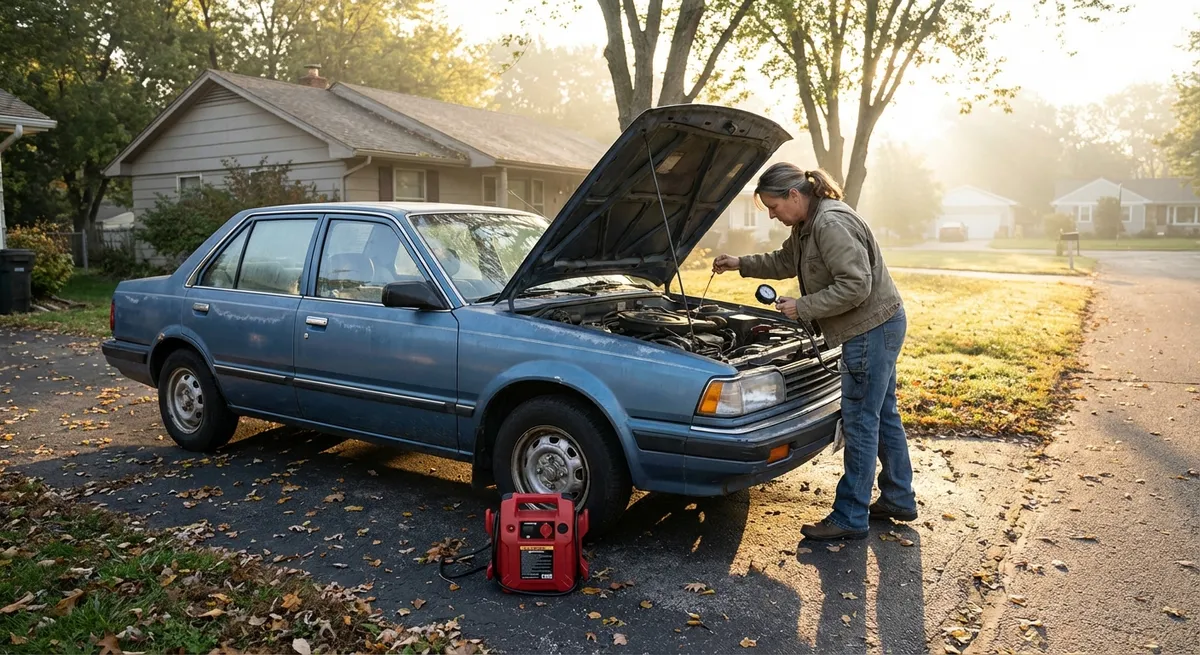
This guide focuses on practical steps you can actually do in your driveway, with an emphasis on prevention, reliability, and preserving value.
Why Inactive Cars Need Active Maintenance
Modern vehicles are designed to be driven. When they sit:
- Fluids separate and collect moisture, especially in the engine, transmission, and brake system.
- Tires develop flat spots and sidewalls weaken under static load.
- Batteries slowly discharge and may sulfate, shortening their life.
- Rubber parts like belts, bushings, and seals dry out and crack without regular heat cycling and lubrication.
- Fuel degrades and can form deposits that clog injectors or cause rough running.
For enthusiasts, a car that only comes out on “nice days” can actually be more at risk than a higher-mileage commuter that’s exercised regularly. Strategic maintenance keeps your parked car responsive, safe, and worth more when you eventually sell or trade.
Below are five actionable moves that make a noticeable difference.
1. Treat the Battery Like a Component, Not an Afterthought
A sitting car’s battery is often the first thing to fail. Even with everything “off,” computers and security systems pull a small but steady current.
Practical steps:
- Use a smart maintainer, not a trickle charger. A quality battery maintainer monitors state-of-charge and voltage, then cycles on and off to avoid overcharging. Leave it connected if the car will sit for more than 2–3 weeks.
- If you can’t use a maintainer, disconnect the negative terminal. This reduces parasitic draws, though you may lose radio presets and some learned driving data. For newer vehicles with advanced electronics, check the owner’s manual first.
- Inspect and clean terminals. Corrosion increases resistance and can mimic a dying battery. Clean with a dedicated battery brush and a baking soda/water solution if needed, then dry thoroughly.
- Know your battery’s age and rating. Check the manufacturing date code on the case. If it’s approaching 4–5 years old, especially in hot climates, plan for proactive replacement rather than waiting for a no-start situation.
- Choose the right replacement battery. Match or exceed the original cold cranking amps (CCA) and reserve capacity, and use the correct physical group size to ensure secure mounting.
These small habits often mean the difference between a turn-key car and a dead one when you finally want to drive.
2. Keep Fluids Fresh, Not Just Full
Low mileage doesn’t mean low wear on fluids. Time, temperature swing, and condensation are just as important as odometer readings.
Practical steps:
- Follow “time” intervals, not just mileage. If your manual says “every 5,000 miles or 12 months,” and you only drove 2,000 miles, change it at 12 months anyway. Engine oil additives break down with age, not only use.
- Prioritize engine oil and brake fluid.
- Oil in rarely driven cars may accumulate moisture and fuel dilution, especially if you only take short trips.
- Brake fluid is hygroscopic (it absorbs water), which can corrode lines and lower boiling point. Many manufacturers recommend changing it every 2–3 years even with modest use.
- Inspect coolant age and condition. Long-life coolants can last 5+ years, but not indefinitely. Look for discoloration, rust flakes, or debris in the overflow tank. A neglected cooling system is a major failure point on parked cars.
- Cycle the systems during your “exercise drives.” Once the engine is fully warm, go through all gears (including manual mode if applicable), gently use the brakes several times, and operate the HVAC. This helps circulate fluids through lines, valves, and solenoids.
- Log your changes. Even a simple note in your phone (date, mileage, what you changed) helps you stay ahead of time-based service.
For enthusiasts chasing longevity, fluid care is one of the least glamorous but most effective ways to preserve mechanical health.
3. Protect Tires from Flat Spots, Aging, and Hidden Damage
Tires slowly harden over time, and when they sit in the same spot for weeks, the contact patch deforms.
Practical steps:
- Aim to move the car at least once every 2–3 weeks. Even a short, 15–20 minute drive that gets the tires up to temperature will help relax the rubber and minimize flat-spotting.
- Maintain slightly higher storage pressure. Adding 3–5 psi above your normal pressure (without exceeding the sidewall max) can reduce flat-spot risk. Return to recommended pressures before hard driving.
- Use tire cradles or parking pads for long storage. Special curved pads distribute load more evenly, especially useful for performance tires with stiffer sidewalls.
- Check tire age, not just tread depth. Locate the DOT code on the sidewall; the last four digits show the week and year (e.g., 2319 = 23rd week of 2019). Many experts recommend replacing tires around 6–10 years even if tread looks adequate.
- Inspect sidewalls and inner shoulders. Look for cracking, bulges, or exposed cords. Cars that sit outside in sun and ozone-rich environments are especially vulnerable to dry rot.
Good tires are your only contact with the road. Treat them as a critical safety component, not a wear item you “run to the cords.”
4. Control Moisture, Rodents, and Sun Damage in Storage
Where and how you park a rarely driven car has a direct impact on longevity.
Practical steps:
- Use a breathable cover if the car is outdoors or in a dusty space. Avoid plastic tarps; they trap moisture and can damage paint. Look for covers designed for your vehicle’s body style with soft inner liners.
- Manage humidity inside and out.
- For garages in humid climates, consider a dehumidifier.
- Inside the cabin, moisture-absorbing desiccant packs can reduce musty smells and mold growth.
- Defend against rodents.
- Keep the area clean and free from food trash.
- Consider rodent deterrents like peppermint sachets or ultrasonic devices, and periodically inspect wiring and insulation under the hood.
- If the vehicle will sit for months, some owners use fine mesh over intake openings (without restricting airflow) to prevent nesting.
- Protect from UV exposure. Use sunshades, crack windows slightly (if safe), and apply UV-protectant products to interior plastics and leather. Long-term sun exposure dries and cracks dashboards, seats, and weatherstripping.
- Avoid parking on bare dirt or grass. Ground moisture accelerates corrosion underneath. If a garage isn’t available, parking on concrete or asphalt is better; adding rubber or composite mats is even better for long-term storage.
Thoughtful storage is often cheaper than repairing mice-chewed harnesses, rusty brake lines, or sun-baked interiors.
5. Schedule “Exercise Drives” as Part of Your Maintenance Plan
The single most effective maintenance move for a parked car is to use it with intention.
Practical steps:
- Drive long enough to fully warm up. Aim for at least 20–30 minutes, including some steady-speed driving. This allows oil and coolant to reach full operating temperature, helping evaporate moisture and neutralize fuel dilution.
- Use the full range of systems.
- Turn on the A/C and heater.
- Operate power windows, locks, mirrors, and sunroof.
- Engage 4WD/AWD modes if equipped (following the manual).
- Perform a quick “health scan” each time.
- Listen for new noises (squeaks, rattles, grinding).
- Check for vibrations under braking or at speed.
- Smell for fuel, coolant, or burning odors when you park.
- Inspect when you return. After the car cools a bit, pop the hood and look for leaks, cracked hoses, or frayed belts. Walk around and check lights and tire condition.
- End with a clean, dry car. If you’ve driven in rain or snow, rinse the underbody when possible, especially where roads are salted. Let the brakes dry before parking for long stretches to reduce corrosion on rotors.
Think of these drives as routine workouts that keep every system in shape. You’re not just preventing problems—you’re staying familiar with the car, so you can catch subtle changes early.
Conclusion
A car that spends more time parked than driven doesn’t need less maintenance; it needs a different kind of maintenance. Instead of reacting to breakdowns, you’re proactively:
- Keeping the battery ready
- Refreshing fluids on time, not just by mileage
- Preserving tires and rubber components
- Protecting the car from the environment and critters
- Exercising mechanical and electronic systems regularly
For enthusiasts, that means your special car is always genuinely “Auto Ready” when the right road and the right moment appear—and you’re far less likely to be greeting a tow truck instead of enjoying the drive.
Sources
- National Highway Traffic Safety Administration (NHTSA) – Tire Safety - Official guidance on tire aging, maintenance, and safety considerations
- U.S. Department of Energy – Maintaining Your Vehicle - Practical overview of how maintenance practices affect performance and efficiency
- Bridgestone – How Long Do Tires Last? - Manufacturer perspective on tire aging, storage, and replacement timing
- AAA – Car Battery Care and Maintenance - Detailed explanation of battery lifespan, testing, and preventative care
- Ford Motor Company – Vehicle Storage Tips - OEM recommendations for short- and long-term storage practices