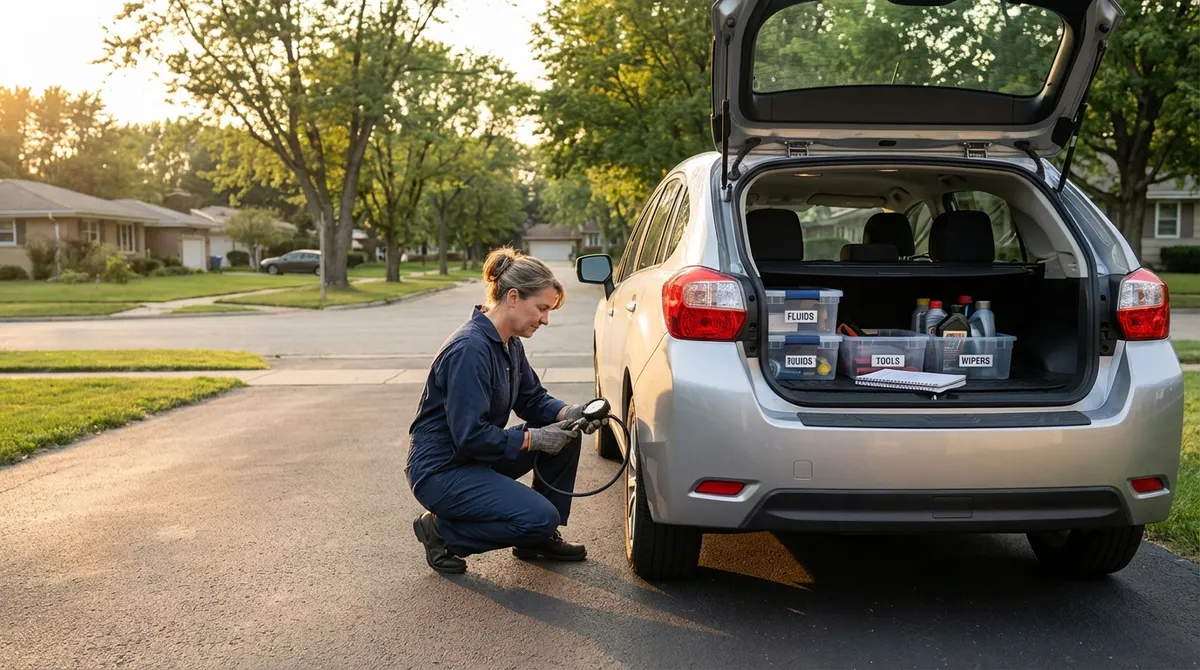
This maintenance plan focuses on five practical habits that fit into real life. No specialty tools, no mechanic-level skills—just consistent basics that dramatically improve reliability, safety, and long-term value.
Build a Simple Fluid-Check Routine
If your car were a body, fluids would be the blood, oil, and oxygen. Let them run low or degrade, and parts fail fast and expensively.
Once a month (or before any long trip), check these:
Engine oil
- Look for: level between “LOW” and “FULL,” and color that’s brown/amber, not thick black sludge or metallic glitter.
- Why it matters: Low or dirty oil means increased wear on bearings and critical internal parts; modern engines can be destroyed by running low just once.
- Quick habit: Set a recurring reminder in your phone to check oil the first weekend of every month.
- Look for: level between MIN and MAX on the reservoir, color typically green, orange, or pink—never brown or rusty.
- Why it matters: Low coolant can overheat and warp the cylinder head or damage gaskets, turning into a four-figure repair.
- Tip: Never open the radiator cap on a hot engine—use the overflow tank sight marks only.
- Look for: clear to light yellow; dark brown fluid can indicate moisture and contamination.
- Why it matters: Old fluid absorbs water, which reduces braking performance and can corrode internal brake components.
- Action: If it’s low, don’t just top it off—have your brakes inspected. Low level often means pad wear or a leak.
- Look for: bright red (for many automatics), not dark or burnt-smelling.
- Why it matters: Contaminated fluid accelerates wear; ignored transmission issues are among the most expensive repairs.
- Caveat: Many newer cars have sealed units—follow the owner’s manual for check intervals or let a shop inspect.
Coolant (antifreeze)
Brake fluid
Transmission fluid (if applicable and accessible)
Making fluid checks a five-minute ritual in your driveway prevents most “it was fine yesterday” failures.
Treat Your Tires Like Safety Equipment, Not Accessories
Tires are your only contact with the road, and they quietly dictate braking distance, handling, and fuel economy.
Maintain proper pressure
- Action: Check pressures at least once a month and before highway trips, using a decent digital gauge.
- Use the correct number: Use the pressure on the driver’s door jamb, not the “max” printed on the tire.
- Why it matters: Underinflation increases wear, fuel use, and heat buildup (which can cause blowouts); overinflation shrinks the contact patch and reduces grip.
- Quick check: Use a tread depth gauge or the penny test—if you can see the top of Lincoln’s head, tread is dangerously low.
- Uneven wear on one side or in the center often points to alignment, suspension, or pressure issues.
- Replace before the legal minimum: Wet and snow performance falls off long before tires are technically “worn out.”
- Rotations: Typically every 5,000–7,500 miles (often when you change oil), which helps all four tires wear evenly.
- Alignment: If your steering wheel pulls, the wheel sits off-center when driving straight, or you see feathered wear on the tread, get an alignment check.
- Result: You’ll extend tire life, improve ride, and keep steering feel sharp—something enthusiasts especially appreciate.
Watch tread depth and wear patterns
Rotate and align on schedule
Well-maintained tires don’t just last longer—they make the whole car feel more confident and precise.
Use Your Ears and Nose as Early-Warning Sensors
Some of the best diagnostic tools are built-in: your hearing and sense of smell. Weird noises and odors often show up long before a dashboard light.
Listen for:
- Rhythmic thumping or humming that changes with speed
Often tire or wheel bearing-related. A failing bearing can eventually seize and become dangerous at highway speeds.
- High-pitched squeal when braking
Many pads have “wear indicators” that squeal to warn you they’re thin. Ignoring this can let them wear down to metal-on-rotor, multiplying the cost of a brake job.
- Clunks over bumps or during low-speed turns
Can indicate worn suspension bushings, ball joints, or sway bar links. Those parts affect stability and emergency handling, not just comfort.
Smell for:
- Sweet, syrupy odor
Often coolant. Look for damp spots under the front of the car or foggy film inside the windshield (if a heater core is seeping).
- Burning oil smell
Could be oil dripping onto hot components. Small leaks can sometimes be addressed cheaply if caught early, instead of after they’ve contaminated sensors or rubber parts.
- Hot, sharp, metallic or “burnt toast” smell after driving
Could be overheated brakes or a slipping clutch/transmission. Either one left unchecked becomes a major repair.
If something sounds or smells “off” and it’s consistent, don’t wait for it to get louder—capture a short phone video/audio clip and show it to your mechanic. It makes remote diagnosis far easier and can reduce guesswork.
Turn Your Battery and Charging System into a Non-Issue
A dead battery always seems to pick the worst possible moment. The good news: most starting and charging issues are preventable.
Check battery age and condition
- Batteries typically last 3–5 years depending on climate and use. After year three, pay attention.
- If your car cranks slowly, lights dim when starting, or the infotainment randomly reboots, have the battery load-tested. Many parts stores do this for free.
- Look for: white or bluish-green corrosion, loose clamps, or frayed cables.
- Clean light corrosion with a battery brush and baking soda/water solution, with the engine off and safety glasses on.
- Secure fit: A loose terminal can cause intermittent no-starts and strange electrical glitches.
- If you see a battery/charging light on the dash while driving, don’t ignore it. That’s often an alternator or belt issue, not just the battery.
- A failing alternator can drain a good battery repeatedly, shortening its life.
Inspect terminals and cables
Watch for charging system warnings
Pro tip for occasional drivers:
If your car sits for long stretches or you have a lot of short trips, consider a smart trickle charger (battery maintainer) in your garage. It keeps voltage healthy and avoids the “it died while parked” surprise.
By treating the battery as a managed component instead of a disposable one, you eliminate one of the most common stranded-on-the-shoulder events.
Create a Seasonal “Mini-Service” Checklist
Professional race teams don’t wait for parts to fail; they inspect on a schedule. You don’t need a race budget, just a twice-a-year habit tied to weather changes.
Do this in spring and fall:
1. Wiper blades and washer system
- Test: Do the blades leave streaks or skip? Replace if they chatter, streak, or the rubber is cracked.
- Top off washer fluid and confirm all spray nozzles work—front and rear.
- Walk around the car with lights on:
- Low beams, high beams, fog lights
- Brake lights (have someone press the pedal), turn signals, hazards, reverse lights
- Burned-out bulbs are cheap to fix but can cause accidents or tickets if ignored.
- Cabin filter: Impacts HVAC performance and air quality; a clogged one can strain the blower motor.
- Engine air filter: A clean filter helps maintain proper airflow and fuel economy. Change if heavily dirty or as specified in the manual.
- With engine off: Look for cracks, frayed edges, glazing, or bulges.
- Squeeze hoses gently: They should be firm but not rock-hard or mushy. Any swelling, softness near clamps, or surface cracks mean it’s time to replace.
- Inspect for excessive corrosion on brake lines, exhaust, and pinch welds/jacking points.
- Early rust can sometimes be treated; advanced rust on structural areas needs professional evaluation.
2. Lights and signals
3. Cabin and engine air filters
4. Belts and visible hoses
5. Underbody and rust check (especially in road-salt regions)
Tie this “mini-service” to something you already remember—like daylight saving time changes or changing from winter to summer tires. That way, it becomes routine instead of occasional guilt.
Conclusion
Reliable cars aren’t built only in factories—they’re built in driveways, parking lots, and service bays through simple, repeatable habits. By:
- Checking key fluids monthly
- Treating tires like the safety gear they are
- Listening and smelling for early warning signs
- Staying ahead of battery and charging issues
- Running a seasonal mini-service checklist
…you quietly eliminate most preventable failures and keep your car feeling tight, responsive, and ready for the next drive.
Maintenance doesn’t have to be a hobby to be effective. A few minutes a month is enough to keep your car in the “no-drama” zone—where it starts every time, drives like it should, and doesn’t ambush your budget.
Sources
- National Highway Traffic Safety Administration (NHTSA) – Vehicle Maintenance Tips - Federal guidance on basic maintenance and safety checks
- AAA – Car Maintenance, Repairs, and Warranties - Practical consumer-focused advice on routine service and reliability
- Consumer Reports – Guide to Car Tires - In-depth information on tire care, wear patterns, and replacement timing
- U.S. Department of Energy – Keeping Your Car in Shape - Explains how maintenance impacts fuel economy and performance
- Bridgestone – How to Check Your Car Battery - Step-by-step overview of battery inspection and testing