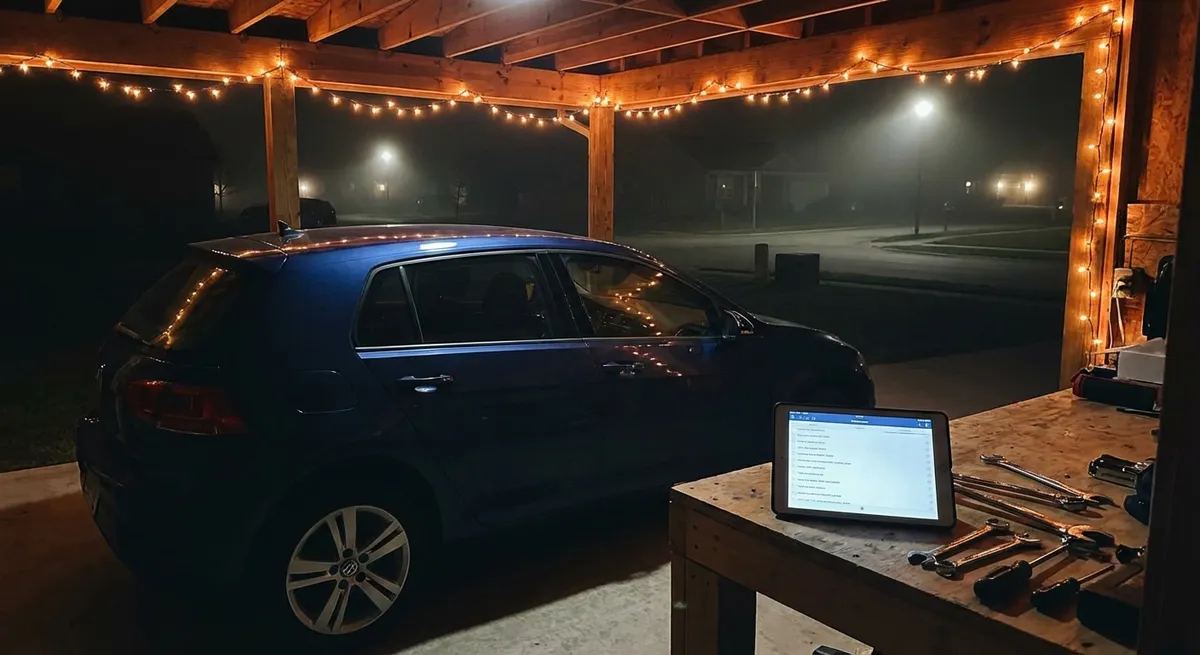
This guide focuses on practical, realistic habits you can set up once and let them work in the background—especially when the car is parked. Enthusiasts will appreciate the detail; everyday drivers will appreciate how simple most of this is to implement.
Turn Your Parking Spot Into a Rust Shield
Where and how your car sits has as much impact on its lifespan as how you drive it. Corrosion and moisture damage usually happen slowly, while the car is parked.
A few changes to your regular parking routine can dramatically slow rust and underbody damage:
- Choose high ground when possible. Parking at the top of a sloped driveway or on a spot that drains well reduces how long water sits around wheels, brakes, and underbody seams. Standing water and road salt are a perfect rust recipe.
- Avoid parking over grass or bare dirt long-term. Moisture from soil rises overnight, condensing on your car’s underside. A basic concrete paver pad or gravel base under your usual spot can reduce underbody moisture exposure.
- Rinse, then park under cover after wet, salty drives. In winter or coastal areas, a quick underbody rinse at a wash bay before you pull into the garage helps flush salt from brake lines, fuel lines, and seams. Let the car drip-dry outside for a few minutes, then park it inside so it dries fully.
- Use a breathable car cover, not plastic, outdoors. If you must store outside, avoid non-breathable tarps. They trap moisture against the paint and metal. A quality breathable cover lets condensation escape while still blocking UV and debris.
- Give the wheel wells attention. When you park after a rainy or salty drive, quickly look inside the wheel wells. Clumps of mud, leaves, or salt hold moisture against metal. Knocking out buildup with a gloved hand or soft brush reduces hidden rust hot spots.
These changes don’t take much daily effort, but over years, they can be the difference between a clean underbody and expensive rust repair or premature structural issues.
Use “Cooldown Time” to Protect Your Engine and Turbos
The most important part of many engines’ day is the last few minutes before shutdown. High heat and old, degraded oil are what really age internal components—especially on turbocharged engines.
You can use the final miles and the first minutes after parking to protect your engine:
- Ease off before you arrive. The last 1–3 minutes before you shut the engine off, drive gently. Lower RPM and light throttle give oil and coolant time to carry heat away from critical engine parts and turbo bearings. This “soft landing” reduces thermal stress.
- Don’t rev before shutdown. Blipping the throttle in park right before turning the key off spikes temperature and fuel wash on cylinder walls without giving the engine time to stabilize. Turn it off smoothly from a normal idle.
- Respect turbo cooldown needs. For turbocharged cars—especially after highway or spirited driving—avoid shutting down immediately after a hard run. A short, gentle cruise or idle period helps prevent oil baking into carbon deposits in the turbo, which can shorten its life.
- Avoid repeated short trips on a cold engine. If your routine is many very short drives, consider combining errands. Engines wear more when cold; coolant and oil need time to reach full temperature and evaporate moisture and fuel dilution.
- Use the right oil spec and change interval. Modern engines are designed around very specific oil formulations. Stick to the manufacturer’s specified grade and certification (e.g., Dexos, VW 504.00, etc.), especially on turbo or direct-injection engines. Older, degraded oil handles heat much worse.
These habits happen right at the end of your drive, but they pay off in fewer oil consumption problems, healthier turbos, and cleaner internals over the long term.
Stabilize Your Electrical System Before It Drains You
Many modern vehicles never fully “sleep.” Modules stay awake for a while, telematics ping servers, and some accessories slowly nibble at your battery. You can’t see it, but poor electrical habits can leave you with hard starts, weird warning lights, and premature battery failure.
Work with your car’s electronics instead of against them:
- Let the car go fully to sleep. After shutting off, many vehicles keep fans, pumps, or modules running for several minutes. Avoid repeatedly unlocking/locking, opening doors, or sitting with ignition on but engine off; this restarts wake cycles and drains the battery.
- Minimize unnecessary keyless proximity events. With keyless systems, walking past the car repeatedly with the key in your pocket can wake modules. If you store keys near a garage or driveway, consider a spot a bit farther away so the car isn’t constantly trying to “handshake.”
- Install a smart battery maintainer for infrequently driven cars. If you drive less than a few times a week, a quality smart charger/maintainer connected to the battery (or approved under-hood terminals) keeps charge healthy, prevents sulfation, and extends battery life—especially in cold climates.
- Shut down high-draw accessories first. Before turning the engine off, switch off heated seats, defrosters, and high-demand aftermarket electronics like light bars or high-wattage audio. This reduces immediate post-shutdown load when the alternator’s no longer helping.
- Pay attention to slow cranks or flickering lights. Changes in cranking speed, dimming interior lights, or random electronic glitches after parking can be early signs of a battery or charging system issue. Testing early is usually cheaper than waiting for a no-start.
By treating the battery and electrical system as components you actively manage—not just “stuff that works until it doesn’t”—you reduce sudden failures and maximize the life of expensive modern modules.
Make Your Tires Work for You, Not Against You
Your tires are aging and deforming most while they sit parked. Heat cycles, flat-spotting, slow leaks, and UV exposure mostly happen off the road, not on it. A few small setup changes will protect performance, comfort, and safety.
Focus on how you leave the car sitting, not just how you drive it:
- Set pressures when the car is truly cold. Check and adjust tire pressures first thing in the morning before driving. This “cold” baseline is what manufacturers specify. Doing it right after driving reads artificially high and leads to underinflation once they cool.
- Avoid parking with wheels cranked hard to one side. Storing the car with the steering at full lock puts extra, uneven load on the sidewalls and can contribute to odd wear patterns over time. Straighten the wheels before shutting down.
- Rotate your “resting position” if the car sits. If a vehicle is stored for long periods, rolling it a few feet every couple of weeks helps avoid flat-spotting in one section of the tire. For long-term storage, some enthusiasts slightly overinflate within safe limits (or use tire cradles) to reduce deformation.
- Don’t ignore very slow leaks. If a tire needs air every few weeks, it’s telling you something—corroded bead, bad valve stem, tiny puncture, or a crack in the wheel. Fixing it early prevents a sudden, dangerous loss of pressure on the road.
- Shield from sunlight when possible. UV degrades rubber. A garage is ideal, but even a basic carport or quality cover slows sidewall cracking. If you park in one spot daily, turning the car around occasionally can even out UV exposure.
Well-maintained tires don’t just last longer; they maintain grip, braking, and fuel economy—critical performance factors that tire neglect quietly chips away at.
Use Overnight Time to Dry Out Your Cabin and Brakes
Moisture trapped in your car—inside the cabin or in the brake system—does much of its damage while everything is sitting still. Rusted brake components, moldy HVAC systems, and fogged windows often trace back to how the car was left the night before.
You can put overnight time to work drying your vehicle out:
- Run A/C for a few minutes before you park, even in cooler weather. Air conditioning dehumidifies the cabin. Running it near the end of your drive helps remove moisture from the air and evaporator, reducing foggy windows next morning and slowing mold or musty smells in the HVAC.
- Turn off “recirculate” near the end of a drive. Letting in a bit of fresh outside air helps balance humidity and prevent the cabin from becoming a damp, sealed box. Just switch it off in the last few minutes before you arrive.
- Avoid setting the parking brake after heavy rain or washing (if you can park on level ground safely). In very wet conditions, especially on older cars, leaving the parking brake engaged for days can encourage pads or shoes to stick to rotors or drums. On level surfaces, using “Park” (for automatics) and wheel chocks if needed can reduce this risk. On steep hills, you must prioritize safety, so use the brake but try to move the car again before days go by.
- Address wet floormats immediately. If you tracked in snow or rain, flip the mats up or remove them overnight to let the carpet underneath dry. Trapped moisture under mats leads to corrosion of hidden floorpan areas and can upset sensitive wiring or airbag connectors often routed under seats.
- Crack windows strategically (when safe). In a secure, dry area, leaving windows open a fraction of an inch can help vent humidity, especially after a wet day. Just be mindful of security, animals, and sudden weather changes.
These small rituals turn your parked hours into active drying cycles, which keeps brakes cleaner, the interior healthier, and future electrical issues at bay.
Conclusion
Most car owners think maintenance happens at the shop, under the hood, or with a wrench in hand. In reality, a surprising amount of long-term reliability is shaped by what happens when the car is off and parked—overnight in your driveway, all day in a work lot, or for weeks during a trip.
By treating your parking spot as part of your maintenance plan—managing moisture, heat, electrical load, and tire stress—you let time work in your favor instead of quietly wearing your car out. None of these habits are complicated. Set them up once, build them into your routine, and your car will reward you with fewer surprises, better performance, and a longer, healthier life on the road.
Sources
- [U.S. Department of Transportation – NHTSA: Tire Safety](https://www.nhtsa.gov/equipment/tires) - Explains proper tire inflation, maintenance, and safety considerations
- [U.S. Department of Energy – Fuel Economy: Keeping Your Car in Shape](https://www.fueleconomy.gov/feg/maintain.jsp) - Covers how basic maintenance affects efficiency and long-term vehicle health
- [AAA – Battery Maintenance and Testing](https://www.aaa.com/autorepair/articles/car-battery-care-and-maintenance) - Provides guidance on extending battery life and recognizing early warning signs
- [Bridgestone – How to Prevent Tire Dry Rot and Cracking](https://www.bridgestonetire.com/learn/maintenance-and-repair/how-to-prevent-tire-dry-rot-and-cracking/) - Details how storage, UV, and underuse impact tire aging
- [EPA – Vehicle and Fuel Emissions Testing: Maintaining Your Vehicle](https://www.epa.gov/vehicle-and-fuel-emissions-testing/maintaining-your-vehicle) - Discusses how proper upkeep reduces emissions and improves reliability