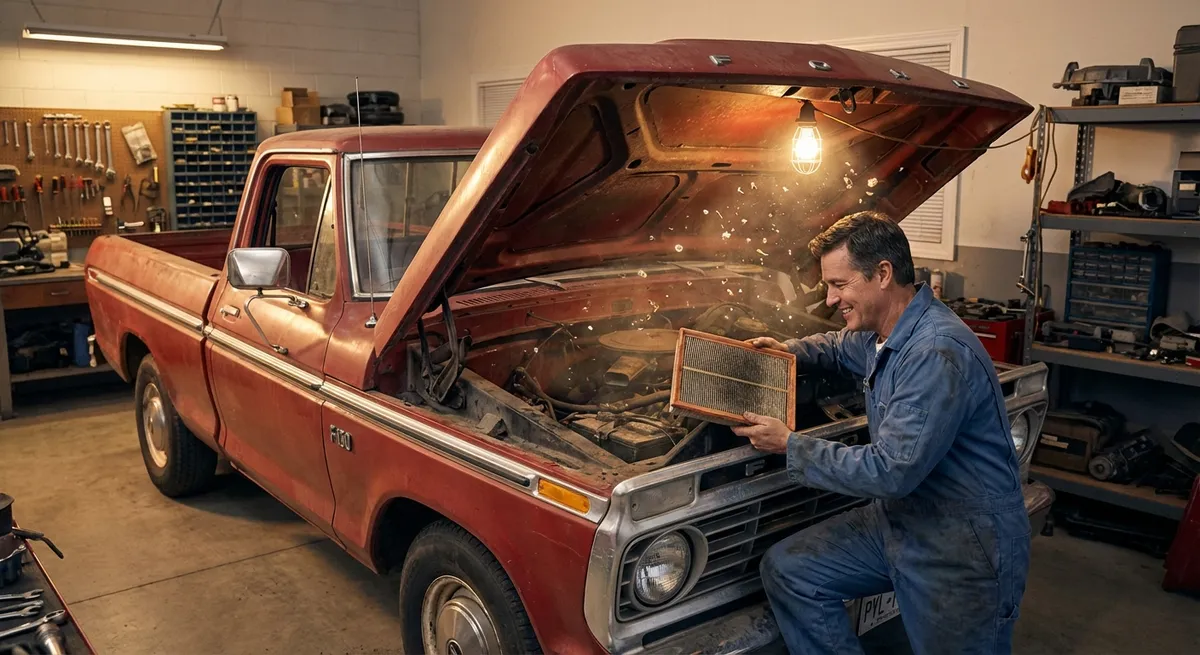
If you drive regularly and plan to keep your car beyond the warranty, paying attention to a few “hidden” maintenance habits can make the difference between a high-mileage, smooth-running engine and a costly rebuild. Here are five practical, enthusiast-level steps that protect the heart of your car without turning you into a full-time mechanic.
1. Warm-Ups That Actually Help (Not Hurt) Your Engine
Letting a car “warm up” for 10–15 minutes in the driveway is mostly a holdover from carburetor days. Modern fuel-injected engines don’t need long idling, but they do need thoughtful warm-up under light load.
How to do it right:
- Start and go within 30–60 seconds. Use that short time to buckle up, set your mirrors, and get your route ready—then drive off gently. Light driving warms up the engine, transmission, and differential faster than idling.
- Keep RPMs low for the first 5–10 minutes. Avoid heavy throttle, high revs, and full-throttle highway merges while the coolant and oil temps are still climbing.
- Don’t trust the coolant gauge alone. Your coolant can reach operating temperature while your oil is still relatively cold and thick. Give it extra time before hard acceleration, especially in cold climates.
- In winter, scrape and go—don’t idle for comfort. Long idling washes extra fuel into the cylinders and past the rings, diluting your oil over time. Use seat heaters and defrosters instead of a 15-minute idle.
- For turbocharged engines: Gentle driving during warm-up is even more critical. Cold, thick oil and high exhaust temperatures are a bad mix for turbo bearings.
This kind of warm-up makes your oil flow properly, minimizes internal wear, and protects expensive components like timing chains, turbochargers, and catalytic converters—without wasting fuel in the driveway.
2. Oil Choice and Change Intervals That Match How You Actually Drive
Most people either change oil too often “just to be safe” or stretch factory intervals without considering their real driving conditions. Both can be sub‑optimal.
Focus less on the mileage number and more on your usage:
- Short trips (under 10–15 minutes) mean the oil rarely gets hot enough to evaporate fuel and moisture. If this describes most of your driving, follow the severe service interval in your owner’s manual, not the normal one.
- Lots of idling, heavy traffic, towing, or hot climates also count as severe service. These conditions oxidize oil faster and stress the additive package.
- Use the correct viscosity and certification. Look for the exact spec in your owner’s manual (e.g., API SP, ILSAC GF‑6, VW/Audi, BMW, MB, Dexos). Modern oils are tailored for specific engines, emission systems, and fuel economy goals.
- Synthetic vs. conventional: A high-quality synthetic oil usually resists breakdown better under heat and high RPM, making it a smarter choice for turbo engines, performance driving, or extreme temperatures.
- Don’t ignore time. Even if you don’t hit the mileage, oil ages from moisture, heat cycles, and chemical breakdown. Follow the time limit (often 6–12 months) as well as the mileage.
Matching your oil and change schedule to the way you drive does far more for engine life than blindly sticking to one-size-fits-all mileage myths.
3. Cooling System Discipline: Stop Cooking Your Engine From the Inside
Engines are designed to run hot—but in a very narrow temperature window. Once coolant quality drops or flow is restricted, everything from head gaskets to plastic housings starts to suffer.
A few quiet habits can dramatically extend engine life:
- Change coolant on schedule, not when it looks “bad.” Modern long-life coolants can still look clean while their corrosion inhibitors are depleted. Follow the interval in your manual (often 5 years/100,000+ miles, but it varies by manufacturer and coolant type).
- Use the correct coolant type. Mixing random “universal” coolant with manufacturer‑specific formulas can create sludge or accelerate corrosion. Match the spec or use OEM fluid whenever possible.
- Inspect the expansion/overflow tank regularly. Look for:
- Oil film or sludge (possible head gasket issue)
- Rust or scale (sign of internal corrosion)
- Low level with no visible leaks (could indicate slow internal loss)
- Check hoses, clamps, and plastic fittings. Soft, bulging, or cracked hoses and brittle plastic T-fittings or flanges are common failure points that can lead to sudden overheating.
- Never ignore a creeping temperature gauge. If you see temps slowly trending higher over weeks (or the fans are running more often than usual), investigate early—often it’s a sticky thermostat, weak water pump, partially clogged radiator, or air in the system.
A healthy cooling system protects head gaskets, valve seats, turbochargers, and even engine oils and ATFs that are cooled via heat exchangers. It’s one of the best “quiet” investments you can make in engine longevity.
4. Air and Fuel: Keeping the Mix Clean and Consistent
Engines are air pumps. Anything that restricts clean airflow or disrupts precise fuel delivery quietly robs power and increases internal deposits.
On the air side:
- Inspect the engine air filter at least once a year. Replace it if it’s heavily loaded with dirt or bugs, not just by mileage alone. Dusty environments can clog filters much faster than the schedule assumes.
- Don’t run “performance” oiled filters unless you know what you’re doing. Over-oiling can contaminate mass airflow (MAF) sensors; under-oiling can let in fine dust. Modern ECUs and intake designs often don’t benefit much from them.
- Check for intake leaks downstream of the MAF. Cracked hoses or loose clamps can let in unmetered air, causing lean conditions, rough idle, and extra combustion stress.
On the fuel side:
- Buy fuel from high-turnover stations. Busy stations are less likely to have stale or water-contaminated fuel, especially important for direct-injection engines.
- Use the recommended octane, not just the cheapest. If the manual says “premium required,” don’t cheap out—knock and timing pull can quietly increase cylinder pressures and heat.
- Periodic fuel system cleaning can help, especially on GDI engines. Top‑tier fuels already contain detergents, but direct injection engines often benefit from:
- Quality fuel system cleaners (used as directed)
- Occasional walnut blasting or professional intake cleaning if carbon buildup affects performance or idle
- Avoid running near-empty regularly. Doing so can overwork the in-tank fuel pump (which is cooled by the fuel) and may increase the risk of sediment entering the system.
Smooth, clean airflow and consistent, appropriate fueling not only protect the engine but also keep emissions systems like oxygen sensors and catalytic converters healthier for longer.
5. Listening for Early Warnings (And When to Stop Driving)
Modern engines often warn you long before catastrophic failure—if you know what to listen and feel for. Enthusiasts tend to notice small changes quickly; turn that awareness into prevention.
Pay attention to these subtle red flags:
- New or changing ticking/knocking sounds:
- Cold start ticking that fades quickly can be normal injector noise—but if it’s getting louder or lasting longer, it’s worth a check.
- A rhythmic knock that changes with RPM can signal rod bearing, piston slap, or detonation issues.
- Oil consumption that’s slowly increasing:
- Needing to top off occasionally isn’t always dire, but track how often and how much. A rising trend may indicate ring, valve seal, or PCV problems.
- Vibration at specific RPMs or loads:
- Beyond tires and mounts, this can point to misfires, failing coils, or uneven compression that stress the engine.
- Unexplained coolant or oil level changes:
- Losing coolant with no visible leaks can mean internal leaks; foamy oil or milky residue under the cap should be investigated quickly.
- Check-engine light behavior:
- A flashing CEL usually indicates active misfire, which can damage catalytic converters and wash down cylinder walls. Reduce load immediately and avoid driving hard until it’s diagnosed.
When something feels “off,” it’s usually cheaper to have it inspected early than to wait for a louder, more dramatic (and more expensive) finale. Combining attentive driving with regular fluid checks is one of the most powerful maintenance habits you can develop.
Conclusion
Long engine life isn’t magic, and it isn’t only about following the most basic schedule in the owner’s manual. It’s about how you warm the engine up, how you match oil and intervals to your driving, how seriously you take the cooling system, how cleanly you manage air and fuel, and how quickly you respond to subtle changes.
None of these habits require a lift, a toolbox full of specialty tools, or pro‑level skills. But together, they quietly defend your engine from the invisible enemies—heat, contamination, neglect, and delay—that shorten its life. Treat these five points as part of how you drive, not just what you do in the garage, and your engine will pay you back in smooth miles and fewer ugly surprises.
Sources
- U.S. Department of Energy – Fuel Economy: Keeping Your Car in Shape – Covers how proper maintenance (fluids, filters, tune-ups) affects efficiency and longevity
- AAA – How Often Should You Change Engine Oil? – Discusses oil change intervals, severe service conditions, and modern oil considerations
- University of California, Berkeley – Internal Combustion Engine Fundamentals (Course Notes) – Technical background on engine operation, combustion, and factors that affect wear
- Penn State Extension – Automotive Cooling Systems – Detailed overview of coolant roles, corrosion, and the importance of proper maintenance
- Top Tier Detergent Gasoline – Consumer Information – Explains detergent gasoline standards and benefits for keeping fuel systems and engines clean