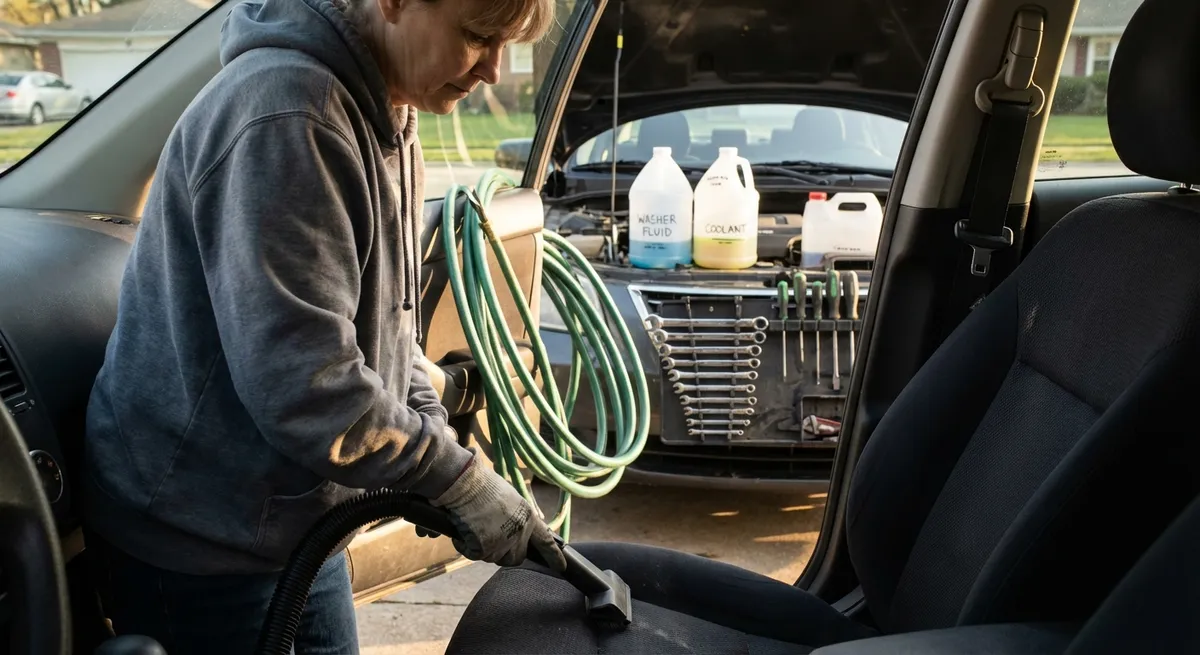
Below are five actionable maintenance habits that automotive enthusiasts and practical owners alike can build into their routine.
1. Treat Fluids Like Wear Items, Not Just Checkboxes
Many owners assume that as long as there’s “some” fluid in the system, it’s fine. In reality, fluids age, oxidize, and lose their protective properties long before they run out.
Engine oil is only the start. Transmission fluid, brake fluid, coolant, and differential fluid each protect specific and expensive hardware. Once their additives break down, you’ll see more heat, more wear, and more corrosion—things that don’t show up until a part fails.
Practical move: create your own fluid schedule that’s stricter than “lifetime” claims.
- Engine oil: follow the severe-service interval in your manual if you do short trips, frequent cold starts, or lots of city driving. That often means 5,000–6,000 miles (8,000–10,000 km) even for synthetics.
- Brake fluid: replace every 2–3 years, regardless of mileage. It absorbs moisture over time, which lowers boiling point and corrodes internal parts.
- Coolant: don’t wait for a leak. Flush and refill roughly at the midpoint of the manufacturer’s interval if you tow, drive in extreme temps, or keep the car long-term.
- Transmission fluid: on automatics and DCTs, proactive changes (often 40,000–60,000 miles / 65,000–95,000 km) can significantly delay or prevent hard shifts and overheating.
Log each change with date, mileage, fluid type, and brand. Over time you’ll see patterns, catch small leaks early, and you’ll have strong records if you ever sell the car.
2. Make Tires and Alignment Part of Your Regular Inspection, Not Just Emergencies
Tires are the only contact between your car and the road, yet they’re often treated as “replace when bald.” That approach wastes money and quietly degrades safety and handling long before the tread is gone.
Uneven wear is your car’s way of telling you something is off—alignment, suspension bushings, tire pressure, or driving style. Addressed early, it’s cheap. Ignored, it shortens tire life and can stress steering and suspension components.
Practical move: build a structured tire routine.
- Every month: check and set pressure when tires are cold, using the spec on the driver’s door jamb, not the sidewall. Underinflation builds heat and accelerates wear; overinflation shrinks the contact patch and can reduce grip.
- Every fuel fill or wash: visually inspect tread for nails, cords showing, sidewall bulges, or unusual “cupping” or feathering.
- At each oil change: request a tire rotation (if your pattern allows) and a quick alignment check if you see uneven wear or your steering wheel doesn’t sit straight.
Enthusiasts can take this further by learning to read wear patterns: inside-edge wear suggests excessive negative camber or toe-out; outside-edge wear can indicate aggressive cornering or too much toe-in. Catching it early lets you correct alignment settings before another set of tires gets sacrificed.
3. Protect Belts, Hoses, and Rubber Before They Fail, Not After
Rubber parts age from heat cycles, ozone, and time—not just mileage. Modern engines hide most belts and hoses under covers, so it’s easy to forget they exist until a breakdown or an overheating incident.
Accessory belts drive alternators, power steering pumps, and AC compressors. A failed belt can leave you without charging, assist steering, or cooling. Hoses carry hot coolant under pressure; a failed hose can overheat an engine quickly.
Practical move: include rubber inspection in your seasonal or annual routine.
- With the engine cold, visually inspect belts for cracking, glazing (shiny surfaces), fraying, or missing chunks.
- Squeeze coolant hoses gently; they should feel firm but not rock-hard or mushy. Soft spots, swelling, or oil contamination are red flags.
- Pay attention to minor signs: chirping noises on cold start, faint burning smells, or intermittent squeals under load often point to belt issues.
If you own an interference engine with a timing belt, treat the replacement interval as non-negotiable maintenance, not a suggestion. A broken timing belt on these engines can cause catastrophic internal damage. Enthusiasts often replace water pumps, tensioners, and related seals at the same time to avoid paying twice for the same labor.
4. Use Your Ears and Nose: Small Clues Prevent Big Repairs
Modern cars are quiet and insulated, which makes any new sound or smell more meaningful. Many expensive repairs start out as faint noises or odors that owners dismiss for months.
Brake pad wear often announces itself as a high-pitched squeal. Wheel bearing issues may start as a faint growl at specific speeds. Exhaust leaks can produce ticking sounds on cold start. The earlier you catch these, the simpler and cheaper the fix.
Practical move: treat your daily drive as a diagnostic test.
- Turn off the radio and climate control once or twice a week on familiar roads and listen for changes: new rattles, hums, ticks, or clunks.
- Note when the symptom appears: only on cold start, only during hard turns, only over bumps, or only at highway speed. This makes diagnosis faster and more accurate.
- Pay attention to smells: sweet (coolant), acrid/burning (oil on hot surfaces), metallic/ozone (electrical), or rotten egg (catalytic converter or fuel system problems).
Document what you notice with short notes or voice memos: date, conditions, and description. If the symptom gets worse, you have a clear timeline to share with your mechanic, which reduces guesswork and labor time.
5. Keep the Undercarriage and Brakes Clean, Especially If You See Winter or Salt
Road salt, moisture, and grime do their worst work where you rarely look: the underside of your car, behind wheels, and on brake components. Rust doesn’t just eat body panels—it attacks brake lines, fuel lines, suspension arms, and fasteners that hold everything together.
Enthusiasts know that a clean undercarriage greatly slows corrosion, especially in snowy or coastal regions. Even if you don’t wrench on your car yourself, this pays off years later in easier repairs and fewer seized parts.
Practical move: build underbody care into your wash habits.
- In winter or salty environments, use a wand or drive-through wash with underbody spray at least once a month, and ideally after heavy salt exposure.
- Pay special attention to the wheel wells and the backside of wheels, where salty slush and brake dust accumulate.
- After washing, a short drive to dry brakes (gentle stops) helps prevent surface rust on rotors from building up and causing uneven braking or noise.
For older vehicles, periodic rust-proofing or applying protective coatings to vulnerable areas (when done properly and on clean, dry surfaces) can add years of structural life. The key is consistency—one undercarriage wash doesn’t do much, but a habit over several winters makes a measurable difference.
Conclusion
Cars don’t suddenly become unreliable; they gradually fall out of tune when small maintenance habits are skipped. By treating fluids as wear items, watching your tires and alignment proactively, inspecting rubber components, listening and smelling for subtle changes, and protecting the undercarriage and brakes, you push major problems further into the future—and often avoid them entirely.
These aren’t glamorous upgrades, but they’re the things that keep an enthusiast’s daily driver feeling tight and trustworthy long after most cars start showing their age. Build these five habits into your routine, and your car will quietly repay you with more miles, fewer surprises, and a better drive every day.
Sources
- NHTSA – Vehicle Maintenance Tips – U.S. government guidance on essential maintenance practices and safety-related checks
- AAA – How Often Should I Change My Vehicle’s Fluids? – Practical recommendations and intervals for common automotive fluids
- Bridgestone – Tire Care and Maintenance – Detailed information on tire inspection, pressure, rotation, and alignment considerations
- U.S. Department of Energy – Maintenance and Driving Tips – Explains how proper maintenance and tire care improve efficiency and longevity
- Penn State Extension – Road Salt Impact on Vehicles – Discussion of how road salt accelerates corrosion and why underbody cleaning matters