This isn’t a full DIY mechanic course. It’s a practical, repeatable checkup you can do in about five minutes once a month. For most owners, that’s the sweet spot between “never” and “weekend project.”
1. Fluid Levels: Quick Visual Checks That Catch Big Problems Early
You don’t need tools or a lift to spot low or contaminated fluids; you just need to know what “normal” looks like under your hood.
Start with engine oil. With the engine off and cooled for a few minutes, pull the dipstick, wipe it clean, reinsert fully, then pull again to check the level against the marks. The oil should sit between the low and full marks and look reasonably clean (golden to dark brown). Milky, foamy, or gritty oil can signal coolant contamination or internal wear—time to call a professional.
Next, look at coolant in the overflow reservoir (never open a hot radiator). The level should be between the MIN and MAX lines. If you’re regularly topping off coolant, you may have a leak or a failing component (like a water pump or radiator).
Check brake fluid in its translucent reservoir—typically near the firewall. It should be near the MAX line and a light, clear amber. Dark, sludgy fluid can mean moisture or contamination and usually calls for a flush. Power steering and windshield washer fluid (where applicable) are also worth a glance; they’re cheap to top off and keep basic systems working smoothly.
Getting familiar with your normal fluid levels makes it much easier to notice when something is off, giving you a head start on potential failures.
2. Tires: Fast Checks That Protect Safety, Fuel Economy, and Ride Quality
Your tires are the only part of your car touching the road, and a 60-second inspection can catch issues that affect safety and cost you money at the pump.
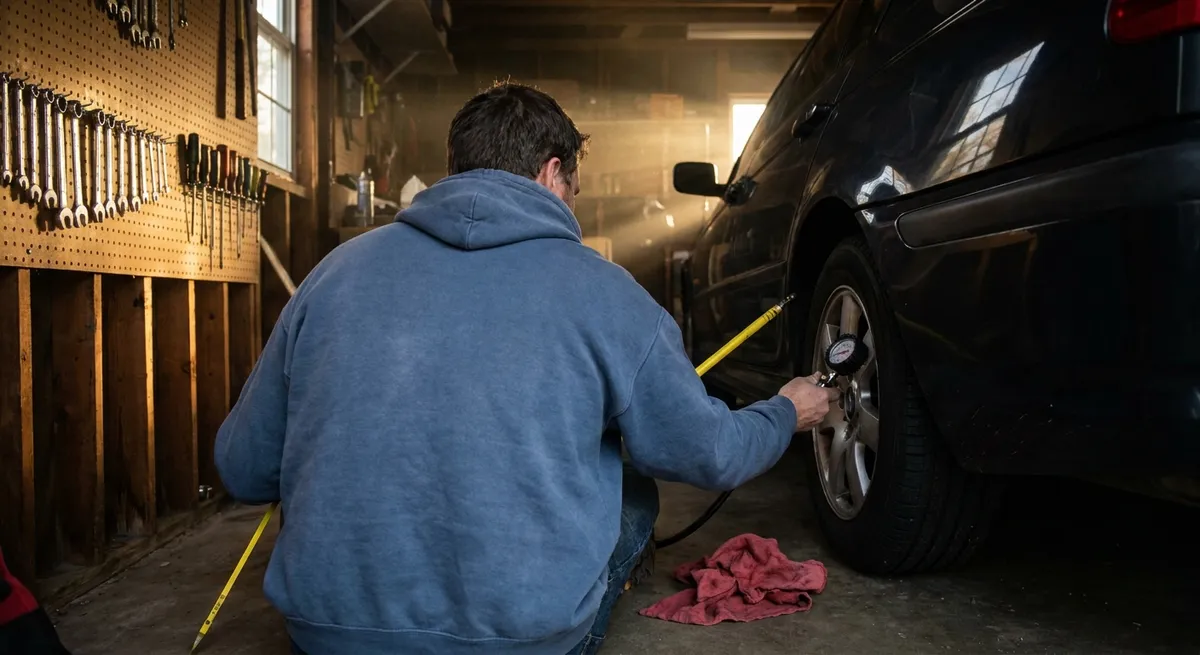
Start with tire pressure. Use a reliable gauge and compare readings against the placard inside your driver’s door jamb (not the max pressure listed on the tire sidewall). Underinflated tires increase rolling resistance, wear unevenly, and can overheat; overinflated tires reduce grip and ride harshly. Adjust pressures when tires are “cold” (the car hasn’t been driven more than a couple of miles).
Next, look at tread depth. A simple check is the “penny test”: insert a penny with Lincoln’s head upside down into the tread. If you can see the top of his head, the tire is at or below 2/32" and legally worn out in many regions. Uneven wear patterns—more wear on the inside or outside edges, cupping, or feathering—often point to misalignment or suspension issues that a shop should inspect.
Don’t ignore sidewalls. Bubbles, deep cracks, or cuts can mean weakened structure and a higher risk of blowouts, especially at highway speeds. Finally, spin each tire slightly and listen: scraping, grinding, or rhythmic resistance can hint at wheel bearing, brake, or debris issues that may need professional attention.
A tiny habit—checking your tires monthly—pays off in better handling, quieter rides, lower fuel use, and fewer unpleasant surprises.
3. Lights and Wipers: Visibility Systems That Quietly Save You at Night and in Weather
Seeing and being seen is one of the simplest forms of “passive safety,” but many drivers discover failed lights or useless wipers only when they desperately need them.
Start the car and walk around it with the lights on. Check low beams, high beams, parking lights, taillights, license plate light, and side markers. Then press the brake pedal and look at brake lights (using a reflection, a wall, or a helper). Activate left and right turn signals and hazard flashers. If a signal is blinking quickly, it often means a bulb is out or an LED module has failed.
Modern headlight lenses can fog or yellow with age, cutting output significantly. A plastic restoration kit or professional service can restore clarity and improve nighttime visibility without touching the bulbs. If one headlight seems noticeably dimmer or a different color, consider replacing bulbs in pairs to maintain even output and color.
Wipers are your first line of defense in rain and snow. Lift each blade and inspect the rubber: it should be flexible, not cracked, torn, or hardened. Streaking, chatter, or missed sections on the windshield are clues that replacements are due. While you’re there, clean the windshield inside and out—film buildup can create glare and eye fatigue, especially at night.
Functional lights and wipers don’t feel like upgrades—until they suddenly become the difference between a near-miss and a collision.
4. Under-Hood Belt, Hose, and Battery Checks: Fast Visuals That Prevent Stranding
Many breakdowns come from parts that literally sit in plain sight. A quick visual scan under the hood can warn you about components reaching the end of their life before they fail on the road.
With the engine off, look at drive belts (serpentine or accessory belts). They should sit centered in their pulleys, with no missing chunks, deep cracks across the ribs, or fraying edges. Modern belts can look OK right up until failure, but obvious cracking or glazing (shiny, polished surfaces) are clear replacement signals.
Check rubber hoses leading to the radiator, heater core, and other cooling system parts. Firm but flexible is good; hoses that feel very soft, bulging, spongy, or cracked at the ends can split under pressure. A coolant hose failure can overheat the engine in minutes, leading to very expensive damage.
Now look at the battery. Corrosion (white, blue, or green crust) on terminals or clamps interferes with charging and starting performance. Light corrosion can often be cleaned with a battery-safe brush and appropriate solution; heavy buildup or damaged terminals should be checked by a shop. Also note the battery’s age (often on a label): many last 3–5 years in typical conditions, but hot climates can shorten that. If your cranking sounds slow or inconsistent and the battery is older, testing at a parts store or mechanic is wise.
This entire scan takes under a minute once you know what to look for, and it’s one of the best ways to avoid roadside tow trucks.
5. Cabin, Brakes, and Smells: Using Your Senses as Diagnostic Tools
Your car constantly gives feedback; we just get used to tuning it out. A quick “sensory checklist” during normal driving can help catch issues early.
When you first roll out of your driveway, listen with the radio off and windows cracked slightly. Do you hear new squeaks over bumps, grinding when you brake, or rhythmic thumps that increase with speed? High-pitched squeal during light braking can mean worn pads contacting built-in wear indicators; grinding usually signals metal-on-metal contact and more urgent attention.
Pay attention to brake feel. A firm, consistent pedal that stops the car straight is normal. A spongy pedal, extra travel, or pulling to one side can indicate air in the system, fluid issues, or mechanical problems at a corner. Vibrations in the steering wheel or pedal under braking often come from warped rotors or uneven pad deposits.
Inside the cabin, note any persistent smells. A sweet, syrupy odor can suggest a coolant leak (sometimes from a heater core). A strong, acrid burning smell may point to oil on hot surfaces or dragging brakes. A musty or moldy smell when the A/C is on often traces back to a dirty cabin air filter or microbial growth on the evaporator; replacing the filter and running the fan on high with A/C off for a few minutes before shutting down can help reduce moisture.
Finally, feel for changes in steering and suspension. Excessive wandering, delayed response, or a “loose” sensation in the wheel could mean worn tie rods, ball joints, bushings, or alignment problems. Documenting when you first notice symptoms—speed, conditions, noise type—gives your mechanic better clues and avoids guesswork.
Your senses are free diagnostic tools. Paying attention to them for even a few seconds each drive makes the rest of your maintenance smarter and more targeted.
Conclusion
You don’t need a garage full of tools or a mechanic’s certification to keep your car in top shape. A consistent, five-minute routine—checking fluids, tires, lights, belts and hoses, and using your senses on every drive—creates a practical early-warning system for problems that would otherwise show up as breakdowns or big repair bills.
The goal isn’t to turn you into a DIY technician; it’s to turn you into an informed owner who notices changes before they become crises. Over months and years, these small habits keep your car safer, more reliable, and more enjoyable to drive—and they give you better information when it is time to visit a professional.
Sources
- National Highway Traffic Safety Administration (NHTSA) – Vehicle Maintenance - Federal guidance on basic safety-related vehicle maintenance, including tires, lights, and brakes
- U.S. Department of Energy – Fuel Economy: Keeping Your Car in Shape - Explains how proper maintenance (especially tire pressure) impacts fuel efficiency
- AAA – Car Care and Maintenance - Practical advice from AAA on routine inspections and preventing common breakdowns
- Bridgestone – How to Check Tire Tread Depth - Detailed explanation of tread depth checks and wear patterns
- Firestone Complete Auto Care – Signs Your Battery is Failing - Overview of age, corrosion, and performance clues that a car battery needs attention