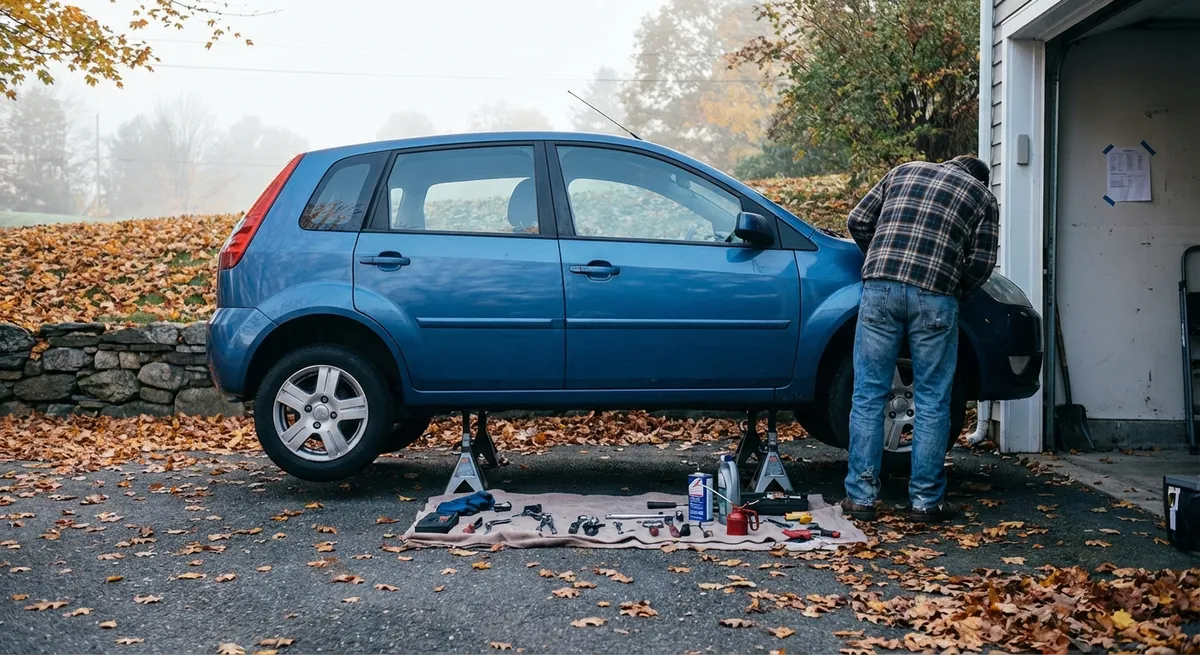
This article breaks maintenance into a simple year‑round loop with five practical habits. Follow them consistently and you’ll catch issues early, stretch component life, and keep your car feeling tight and responsive.
Build a 12‑Month Maintenance Calendar (And Stick to It)
Most owners rely on mileage alone, but time matters just as much. Fluids age, rubber dries out, and filters load up even if you don’t drive much. Creating a basic yearly calendar turns “I’ll get to it someday” into a predictable routine.
Start by listing the big recurring items: oil changes, tire rotations, brake inspections, cabin and engine air filters, coolant checks, and general inspections. Then map them to either mileage (5,000–7,500 miles for oil on most modern cars using synthetic, or your manufacturer’s interval) or specific months if you drive less. For example, you might do oil and a quick multipoint inspection every spring and fall, tires and alignment check in late winter, and a full fluid/top‑to‑bottom inspection before summer.
Use your phone’s calendar or a dedicated maintenance app and set reminders a couple of weeks before each task window. Make notes when you complete each job—date, mileage, what you did, and any observations (e.g., “slight brake squeal, 4 mm pad left”). Over a couple of years, that log becomes a powerful tool: patterns emerge, you can forecast upcoming expenses, and you’ll have solid documentation that helps if you sell or need to prove proper care for warranty claims.
Adopt a “5‑Minute Walkaround” Every Month
Most serious issues start as small, visible hints. A quick walkaround once a month can catch problems long before they become dangerous or expensive.
Do this on a level surface in daylight:
- Tires: Check for uneven wear, bulges, cuts, or exposed cords. Run your hand lightly across the tread—feathering (a saw‑tooth feel) can indicate alignment or suspension issues. Verify tread depth with a quarter or tread gauge and compare all four tires; one wearing faster tells a story.
- Leaks and drips: Look under the car after it’s been parked overnight. Fresh oil, coolant, or transmission fluid spots are early warning signs. Also peek into the engine bay for dried coolant traces (white/green/pink crust) around hoses and fittings.
- Lights and lenses: Turn on low beams, high beams, hazards, and brake lights, and walk around. Cloudy or yellowed lenses reduce light output; a simple restoration kit can dramatically improve night visibility.
- Glass and wipers: Check for chips or cracks in the windshield—small rock chips are cheaper to repair than a full replacement. Inspect wiper blades for tears or hard, brittle edges and replace if they chatter or streak.
- Body and trim: Look for loose splash shields, hanging underbody panels, or loose exhaust shields that can rattle or drag. These are usually inexpensive to secure if caught early.
This 5‑minute habit is especially useful after winter, off‑road use, or any hard driving. For enthusiasts, it’s also a chance to spot alignment changes, camber wear, or track‑day damage early enough to adjust setup or driving habits.
Make Tires and Brakes a Regular Performance Check, Not Just a Repair
Tires and brakes aren’t just safety items—they define how your car feels. Treat them like performance components you intentionally manage, not parts you ignore until they squeal or go bald.
Set a recurring reminder to:
- Check tire pressure monthly and before long drives. Use a quality gauge when tires are cold. Compare your readings to the driver‑door jamb sticker, not the tire sidewall. Underinflation increases wear and fuel consumption; overinflation reduces grip and comfort. For enthusiasts, adjust within the recommended range for your driving style (slightly higher front pressures for sharper turn‑in, for example), but avoid going beyond safe limits.
- Rotate tires on schedule. Most manufacturers suggest every 5,000–7,500 miles, but follow your owner’s manual for directional or staggered setups. Regular rotation evens wear, extends life, and can highlight suspension problems if one position consistently wears faster.
- Visually inspect brake pads and rotors. With the wheel spokes, you can usually see pad thickness—if it looks close to the steel backing plate, it’s time to plan a service. Grooves, heavy scoring, or blue discoloration on rotors can indicate overheating or contamination.
- Pay attention to feel and sound. Pulsation when braking can indicate rotor issues or suspension problems. A pull to one side may mean caliper trouble, uneven pad wear, or alignment issues. High‑pitched squeals might be wear indicators contacting the rotor, warning that pad life is nearly over.
- Flush brake fluid on time. Even if your car still “stops fine,” brake fluid absorbs moisture over time, especially in humid climates. That moisture lowers the boiling point and can corrode internal components. Enthusiasts should follow the shorter interval in the manual or consider a 2–3 year fluid change cycle.
By treating this as ongoing tuning instead of reactive repair, you’ll maintain consistent braking feel and grip—key to both safety and driving enjoyment.
Prevent “Invisible” Wear with Smart Fluid and Filter Habits
Many of the most expensive failures—engines, transmissions, cooling systems—start with invisible chemical breakdown long before you see or feel anything. Staying ahead of fluids and filters is one of the highest‑value habits you can develop.
Key points to build into your routine:
- Engine oil: Follow the severe or normal schedule in your manual based on your actual driving. Lots of short trips, stop‑and‑go traffic, towing, or wide temperature swings usually qualify as severe duty, even if your mileage is low. If you stretch intervals, use oil that meets your manufacturer’s exact specification, not just the viscosity.
- Transmission fluid: Many modern cars list “lifetime” or “sealed” transmissions, but manufacturers also often publish service intervals under severe conditions. Check the maintenance schedule section of your manual or your automaker’s service site. A preventive fluid change at the recommended interval (or slightly sooner) is much cheaper than transmission rebuilds.
- Coolant: Modern coolants last longer than older formulations, but they still degrade. Fresh coolant maintains corrosion protection inside the engine and radiator. Use the correct type (color is not a reliable guide) and change on schedule; mixing incompatible coolants can cause sludge and block passages.
- Air filters: A clogged engine air filter can reduce performance and fuel economy. Replace according to the schedule or sooner if you drive in dusty conditions. The cabin air filter is often neglected but directly affects HVAC performance, defrosting, and air quality—especially important for allergy sufferers.
- Fuel quality and occasional system cleaning: Top‑tier fuels contain detergents that help keep injectors and valves cleaner. For direct‑injection engines, consider following brand‑approved intake cleaning intervals or procedures, especially if you notice rough idle or hesitation.
Enthusiasts can go a step further by periodically sending used oil samples to a lab. The reports show wear metals and additive condition, helping you optimize intervals and catch abnormal engine wear early.
Turn “Weird Noises and Smells” into Early Diagnostics
Many drivers ignore subtle changes until they become obvious problems. Training yourself to notice and interpret noise, vibration, and smell gives you a huge head start on maintenance.
Pay attention to:
- Cold‑start changes: Longer cranking times, rough idle when cold, or new ticking/knocking sounds on startup can indicate battery, ignition, fuel, or internal engine wear. If they appear suddenly, don’t wait for them to get worse.
- New vibrations: A shake in the steering wheel at certain speeds often points to wheel balance or tire issues. A vibration under braking suggests rotor or suspension problems. A vibration felt in the seat at highway speeds may come from rear tires or drivetrain.
- Whines, hums, and clunks: A growing hum that changes with speed can be a wheel bearing. Clunks over bumps may come from worn bushings, ball joints, or sway‑bar links. Rhythmic flapping or slapping noises can be a loose underbody panel or damaged tire.
- Smells:
- Sweet smell = possible coolant leak.
- Burning rubber = slipping belt or hose touching a hot surface.
- Hot oil = leak dripping onto exhaust.
- Fuel smell = potential fuel leak or evaporative system issue.
- Dashboard warnings and “soft” symptoms: Modern cars often show subtle warnings early—check engine lights, powertrain warnings, or even messages like “reduced power.” Don’t clear codes blindly; read and document them before any reset. A basic OBD‑II scanner is inexpensive and gives you insight before you visit a shop.
The goal isn’t to self‑diagnose everything. It’s to notice patterns early, record what you observe (when it happens, conditions, duration), and give a clear description to a shop or forum. That alone can reduce troubleshooting time and repair costs.
Conclusion
A car that feels tight, quiet, and predictable isn’t an accident—it’s the result of small, consistent maintenance habits. By committing to a simple 12‑month calendar, doing quick monthly walkarounds, treating tires and brakes as tunable components, staying on top of fluids and filters, and taking noises and smells seriously, you move from reactive repairs to proactive control.
For everyday drivers, this means fewer surprises and a more dependable commute. For enthusiasts, it means a car that rewards you every time you drive it—with performance, feedback, and longevity that match the time and attention you invest.
Sources
- U.S. Department of Energy – Fuel Economy: Keeping Your Car in Shape – Explains how proper maintenance improves fuel economy, performance, and vehicle longevity.
- National Highway Traffic Safety Administration (NHTSA) – Tire Maintenance – Covers tire pressure, tread depth, and safety recommendations directly from a U.S. government agency.
- AAA – Vehicle Maintenance Checklist – Practical overview of key maintenance items and service intervals for typical drivers.
- Bridgestone – Brake Fluid: What It Is and When to Change It – Detailed explanation of brake fluid function, degradation, and recommended change intervals.
- Edmunds – Car Maintenance Guide – Manufacturer‑based maintenance schedules and explanations of common service items.