Start With the Commute You Actually Drive, Not the Dream Trip You Post
Many buyers shop for the fantasy version of their driving, not the week-to-week reality—and end up with more car than they can use or afford.
Before you even open a listings site, write down your real-world driving patterns for a typical month: average daily distance, mix of highway vs. city driving, parking situation at home and work, and how often you carry passengers or cargo. This becomes your baseline spec sheet.
Match that baseline to body style and powertrain first, not to trim lines or paint colors. If your commute is mostly stop-and-go city driving, prioritize fuel economy, visibility, and a compact footprint over top speed or off-road modes. If you routinely drive long highway stretches, cabin comfort, seat quality, adaptive cruise, and noise levels matter more than a tenth of a second in 0–60.
Think about edge cases you realistically face: mountain roads in winter, frequent airport runs with luggage, or towing a small trailer. Make sure the car meets those needs without overbuilding for situations that almost never happen. A realistic use profile not only narrows your choices but also keeps you from being upsold into unnecessary capability you’ll pay for every month.
Treat Total Cost of Ownership as the Real Price Tag
The window sticker or listing price is only the down payment on what the car will actually cost you. Fuel, insurance, maintenance, and depreciation usually matter more over the full life of the vehicle than the one-time purchase number.
Estimate fuel or energy costs with your real mileage. For gas cars, compare EPA fuel economy ratings to your typical driving mix (city vs highway); for EVs, note range, battery size (kWh), and home vs public charging availability and rates. A slightly more efficient vehicle can quietly save thousands over years of ownership.
Call your insurance company (or use an online quote tool) for the specific models you’re considering, not just the general segment. Two similar-looking cars can have sharply different premiums based on safety features, repair costs, and theft statistics.
Look up common maintenance items and intervals—things like timing belts vs chains, transmission service schedules, and typical brake life. Some brands and models are known for higher parts and labor costs. Factor in any warranty coverage, including powertrain and corrosion, and whether you’re likely to keep the car long enough for those to matter.
Finally, research projected resale value and reliability trends. A car that holds value and stays out of the shop often beats a cheaper purchase that depreciates quickly and spends time on a tow truck. Think of total cost of ownership as your “all-in” subscription price to drive that car, year after year.
Use Vehicle History and Inspection as Your Two-Layer Safety Net
For used cars, the best defense against someone else’s problems becoming your problems is a combination of records and professional eyes on the vehicle.
Start by pulling a vehicle history report (from services like Carfax or AutoCheck) using the VIN. Check for title issues (salvage, rebuilt, flood), odometer discrepancies, frequent ownership changes, and records of major accidents or airbag deployment. A clean history doesn’t guarantee a perfect car, but a messy one is a clear warning sign.
Compare the mileage on the car to its age and service records. Roughly 10,000–15,000 miles per year is typical; far higher can mean accelerated wear, while far lower may indicate a car that’s sat unused, which creates its own problems (dried seals, battery issues, flat-spotted tires). Ask for maintenance records and look for regular oil changes, brake service, and any major repairs.
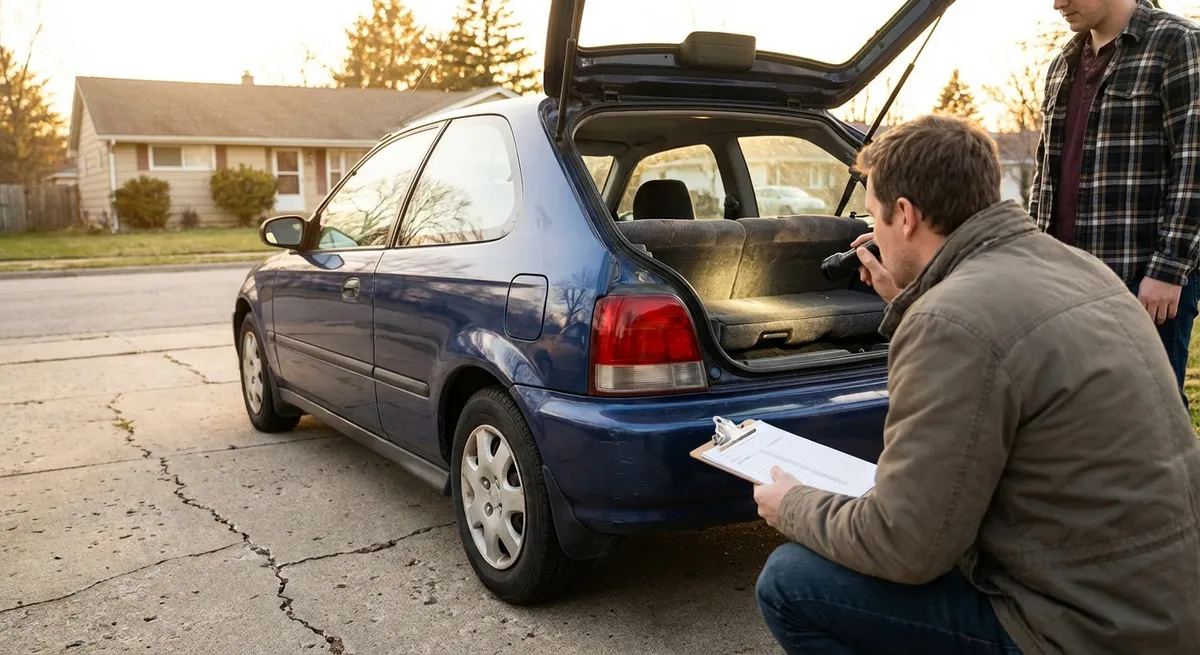
Never skip a pre-purchase inspection from an independent mechanic—ideally one experienced with the brand you’re considering. They can spot frame damage, previous repainting, hidden leaks, worn suspension components, or aftermarket modifications that might affect reliability or insurance. A modest inspection fee can save you from a four-figure repair bill waiting just beyond the test drive.
If the seller refuses an independent inspection or rushes you to decide before you can arrange one, treat that as your signal to walk away. In a healthy used-car market, trustworthy cars can stand up to scrutiny.
Align Financing With How Long You’ll Actually Keep the Car
How you pay for the car is as important as which car you choose. The wrong loan structure can turn a solid vehicle into a financial headache, even if the payment “fits” today.
First, get preapproved for financing from your bank or credit union before visiting a dealer. This gives you a clear interest rate benchmark and prevents you from shopping backward from a monthly payment instead of the total cost. You can still let the dealer try to beat that rate—but now you’re negotiating from a position of knowledge.
Match loan length to your planned ownership. If you think you’ll keep the car five years, avoid stretching a loan to seven or eight years just to shrink the monthly payment. Extra-long loans mean you’ll pay far more in interest and may end up “upside down,” owing more than the car is worth if you need to sell or trade early.
Calculate your out-the-door price, including taxes, fees, and any add-ons, then see what different down payments do to your loan balance. The bigger the down payment, the less risk you have of negative equity and the less you’ll pay in interest over time. Avoid rolling old negative equity from a previous car into the new loan if you can; that’s how people end up trapped in a cycle of owing more than their cars are worth.
Be cautious about extras in the finance office—extended warranties, gap insurance, paint protection, and more. Some can be useful, but not all are priced fairly through the dealer. Compare third-party options and read the fine print before agreeing.
Make the Test Drive a Real-World Simulation, Not a Short Lap
A quick spin around the block tells you surprisingly little about how a car will feel after three years of daily use. Turn the test drive into a focused experiment that mimics your actual driving as closely as possible.
Drive a route that includes the type of roads you use most: stop-and-go city streets, a stint on the highway, and, if relevant, hilly or twisty sections. Pay attention to visibility from the driver’s seat, blind spots, and how easy it is to maneuver and park in tight spaces. Test how the steering feels at both low speeds (parking) and higher speeds (lane changes).
Sit in the car the way you would on a long trip. Adjust the seat and steering wheel until you’re comfortable, then check legroom and headroom in the back seats if you ever carry passengers. Try getting in and out several times; tall rooflines, door openings, and seat height make a big difference for daily comfort.
Use the tech features you’ll rely on: pair your phone with the infotainment system, explore navigation, audio controls, and driver-assist systems (like adaptive cruise or lane keeping) if equipped. If the interface is confusing or slow now, it will only be more frustrating over time.
Finally, if you can, test more than one example of the same model—especially in the used market. You’ll gain a sense of what’s normal for that car and may notice differences in noise, ride, or responsiveness that point to hidden issues or better overall condition in one particular vehicle.
Conclusion
A smart car purchase isn’t about memorizing every spec or out-negotiating a professional salesperson—it’s about controlling the parts of the process that truly matter. When you anchor your choice in your actual driving life, total ownership costs, verifiable vehicle condition, realistic financing, and a test drive that mirrors reality, you dramatically reduce the chance of buyer’s remorse. With a bit of prep and a willingness to walk away from cars that don’t check your boxes, you’ll find a vehicle that fits both your garage and your long-term plans.
Sources
- [U.S. Department of Energy – Fuel Economy Guide](https://www.fueleconomy.gov/feg/findacar.shtml) - Official fuel economy ratings and cost estimates for new and used vehicles
- [National Highway Traffic Safety Administration (NHTSA)](https://www.nhtsa.gov/ratings) - Safety ratings and crash-test information for comparing vehicles
- [Consumer Financial Protection Bureau – Auto Loans](https://www.consumerfinance.gov/consumer-tools/auto-loans/) - Guidance on auto financing, loan terms, and avoiding common pitfalls
- [Federal Trade Commission – Buying a Used Car](https://consumer.ftc.gov/articles/buying-used-car) - Practical advice on vehicle history reports, inspections, and dealer practices
- [Insurance Institute for Highway Safety (IIHS)](https://www.iihs.org/ratings) - Independent crash-test results and safety evaluations that can influence insurance costs and buying decisions