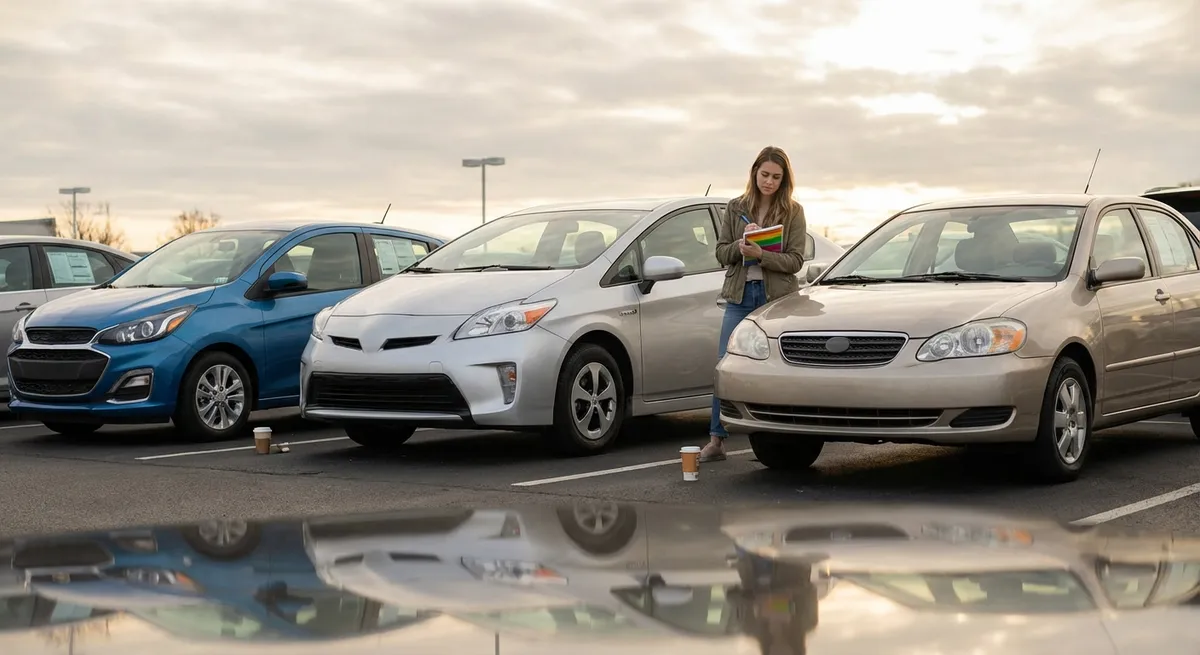
This guide focuses on what you can actually do before and during the buying process to stay in control. These steps work whether you’re shopping new or used, at a dealer or private party.
Start With Total Cost, Not Just the Monthly Payment
Most buyers start by asking, “What can I afford each month?” Dealers know this—and they can use it to hide a bad deal in a “comfortable” payment. Shifting your thinking to total cost of ownership puts you back in charge.
Look beyond the sticker price and consider:
- Purchase price + taxes and fees: Document fees, title, registration, and sales tax add thousands in some states. Get an itemized out-the-door estimate in writing.
- Insurance costs: A sporty trim or luxury badge can double your insurance. Get quotes using the exact year, make, model, and trim before you commit.
- Fuel and energy costs: Compare EPA fuel economy or MPGe estimates, and adjust for your driving style (lots of highway vs. city). Hybrids and EVs might cost more upfront but less to run.
- Maintenance and repairs: Some brands and models are known for higher long-term maintenance or parts costs. Look up reliability ratings and common issues before falling in love.
- Depreciation: Two cars with the same price today might be worth very different amounts in five years. If you expect to sell or trade often, resale value matters.
Buyers who focus only on the monthly payment are more likely to stretch loan terms to 72–84 months, pay more interest, and risk going “upside down” (owing more than the car is worth). Start by setting a maximum out-the-door price, then use that to figure out a healthy monthly payment and term—not the other way around.
Treat the Test Drive Like a Stress Test, Not a Joyride
Most shoppers use the test drive to see if the car feels “nice.” That’s not enough. You want to know how this car behaves in the kind of driving you do every day—and how it holds up to small annoyances that will drive you crazy later.
Use your test drive time strategically:
- Recreate your real driving: If you sit in traffic daily, don’t just cruise a quiet side street. Ask to take a route with stop-and-go, rough pavement, and a stretch of highway.
- Check visibility and ergonomics: Adjust the seat, mirrors, and steering wheel like you would on a real commute. Can you see blind spots clearly? Are the controls easy to reach without looking down?
- Test low-speed behavior: Listen for clunks, rattles, or hesitation when accelerating from a stop. Pay attention to transmission smoothness and brake feel at parking-lot speeds.
- Assess noise and comfort: Turn the radio off for part of the drive. Is there wind or road noise that will wear on you? Do the seats feel supportive after 20 minutes, not just two?
- Try parking and tight turns: Practice parking in a tight spot, backing up, and making U-turns. Large wheels and aggressive tires can look great but make daily driving more stressful.
If the dealer rushes you or insists on a super-short route, push back. You’re about to spend tens of thousands of dollars; a 20–30 minute test drive that reflects your real life is a reasonable ask.
Use Third-Party Data to Anchor Your Negotiation
Walking into a negotiation without data is like going into a track day without checking tire pressures—you’re at a disadvantage before you start. The good news: most pricing information you need is publicly available.
Before you talk numbers, gather:
- Market pricing for your area: Use tools that show average transaction prices, not just MSRP. These reveal what people actually pay for that vehicle near you.
- Trade-in value ranges: Get multiple estimates from different sources for your current car. This prevents a dealer from lowballing your trade while “discounting” the new car.
- Incentives and rebates: Look up current manufacturer rebates, low-APR offers, or lease specials from the official brand site. Don’t rely solely on what the dealer volunteers.
- Invoice pricing (for new cars): Knowing approximate invoice can help you judge how aggressive your offer really is, especially on models that aren’t in short supply.
Use this information to calmly state your target out-the-door price and how you arrived at it. You’re not arguing—you’re showing that your expectations are grounded in real market data. Be ready to walk away if the numbers don’t come close; you’ll have more confidence when you know your target isn’t just a guess.
Make a Simple, Non-Negotiable Checklist for Used Cars
Buying used can be a smart way to avoid steep depreciation, but it shifts more responsibility onto you. Even if you’re not a mechanic, a clear checklist and a bit of discipline can prevent expensive mistakes.
For any used car you seriously consider, insist on:
- Vehicle history report: Look for accidents, branded titles (salvage, flood, lemon), odometer issues, and frequent ownership changes. Minor fender-benders aren’t always a deal-breaker, but multiple serious accidents often are.
- Service and maintenance records: Regular oil changes and scheduled services (timing belt, transmission fluid, etc.) are a strong sign of a careful owner. Spotty or missing records are a warning, especially on complex or turbocharged models.
- Professional pre-purchase inspection (PPI): A trusted independent mechanic should inspect the car, even if it’s from a dealer. They can catch leaks, worn bushings, hidden rust, and early signs of transmission or cooling-system trouble.
- Title and VIN validation: Verify the VIN on the dashboard, door jamb, and paperwork all match. Confirm the seller’s name matches the title and there are no unresolved liens.
- Cold-start and warm-up drive: Want to know how a car really behaves? See how it starts and idles when cold, then drive it long enough for the engine and transmission to fully warm up.
If a seller refuses a PPI or seems irritated by basic questions about history or documentation, treat that as useful information and be ready to walk away. The right car will stand up to scrutiny.
Decide Your “Walk-Away Points” Before You Step on the Lot
Most buying regrets don’t come from a single bad decision—they come from slowly compromising past your own limits under pressure. You can prevent this by deciding your non-negotiables before you see the car, the showroom, or the finance office.
Write down, clearly:
- Maximum out-the-door price: Including taxes, fees, and any add-ons. This is your hard ceiling, not your goal.
- Maximum loan term: Longer terms cost more in interest and lock you into a car that may depreciate faster than you pay it down. Consider setting a limit like 60 months (or less if you can).
- Deal-breaker fees or add-ons: Decide in advance which extras you will automatically decline (paint protection, dubious “security etching,” overpriced extended warranties, mandatory accessories you don’t want).
- Minimum features or safety tech: Some items (like advanced driver-assistance systems, a proper spare tire, tow rating, or AWD) may be crucial for your use. If a car doesn’t have them, don’t talk yourself into compromising.
- Conditions of the car (for used): For example, “No salvage or rebuilt titles, no frame damage, no open recalls, no significant rust.”
Bring this list with you—on paper, not just in your head. When the conversation gets complicated or sales pressure ramps up, refer back to your pre-set conditions. If the deal crosses one of your lines, you already know what to do: step back or walk away.
Conclusion
You don’t need to be a master negotiator or a professional mechanic to buy the right car at a fair price. You do need a process that keeps you focused on the whole cost of ownership, turns the test drive into a real evaluation, and grounds your decisions in data instead of emotion.
By treating the purchase like a project—setting your limits, gathering information, and sticking to a simple checklist—you shift the balance of power back to yourself. The result isn’t just saving money; it’s ending up with a car that genuinely fits your life, your budget, and your long-term plans.
Sources
- [Consumer Reports – Car Buying & Pricing](https://www.consumerreports.org/cars/car-buying-pricing/) – Independent guidance on pricing, reliability, and ownership costs
- [Edmunds – Car Buying & Leasing Advice](https://www.edmunds.com/car-buying/) – Market pricing tools, incentive information, and negotiation tips
- [Kelley Blue Book – What Is Total Cost of Ownership (TCO)?](https://www.kbb.com/what-to-know/what-is-total-cost-of-ownership/) – Breakdown of how to think beyond sticker price when budgeting for a vehicle
- [U.S. Federal Trade Commission – Buying a Used Car](https://consumer.ftc.gov/articles/buying-used-car) – Official government advice on used-car shopping, inspections, and contracts
- [Insurance Information Institute – How to Save Money on Car Insurance](https://www.iii.org/article/how-to-save-money-on-your-car-insurance) – Explains how vehicle choice and features influence insurance costs