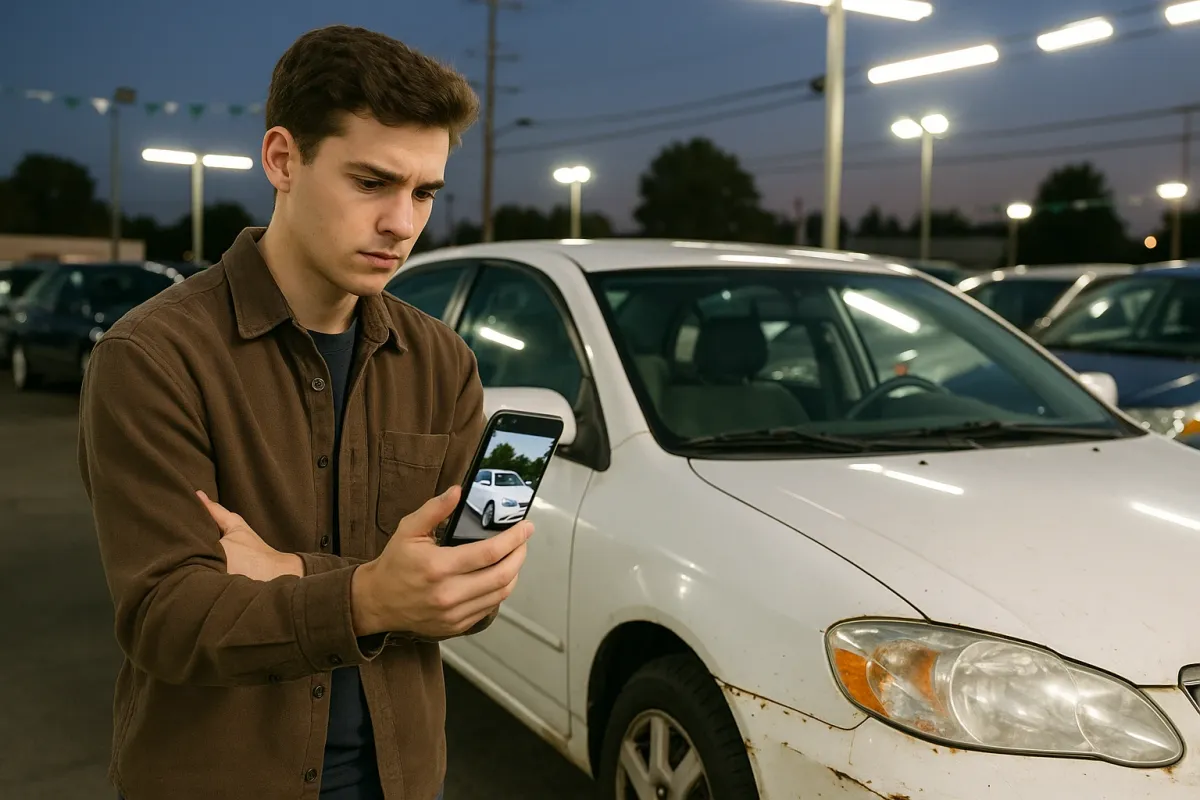
If you’re shopping for a used car right now, the same instincts you use when scrolling through “too good to be true” photos can save you from a bad purchase. Photographers in contests like Wikimedia Commons’ Picture of the Year spend hours choosing the one angle that hides flaws and highlights strengths. Sellers do exactly the same thing with cars.
Here’s how to read between the pixels and shop smarter—especially if you’re buying from online marketplaces and dealer websites this month.
Look for What’s Missing in the Photos, Not Just What’s Shown
Just like viral house photo collections often skip the weird bathroom or crumbling back wall, car sellers choose what not to show you.
Actionable tips:
- Scan for full coverage: You should see front, rear, both sides, interior (front and rear seats), trunk, engine bay, and a close‑up of the wheels. If you don’t, assume there’s a reason.
- Check panel gaps and reflections: Zoom in on reflections in the paint—wavy reflections or uneven gaps between panels can signal past accidents or poor bodywork.
- Inspect high‑wear points: Look closely at the steering wheel, driver’s seat bolsters, pedals, and shifter. Excessive wear here with “low” mileage is a red flag.
- Watch the cropping: Photos that always cut off the lower bumper, rocker panels, or wheel arches might be hiding rust, curb damage, or scrapes.
- Ask for specific angles: Request photos of exactly what’s missing (under door sills, inner wheel wells, spare tire well). A serious seller will provide them quickly.
If a listing feels like those “only one perfect angle” house photos, treat it with caution.
Trust Mileage and History Over “Aesthetic” Lighting
Nature photography contests like Nature Photographer of the Year reward incredible timing and lighting—but the subject is still real. With used cars, clever lighting can make an aging vehicle look showroom‑fresh.
Actionable tips:
- Compare interior wear to mileage: A 40k‑mile car should not have a shiny, worn steering wheel and collapsed driver’s seat cushion. If it does, dig deeper.
- Ask for the VIN and pull a history report: Use services like Carfax, AutoCheck, or your local equivalent to check for reported accidents, mileage rollbacks, and frequent ownership changes.
- Check service records: An ugly PDF scan of dealership visits is worth more than the nicest Instagram‑style photo set. Ask specifically for timing belt/chain, transmission service, and brake/fluid history.
- Be wary of “just detailed!”: Fresh engine bay dressing can hide leaks, while ultra‑shiny tires and interiors can be used to distract from underlying problems.
- Look for consistency: Mileage on the ad, the photo of the instrument cluster, and the history report should match. Any discrepancy needs an explanation.
Pretty photos are nice, but a boring, well‑documented car is almost always the smarter buy.
Read Background Clues Like a Photographer
Those viral street‑cat photos from Istanbul aren’t just about the cat—you can tell a lot from the street, the shop fronts, even the concrete. Apply the same mindset to car listings.
Actionable tips:
- Study the surroundings: Is the car always parked on grass, dirt, or gravel? That can imply a life outside, increasing rust risk. A clean, well‑kept garage usually signals a more careful owner.
- Look for other vehicles in frame: A yard full of damaged cars might mean a home‑brew flipper; a single ordinary car in a driveway might be a genuine private seller.
- Check weather and season: A car photographed in heavy snow with unplowed buildup around it may have sat for a while. A “summer only” car should have some proof (no salt residue, clean undercarriage).
- Watch for dealer‑style staging: Even if it’s marked “private seller,” a perfect white background and repeating photo style can indicate a small dealer posing as an individual.
- Spot temporary tags or missing plates: That can suggest the car was just acquired for resale and the seller doesn’t know its true history.
Treat each image like a documentary photo: what does it tell you about how the car really lived?
Use Detail Shots to Predict Near‑Future Costs
Those “beautiful old houses” galleries often highlight craftsmanship that has lasted. You want that same durability from a used car—and images will hint at what you’ll need to spend in the first year.
Actionable tips:
- Zoom in on tires: Check brand, tread depth (roughly), and date code (a 4‑digit number like 3622 = week 36 of 2022). If the tires are 6+ years old, budget for a new set even if they “look fine.”
- Inspect brakes through the wheels: Rusty, lip‑worn brake rotors and uneven pad wear suggest upcoming brake work. Factor that into your offer.
- Check headlights and trim: Yellowed headlights, faded black plastic, and cracked weatherstripping are signs of heavy sun exposure—UV beats on more than just looks.
- Look at fluid stains on the ground: Any photo that accidentally shows puddles under the car is a goldmine for you. Oil, coolant, or transmission drips mean real money soon.
- Assess modifications: Aftermarket wheels, lowering springs, cheap LED headlight kits, or “performance” intakes can indicate hard driving and hit‑or‑miss quality work.
Every little detail you notice now is a negotiation chip—or a reason to walk away.
Don’t Commit Until You’ve “Seen It in Real Life” (Even Online)
Portrait series that celebrate human diversity show people in different light, angles, and moods. With cars, you want that same “multi‑angle reality check” before sending any money.
Actionable tips:
- Insist on a live video walk‑around: A 5–10 minute video call (FaceTime, Zoom, WhatsApp) where the seller starts the car cold, cycles all lights, and walks around the body will reveal more than 20 staged photos.
- Listen closely: On video, pay attention to cold‑start idle, any rattles, belt squeals, exhaust leaks, or whining noises from the transmission or power steering.
- Ask them to show the dash with the engine running: You want to see all warning lights come on with ignition and then go off. A permanently dark airbag or check engine light may have been disabled.
- Verify features live: Have them test windows, mirrors, A/C, heater, infotainment, backup camera, sunroof, and keyless entry. Missing or broken features add up quickly.
- Use a pre‑purchase inspection (PPI): If the car passes your photo and video filters, pay a trusted local mechanic—or a mobile inspection service—to inspect it before you sign or send a deposit.
Think of the listing photos as the “magazine cover” and the inspection as the unfiltered documentary. You need both before you buy.
Conclusion
Online right now, we’re surrounded by carefully curated visuals—award‑winning nature shots, lovingly photographed historic homes, even perfectly timed cat portraits from across the world. Car listings are no different: they’re crafted to make you feel something and click fast.
As a buyer, your job is to slow down and read every photo like a professional critic: what’s missing, what the background reveals, and what the small details predict about future costs. Combine that with solid history checks and a real‑world inspection, and you’ll avoid the “looks great, drives terrible” trap that burns so many shoppers.
Use your scrolling instincts wisely, and your next used car will be more than just photogenic—it’ll be a genuinely smart buy.