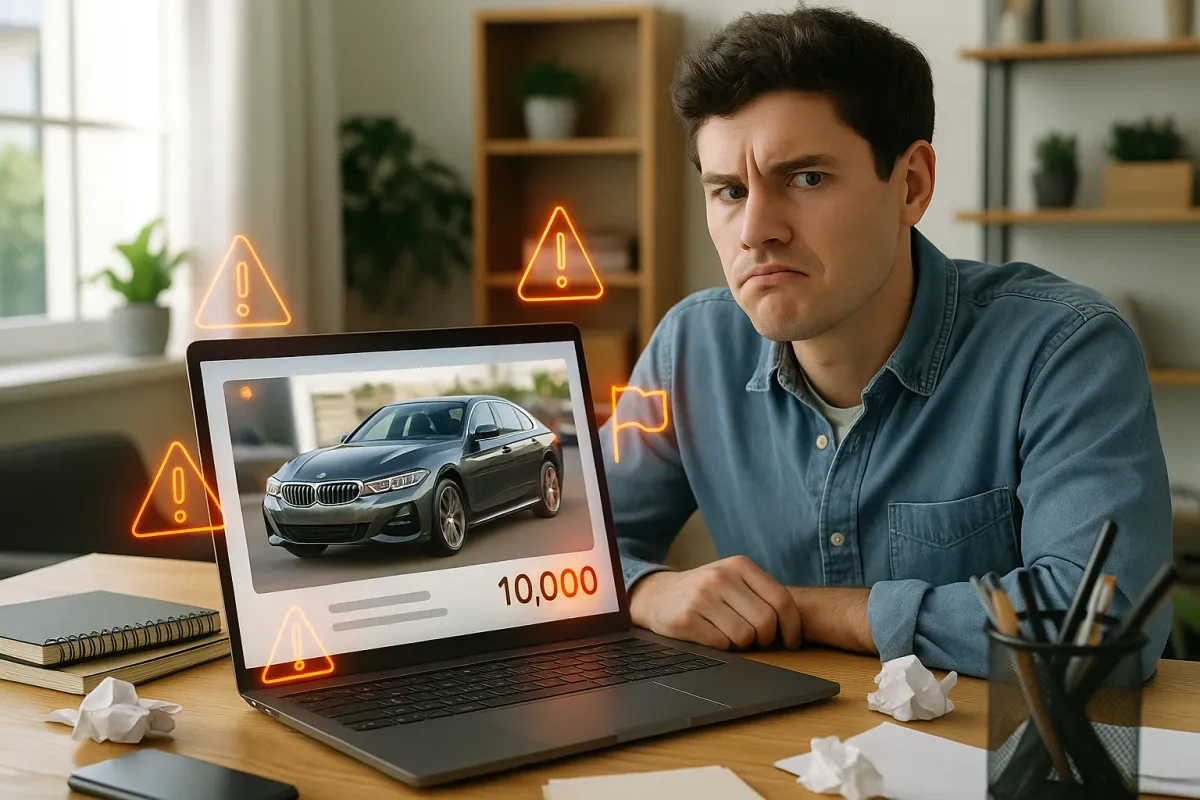
As platforms like Facebook Marketplace, Craigslist, and classifieds apps grow, we’re seeing more “delusional” ads shared online: wildly unrealistic prices, absurd descriptions, and photos that hide more than they reveal. For car buyers, this isn’t just funny—it’s expensive if you fall for the wrong one.
Here’s how to use what we’re seeing in today’s worst online ads to protect yourself when shopping for your next car.
Treat Every “Too Good To Be True” Price As A Red Flag, Not A Lucky Break
A lot of the viral “world’s worst ads” posts have one thing in common: the price and the promise don’t match. The same thing is happening in car listings—only with bigger numbers. If you see a late-model car priced thousands below similar listings in your area, assume there’s a problem until you can prove otherwise.
Instead of celebrating a “steal,” pause and compare:
- Check prices on at least two major sites (Autotrader, Cars.com, CarGurus, even Kelley Blue Book or Edmunds) for the same year, trim, mileage, and location.
- If a 2019 compact SUV is averaging $19,000–$21,000 and one pops up at $13,500 with no explanation, you’re not lucky—you’re being tested.
- A legit seller can explain a big discount (accident history, rebuilt title, high miles, cosmetic damage). If the ad just says “Need gone today” or “My loss your gain” with no details, walk away.
- Be extra wary of “price negotiable, text only” with no VIN or plate visible in photos. That combination shows up constantly in scam compilations for a reason.
A good deal is slightly better than market value with clear reasons. A great deal with zero explanation is usually hiding an expensive surprise.
Read The Photos Like Evidence, Not Advertising
Those viral bad ads often show ridiculous photos: wrong item, absurd angles, or everything except what you actually need to see. Used car listings do the same thing—just more subtly.
Train yourself to read photos like evidence:
- Missing angles tell a story. If you never see the rear bumper, passenger side, or roof, assume that’s where the damage is. Same for close‑ups that never zoom out to show overall condition.
- Dark, rainy, or cramped garage photos can hide dents, mismatched paint, and rust. Ask for daytime, outdoor shots of all four corners, each side, and a straight-on front and rear view.
- Interior shots should include driver’s seat bolsters, steering wheel, pedals, infotainment screen, odometer, and headliner. Excessive wear in those spots tells you how the car was actually used.
- Zoom in on weird details: overspray near door seals, uneven panel gaps, scuffed airbags covers, or ripples in the quarter panels can hint at previous collision repairs.
- If the seller refuses to add more photos or sends blurry ones “because camera is bad,” treat it just like the worst Craigslist posts being roasted online: they’re wasting your time.
If the photos don’t give you enough information to confidently say “I know what I’m going to see in person,” you don’t have enough to move forward.
Decode Descriptions: What Sellers Say (And What They’re Avoiding)
The funniest “delusional” listings going viral right now often hide behind vague language or over-the-top claims. Car ads do a quieter version of this—with phrases that should instantly make you cautious.
Pay attention to how the description is written:
- Overused phrases to treat with suspicion:
- “Runs and drives great” (says nothing about leaks, warning lights, or recent repairs)
- “Just needs a little TLC” (often means multiple neglected issues)
- “No lowballers, I know what I have” (frequently overpriced or emotionally priced)
- “Don’t have time to deal with it” (could mean it has issues they don’t want to chase)
- Missing information is louder than hype. If the ad doesn’t list mileage, trim level, VIN, or maintenance history but spends lines on “head-turner” or “gets compliments everywhere,” that’s marketing, not information.
- Mileage games: phrases like “mileage will go up, it’s my daily” are normal—but “low miles for the year” without a specific number is not. You need exact mileage.
- Maintenance claims must be verifiable. “New brakes, new tires, fresh oil change” are only meaningful if there are dates, brands, or receipts. Otherwise, assume you’ll be doing that work yourself.
Before you message a seller, write down what’s missing from the description (mileage, ownership, title status, major repairs, accident history). Your first message should be direct: “Can you confirm mileage, title status, accident history, and send the VIN?” If they dodge, you’re done.
Verify The Story With The VIN Before You See The Car
In those compilations of absurd online ads, one pattern stands out: the more unrealistic the claims, the less proof is provided. With cars, the VIN is your proof anchor—and if you can’t get it easily, that’s your sign to move on.
Here’s how to use the VIN practically:
- Always ask for the VIN before meeting. A reflective photo of the VIN plate on the dash or the driver’s door jamb is standard. Blurred or “I’ll give at meetup” isn’t good enough.
- Run it through multiple sources:
- A paid vehicle history report (Carfax, AutoCheck, or a reputable alternative)
- Your state’s DMV/title lookup if available
- Free VIN decoders to confirm exact trim, engine, and options
- Cross-check the story:
- Does the number of previous owners match what the seller claims?
- Are there mileage jumps or gaps in reported readings?
- Any salvage, flood, lemon buyback, or police use history?
- Look for timing clues. If the car was purchased at auction three weeks ago and is suddenly being “sold for a friend moving overseas,” you know you’re dealing with a flipper who may not know (or disclose) the full history.
- Ask for service records that match the VIN. Digital invoices from dealerships or shops are ideal. A stack of unlabeled paper with generic work is better than nothing, but not proof on its own.
Modern scam and “fantasy ad” culture thrives on buyers not checking. The VIN is how you stop playing along and turn the deal into a data-driven decision.
Meet Smart, Inspect Hard, And Be Ready To Walk Away
Those viral collections of the worst ads online survive because people share them, laugh, and move on. In car buying, your version of “moving on” is walking away—even after you’ve driven across town.
Plan your in-person process with discipline:
- Pick a safe, neutral meetup point. Grocery store or bank parking lots with cameras are common choices. Avoid “come to my backyard” or remote locations for a first look.
- Do a full walkaround before you start the engine. Look for body panel color mismatches, uneven tire wear, cracked lights, or signs of leaks under the car. Anything that conflicts with the ad is a negotiation point—or a walk-away reason.
- Never skip a cold start. Ask the seller not to warm up the car before you arrive. Cold-start noises (knocks, lifter ticks, exhaust leaks) tell you more than a warmed-up engine ever will.
- Insist on a pre-purchase inspection (PPI). A trustworthy seller won’t fight you taking the car to a reputable shop (you pay). Share the inspection findings with the seller and adjust your offer—or decide it’s not worth it.
- Have a walk-away script ready. You don’t owe the seller anything. “Thanks for your time, but I’m going to pass” is enough. If they pressure you with “I have another buyer coming,” let them. That line shows up in bad listing horror stories constantly.
The mindset shift: don’t go to “buy the car.” Go to “inspect the car and decide if it deserves my money.” That keeps you from making emotional decisions based on scarcity or pressure.
Conclusion
The same internet energy that produces those absurd, delusional online ads is flooding the used car market right now. Unrealistic claims, vague descriptions, bad photos, and fantasy pricing aren’t rare—they’re normal. But you don’t have to be the buyer who funds someone else’s bad listing.
Treat suspicious prices as red flags, read photos like evidence, decode the wording, verify everything with the VIN, and run your in-person visit like an inspection, not a commitment. When you do that, the worst car listings become what they should be: something you scroll past and share for a laugh, not something that empties your bank account.