Below are five upgrades that do real work on the road, with clear benefits and what to watch out for before you buy.
Upgrade 1: Dash Cams That Protect You Before and After a Crash
Dash cameras have gone from niche gadgets to serious driving tools. Instead of thinking of them as “cool toys,” treat them as an accountability device—one that can save you thousands in a dispute.
A good dash cam records high-resolution video (1080p minimum, ideally 1440p or 4K) and has a wide field of view (around 140–160 degrees). That balance helps capture plates and details without excessive image distortion. Look for models with a G-sensor (to lock footage during an impact), loop recording (so the card never “fills up”), and night vision that’s actually usable, not just marketing fluff. Parking mode can be particularly valuable if you park on the street, as it can capture hit-and-run bumps or vandalism. Installation ranges from using the cigarette lighter to hardwiring to an “always on” fuse—but if you’re not comfortable with vehicle electrics, have a professional handle it to avoid battery drain or airbag wiring issues. Make sure the memory card you use is “high endurance,” since regular cards wear out quickly with constant overwriting. Finally, check your local privacy and recording laws—especially if you ride-share, drive for hire, or plan to share footage online.
Upgrade 2: Tire Pressure Monitoring You Control, Not Just the Car
Many modern cars include built-in Tire Pressure Monitoring Systems (TPMS), but they’re often vague (“low tire” light, no actual numbers) or slow to react. An external TPMS kit or a Bluetooth tire gauge can give you more precise control—and that pays off in fuel economy, tire life, and safety.
External TPMS kits usually replace your valve stem caps with small sensors that send real-time data to a small display or phone app. You see exact pressure and sometimes temperature for each tire, which helps diagnose slow leaks early rather than discovering them on the highway shoulder. Some systems let you set your own warning thresholds, which is especially helpful if you run non-stock tire sizes or carry heavy loads. For drivers who’d rather keep things simple, a quality Bluetooth tire gauge that syncs to your phone may be enough—check pressure monthly and before long trips, and log trends over time. Whatever tech you choose, don’t ignore the basics: set pressures according to the sticker in the driver’s door jamb (not the sidewall max), check when tires are cold, and consider bumping up pressures slightly (within spec) if you consistently carry extra weight. Combining tech with good habits is where you see real-world savings.
Upgrade 3: Adaptive Phone Mount + Wired Connection for Real Navigation
Smartphone-based navigation is powerful—but the way you mount and connect your phone can make the difference between a clean setup and a dangerous distraction. A thoughtful mounting and connection setup can mirror many of the benefits of built-in infotainment, without the new-car price tag.
Choose a phone mount that locks firmly without blocking critical sight lines or airbag deployment paths. Vent mounts are convenient but can stress weak vents; dash or windshield mounts offer stability but must be positioned carefully to avoid obstructing your view. Magnetic mounts are clean, but only if you add a metal plate correctly or use MagSafe-style mounts with proper cases. For the tech side, a solid wired connection (USB-A or USB-C) is more reliable than Bluetooth alone—wired connections often charge faster, cut lag on audio prompts, and reduce disconnect issues. If your car supports Apple CarPlay or Android Auto, prioritizing a high-quality cable and a mount that keeps the phone stable dramatically reduces fumbling and glancing away from the road. Turn off non-essential notifications while driving, pre-set your destination before moving, and rely on voice commands instead of tapping the screen whenever possible.
Upgrade 4: Backup and Blind-Spot Tech for Cars That Never Had It
You don’t need a new vehicle to get safer reversing and lane changes. Aftermarket backup cameras, parking sensors, and blind-spot add-ons can dramatically improve awareness in older cars—especially taller vehicles and family haulers.
A wired backup camera kit paired with a mirror-integrated screen or a small dash display is more reliable than most wireless-only setups, which can suffer from interference and lag. Mount the camera near the license plate and make sure it’s angled to show both close obstacles and the path behind you. Ultrasonic parking sensors (those small round “dots” you see in bumpers) can be added to many vehicles and give distance beeps that are especially helpful in tight garages. For lane changes, aftermarket blind-spot systems that use radar are typically more accurate than simple camera-only solutions. They can provide a warning light in the mirror area and an audio alert if you signal with a car in your blind zone. Even with tech assistance, keep your mirror adjustments correct (outer mirrors angled out to minimize lane overlap) and always confirm visually—treat tech as a second set of eyes, not a replacement for yours.
Upgrade 5: Battery and Power Tech That Prevents the “Dead Car” Surprise
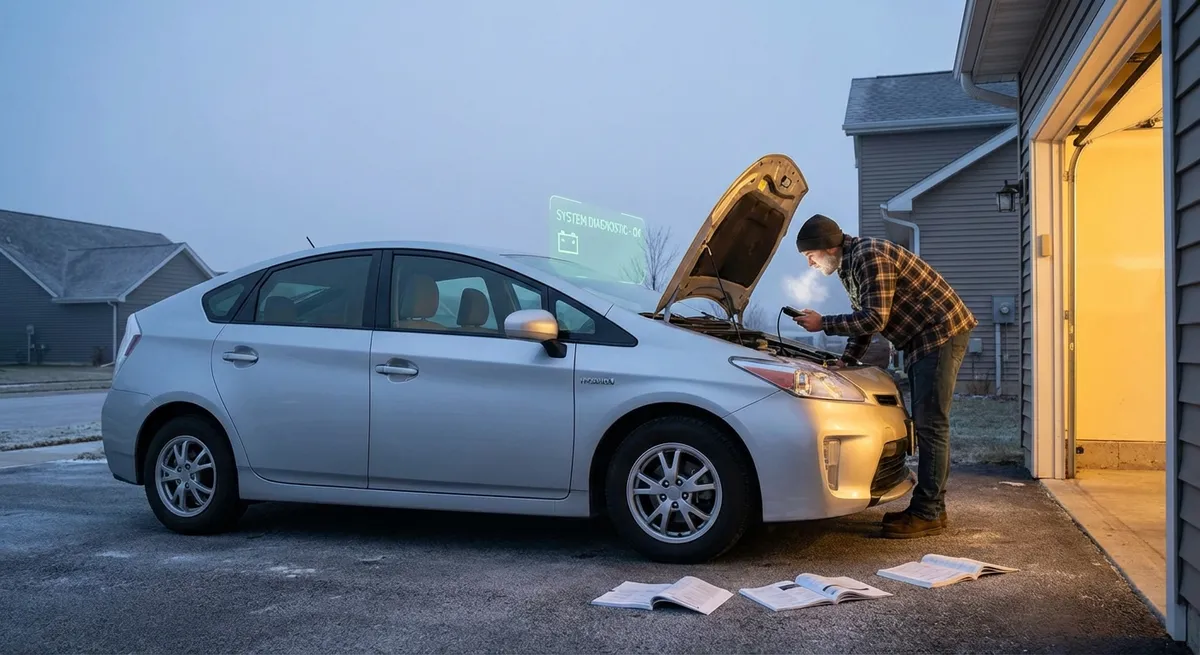
Many tech upgrades draw from the same 12V battery that starts your engine. Combine dash cams, chargers, and cold weather, and suddenly you’re dealing with a dead battery at the worst time. A few smart power-related upgrades can help keep your vehicle starting reliably.
A compact lithium jump starter is one of the highest-ROI tools you can keep in the car. Quality units hold a charge for months, can jump most engines several times on a single charge, and often include USB ports and a flashlight. Pair this with a simple plug-in battery monitor or a Bluetooth battery monitor that tracks voltage over time; you’ll get early warning signs of a weakening battery instead of finding out when it’s already flat. If you install always-on devices like hardwired dash cams or trackers, use a hardwire kit with low-voltage cutoff so the camera shuts off before the battery is drained too far to start the engine. In colder climates or for cars that sit for long periods, a smart battery maintainer (trickle charger) used at home can significantly extend battery life. Just be sure to follow the manufacturer’s guidance on connection points, especially on vehicles with battery management systems or covered terminals.
Conclusion
Practical auto tech isn’t about turning your car into a gadget museum—it’s about choosing upgrades that quietly do work every day. A well-chosen dash cam, smarter tire pressure monitoring, a stable navigation setup, added visibility tech, and thoughtful power management can make your existing car feel safer, more predictable, and easier to live with.
If you treat each upgrade like a tool—define the problem first, then pick the tech—you’ll avoid wasted money and clutter while getting real-world benefits every time you drive.
Sources
- [National Highway Traffic Safety Administration (NHTSA) – Tire Pressure Monitoring Systems](https://www.nhtsa.gov/equipment/tires) - Background on TPMS, tire safety, and proper inflation guidelines
- [AAA – Advanced Driver Assistance Systems (ADAS) Overview](https://www.aaa.com/autorepair/articles/what-are-advanced-driver-assistance-systems) - Explains common driver assistance features, their limits, and best practices
- [Consumer Reports – Dash Cam Buying Guide](https://www.consumerreports.org/cars/car-safety/dash-cam-buying-guide-a9897451875/) - Independent evaluations of dash cams, key features, and installation tips
- [U.S. Department of Energy – Fuel Economy & Proper Tire Inflation](https://www.fueleconomy.gov/feg/maintain.jsp) - Data on how maintenance and tire pressure affect fuel economy
- [Edmunds – Car Battery and Jump Starter Basics](https://www.edmunds.com/car-care/how-to-jump-start-a-car-battery.html) - Practical guidance on car batteries, jump-starting, and battery-related tools