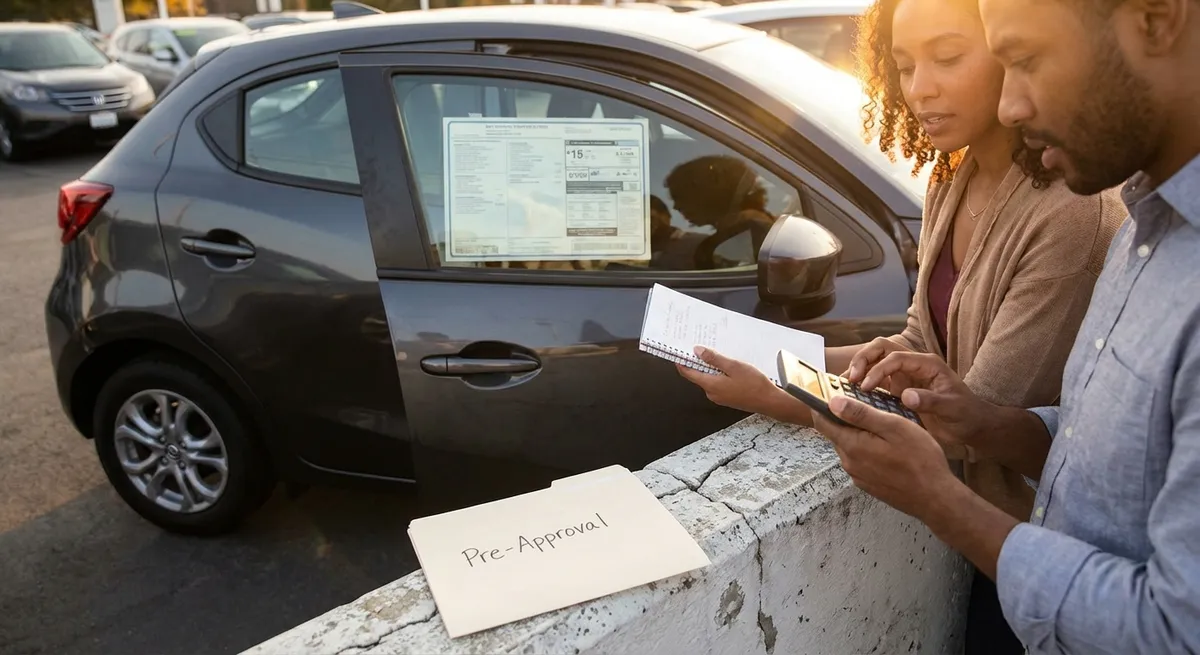
Know Your Real Budget, Not Just the Monthly Payment
Most buyers walk into the process thinking in terms of “What can I afford per month?” That’s how many bad deals start. A low monthly payment can hide a long loan term, high interest, or inflated fees. Start instead with the total cost of the car and the total amount you’re willing to finance or pay in cash.
Map your budget like this: list your fixed monthly costs (rent/mortgage, insurance, utilities, existing debts) and your realistic variable expenses (fuel, groceries, entertainment). The amount left over is your starting point for what you can comfortably commit to transportation. From there, factor in insurance (get quotes for specific vehicles you’re considering), estimated fuel costs based on your driving habits, and an allowance for maintenance and repairs. Use that combined monthly figure as your ceiling, not just the loan payment. This approach helps you avoid a “payment trap” and ensures the car doesn’t quietly strain your finances months after the honeymoon phase ends.
Match the Car to Your Actual Use, Not Your Fantasy Use
It’s easy to shop for the life you wish you had: track days every weekend, overlanding every month, or road trips every holiday. But the smart move is to buy for your 90% reality, not your 10% dreams. Start by tracking your driving for a few weeks—how far you go, how often you carry passengers, how much cargo you typically haul, and what the roads really look like (highway, city, rough surfaces, snow, etc.).
Use that data to build a practical profile: daily commute length, parking situation, climate, and how long you typically keep cars. If you sit in traffic an hour each way, features like adaptive cruise control, good seat ergonomics, and sound insulation matter more than ultimate horsepower. If you live in a city with tight parking, overall length, turning radius, and visibility might rank higher than third-row seating. Enthusiasts can still get something fun, but targeting the right body style, drivetrain, and feature set for your real-world use keeps you happy longer and reduces buyer’s remorse.
Compare Long-Term Ownership Costs, Not Just the Sticker
Two cars with similar sticker prices can have very different long-term costs. Before you fall in love with a specific model, research its expected total cost of ownership: depreciation, fuel, insurance, maintenance, and repairs. Some vehicles hold value better, some are cheaper to insure, and some are notorious for expensive out-of-warranty issues that can wipe out any initial savings.
Look at fuel economy ratings and match them to your driving pattern—highway vs city, and expected annual mileage. Check insurance quotes for each model and trim; advanced driver-assistance features can reduce premiums, while performance variants or certain brands can increase them. Research common maintenance intervals and known problem areas for the model and engine you’re considering, especially for used cars. If you’re drawn to a turbocharged or performance model, factor in higher tire, brake, and service costs. When you compare cars side by side using ownership cost, not just purchase price, the “cheaper” car on paper often stops looking like the smarter choice.
Use Financing Options as a Tool, Not a Trap
How you pay for the car can be as important as which car you choose. Many buyers let the dealership structure the deal for them, but you gain leverage and clarity when you line up your own options first. Before you shop seriously, check your credit score and pull your credit reports so you know what lenders will see. Then get preapproved with your bank, credit union, or an online lender. This gives you a concrete interest rate and loan term to compare against dealership offers.
When you discuss numbers, focus on the out-the-door price (including taxes and fees) and the interest rate, not just the monthly payment. Be cautious about loan terms stretching beyond 60–72 months; longer terms lower the payment but increase the total interest and keep you upside down on the loan longer. If you have a trade-in, negotiate it separately from the car purchase so you can see clearly what you’re getting. Consider how stable your income is and whether you plan to keep the car past the warranty period—shorter terms and slightly higher payments can be safer if you want flexibility to sell or trade later without being buried in negative equity.
Inspect, Verify, and Document Before You Commit
Whether you’re buying new or used, a bit of verification up front protects you from expensive surprises. For used vehicles, always start with a vehicle history report using the VIN to check for accidents, salvage titles, flood damage, odometer issues, and frequent ownership changes. Then, arrange an independent pre-purchase inspection (PPI) from a trusted mechanic or specialist familiar with that brand or type of vehicle; this is especially important with performance models or older, higher-mileage cars.
For new cars, inspect for paint defects, panel alignment, interior damage, and any unusual noises or warning lights. Confirm that any promised accessories or options (floor mats, second key, charging cable for EVs, etc.) are included before you sign. Test all electronics, from infotainment and Bluetooth pairing to safety systems like blind-spot monitoring and parking sensors. Review the warranty coverage and ask for it in writing, including any dealer-added warranties or service plans. Finally, read the contract line by line—look for add-ons you didn’t request (VIN etching, paint sealant, nitrogen in tires, service packages) and decline anything that doesn’t add real value for how you’ll use the car. Once everything matches what you agreed to, then it’s time to sign.
Conclusion
A car purchase doesn’t have to feel like a gamble if you approach it with a clear plan. When you define a realistic total budget, choose a car that fits your actual life, compare long-term ownership costs, treat financing as a tool, and verify the vehicle and paperwork before you commit, you shift the power back to yourself. These steps take a bit more time up front, but they help ensure that the car in your driveway is one you’re still glad you bought years down the road—not just on day one.
Sources
- Consumer Reports – Car Buying & Pricing – Independent guidance on pricing, reliability, and ownership costs
- Edmunds – True Cost to Own – Detailed total-cost-of-ownership data including depreciation, insurance, fuel, and maintenance
- U.S. Department of Energy – Fuel Economy Guide – Official fuel economy ratings and annual fuel cost estimates
- National Highway Traffic Safety Administration (NHTSA) – Safety ratings and recall information for specific vehicles
- Federal Trade Commission – Buying a Used Car – Government advice on vehicle history reports, inspections, and contracts