Know Your Car’s True Market Value Before You Talk Numbers
Before you visit a dealership or contact a seller, you need a realistic picture of what your current car is actually worth in today’s market—not just what you hope it’s worth.
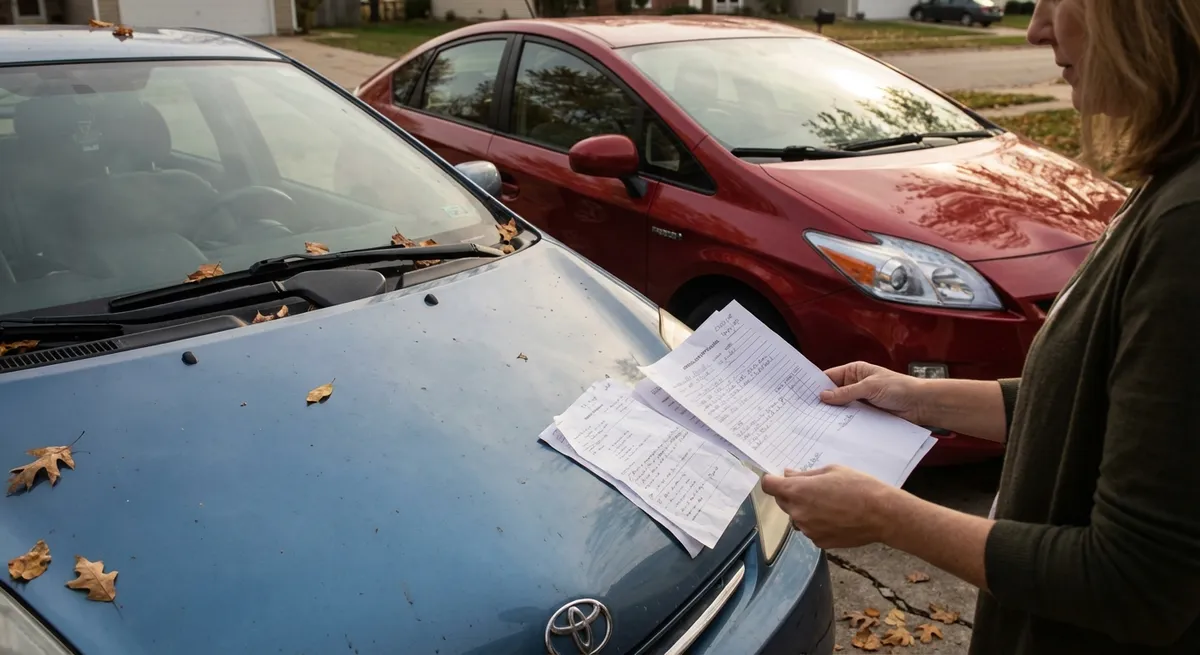
Start by getting several online value estimates using your car’s exact year, trim, mileage, options, and condition. Use both trade-in and private-sale values so you understand the spread between what a dealer might offer and what a buyer might pay directly. Compare those numbers with real listings in your area for similar vehicles to see what they’re actually advertised for, then mentally subtract typical negotiation room and reconditioning costs to arrive at a grounded value range.
Pay close attention to mileage thresholds (like 60k, 100k, 150k miles) and model-year jumps, as these can sharply influence value. Some brands and specific models hold their value unusually well; others drop faster, which changes how much leverage your current car realistically gives you. Going into any negotiation with a documented value range—screenshots, printouts, and recent comparable listings—puts you in a stronger position when someone throws out a lowball number for your trade.
Separate the Trade-In, the New Car Price, and the Financing
One of the most effective ways to protect your wallet is to avoid letting everything get blended into one monthly payment discussion. Dealerships often package the trade-in value, new car price, and financing terms together, which can hide weak offers in one area behind attractive numbers in another.
Treat your deal as three separate negotiations:
- Price of the new (or new-to-you) car – Focus on the out-the-door price, including taxes and fees.
- Value of your trade-in – Look at your car as a separate asset; evaluate offers against your researched value range.
- Financing terms – Interest rate, loan length, and total finance charge over the life of the loan.
Get your own pre-approved financing quote from a bank, credit union, or online lender before you shop. This gives you a baseline and often forces the dealership to bring their best rate to the table if they want your loan business. Once you’ve agreed on the vehicle price and you know exactly what they’re offering for your trade, only then compare financing options. Keeping each piece transparent makes it much harder for anyone to “over-allow” on the trade while quietly inflating the car price or stretching the loan.
Decide Early: Trade-In vs Private Sale vs Bridge Strategy
How you use your current car will shape your entire shopping strategy, so decide your approach up front instead of improvising at the dealership.
- Trade-in: Fastest and simplest. You hand over the keys, sign papers, and your old car becomes part of the deal. This is usually the best route if you have negative equity, need the tax advantage (in many states you pay sales tax on the price minus trade-in value), or don’t have the time/space to sell privately. The trade-off is typically a lower overall return compared to a private sale.
- Private sale: More work, more potential money. You’ll photograph the car, write a listing, answer messages, meet buyers, and handle payment and title transfer. This path can make the most sense for vehicles with strong enthusiast followings, low-mileage examples, or clean one-owner histories that retail buyers will pay a premium for.
- Bridge strategy: If you need the convenience of a dealer but want to maximize value, consider getting immediate online offers from national used-car buyers and local dealers a few days before your purchase appointment. You may be able to drive your car to the buyer offering the highest price, complete the sale, then walk into your targeted dealership as a “cash buyer” with money in hand from the sale.
Whatever you choose, run the numbers with tax, timing, and hassle factored in—not just the headline price. For some buyers, an extra $800 isn’t worth weeks of listing and showings; for others, that same $800 is exactly what makes the next car affordable.
Use Simple Prep Work to Unlock Extra Trade-In or Sale Value
Basic preparation can add meaningful value to your car with relatively little effort or cost. You don’t need a full detail package and expensive repairs in every situation, but you should be strategic about quick wins.
Start with a thorough wash, interior vacuum, and glass cleaning. Remove personal items, organize any loose parts, and wipe down high-touch surfaces. A clean, well-presented car signals that it’s been cared for, which can shift a buyer’s first impression—and their initial offer. Gather maintenance records, receipts, and documentation of major work like timing belt replacements, new tires, or brake jobs; organized records can justify a higher price and reduce buyer skepticism.
For mechanical items, tackle low-cost, high-impact issues: replace burned-out bulbs, top off fluids, and address obvious minor fixes that would raise red flags (like warning lights from something simple you already know about). For more expensive repairs, weigh the expected increase in sale/trade value against the real cost and hassle of fixing them. In many cases, you’ll get more out of disclosing a known issue and pricing accordingly than pouring money into last-minute major repairs you can’t fully recover in the sale price.
Turn Your Equity Position Into a Strategy, Not a Surprise
Your equity—the difference between your car’s market value and what you still owe—is one of the most powerful levers in your next purchase. Knowing that number in advance keeps you from being blindsided at the desk.
If your car is worth more than your payoff amount, you have positive equity. That equity can become a down payment on your next vehicle, helping you secure a lower loan amount, a shorter term, or both. You might decide to leverage all of it to keep your next payment low, or hold back some cash if you sell privately and don’t want to put everything into the next car.
If your car is worth less than the payoff, you’re in negative equity (often called being “upside down”). In that case:
- Ask your lender for an exact payoff quote, including any fees, on a specific date.
- Compare that to multiple real offers for your car, not just one dealer’s number.
- Decide if rolling the negative balance into a new loan is truly acceptable, or if it’s smarter to delay upgrading, make extra payments, or switch to a less expensive replacement vehicle to avoid compounding the problem.
When the numbers are tight, you may find that extending your ownership by 6–12 months, continuing regular payments, and keeping the car in good condition turns a negative-equity situation into neutral or positive equity—suddenly giving you much more control the next time you’re ready to buy.
Conclusion
The car you already own isn’t just something you hand over at the end of the deal—it’s a financial tool that can either work for you or quietly drain value if you don’t manage it carefully. By knowing your true market value, separating each part of the transaction, choosing the right sale strategy, doing targeted prep work, and actively managing your equity position, you turn your current vehicle into real buying power. That leverage doesn’t just change the numbers on a contract; it shapes what you can afford, how flexible your next ownership experience will be, and how ready you’ll be for the road ahead.
Sources
- [Kelley Blue Book – Car Values & Pricing](https://www.kbb.com/what-is-my-car-worth/) - Industry-standard tool for estimating trade-in and private-party values based on real market data
- [Edmunds – How to Trade in a Car](https://www.edmunds.com/car-buying/how-to-trade-in-a-car.html) - Detailed guidance on trade-in strategy, valuation, and negotiation
- [Consumer Reports – New Car Buying Guide](https://www.consumerreports.org/cars/buying-a-car/new-car-buying-guide-a4668346935/) - Independent advice on pricing, financing, and maximizing value during purchase
- [FTC – Buying a Used Car](https://consumer.ftc.gov/articles/buying-used-car) - U.S. government overview of used-car buying, contracts, and your rights as a consumer
- [Consumer Financial Protection Bureau – Auto Loans](https://www.consumerfinance.gov/consumer-tools/auto-loans/) - Official resource on understanding auto financing, loan terms, and protecting yourself in credit agreements