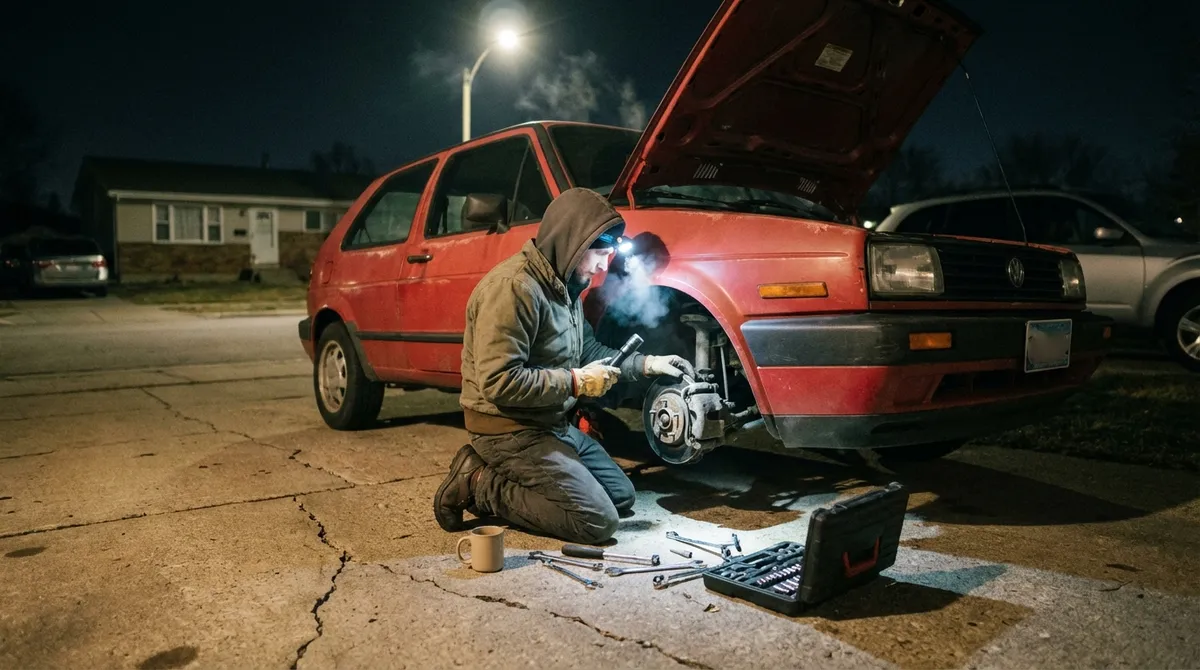
This guide breaks down five smart, practical ways to track and tame those noises before they hit your wallet.
Start a “Noise Log” So You’re Not Guessing at the Shop
If your car only makes a sound “sometimes,” it’s hard for a mechanic to find the cause—and easy for you to waste time and money. A simple noise log turns vague complaints into usable information.
Write things down (or use your phone’s notes app) every time you notice a new noise:
- When it happens: cold start, after 20 minutes of driving, only at highway speed, only on bumpy roads, when turning left, when braking, etc.
- Where you hear it: front-left, behind you, under your feet, in the dash, outside the car.
- What it sounds like: scraping, grinding, squealing, clicking, knocking, humming, whistling, popping.
- Speed and conditions: speed range, weather (wet/dry), AC on or off, windows open or closed.
Why this is powerful:
- It helps distinguish brake issues (noise when braking), suspension issues (noise on bumps), or drivetrain issues (noise under steady load).
- It gives a technician a head start so they don’t have to play “noise detective” from scratch.
- It lets you track whether a sound is staying the same, getting worse, or actually gone after service.
Bonus: Record a short video or audio clip with your phone when the noise is happening. Even if you can’t see anything, that sound file can be surprisingly useful at the shop.
Separate “Urgent” Noises from “Monitor Carefully” Sounds
Not every noise means you need to pull over immediately, but some absolutely do. Knowing the difference helps you avoid both panic and procrastination.
Treat these noises as “stop driving and diagnose ASAP” warnings:
- Loud grinding or scraping when braking – Could mean pads are worn down to metal and chewing up the rotors.
- Sharp knocking from the engine that rises with RPM – Possible detonation or internal engine wear; heavy damage can follow.
- Rhythmic thumping that changes with speed, especially with vibration – Tire or wheel problem, potentially dangerous at highway speeds.
- High-pitched whistle or screech with burning smell – Possible belt slippage or failing accessory; can strand you if it’s an alternator or water pump drive belt.
These sounds are usually less urgent, but should still be checked soon:
- Light squeak over bumps – Often suspension bushings or worn components; if ignored, wear spreads to more expensive parts.
- Humming or growling that gets louder with speed – Often a wheel bearing starting to fail. It may be subtle at first, but it rarely fixes itself.
- Rattling from under the car around certain RPMs – Heat shields or exhaust hangers can loosen; if they break off, you can damage exhaust parts.
- Safety or drivability affected? Get it checked now.
- Annoying but car still drives normally? Schedule a visit within the next few weeks and keep tracking it in your noise log.
Create a simple rule for yourself:
Use Simple Tests to Narrow Down the Source (Without Guessing)
You don’t need a lift or a toolbox to do basic “A/B testing” on noises. Controlled tests help you figure out which system is most likely at fault, even if you can’t see the problem.
Try these controlled checks in a safe area:
- Brake or no brake:
- Find an empty, straight road.
- At a moderate speed, listen for noise.
- Lightly apply the brakes and see if the sound appears, disappears, or changes.
- If noise only happens under braking, your braking system is the first suspect.
- Straight vs. turning:
- At low to medium speeds, listen while driving straight.
- Gently turn the wheel left and right (within your lane, safely).
- If a humming or growl gets louder when turning one direction, that often points to a wheel bearing on the opposite side of the direction you’re turning.
- Coasting vs. accelerating:
- Drive at a steady speed, then lift off the throttle and coast.
- Note whether the noise is tied to engine load (appears under acceleration, fades when coasting) or to vehicle speed (same intensity whether you’re accelerating or coasting).
- Speed bands:
- Pay attention to when a vibration or humming starts and stops (e.g., starts at 45 mph, smooths out after 70 mph).
- That pattern can help separate tire/wheel balance issues (often show up in specific speed bands) from constant mechanical noises.
Use your findings to communicate clearly:
Instead of “it makes a weird sound sometimes,” you can say, “There’s a low humming that starts around 40 mph, gets louder when I turn left, and stays even when I let off the gas.” That’s extremely helpful information.
Use Your Hands and Eyes: Quick Inspections That Catch Problems Early
You can spot a surprising number of causes of noise just by looking and feeling around the car—no tools required, just common sense and a cool engine.
With the engine off, car in park, parking brake set, and the area safe:
- Check tires visually and by feel:
- Look for uneven wear, exposed cords, bubbles, or chunks missing.
- Run your hand lightly across the tread—if it feels “stepped” or saw-toothed, that can cause humming or droning noises.
- Any bubble or severe damage is a do not drive situation.
- Shake test for loose components (gently):
- Lightly rock each door, the trunk, and exhaust tip (when cool).
- Listen for metallic clinks or rattles. Loose exhaust hangers or shield brackets often show up here.
- Check that the spare tire, jack, and tools are snug in their mounts; they can rattle loudly over bumps.
- Look under the car (from the side, without crawling fully under):
- See if any heat shields, plastic underbody panels, or exhaust components appear to be hanging low or moving more than they should if nudged with a foot.
- Bent or cracked mounting points can cause buzzes or rattles at specific RPMs.
- Under-hood visual check (engine cool):
- Look for frayed, cracked, or shiny-glazed belts. A slipping belt can squeal or chirp.
- Check for loose plastic covers or intake ducts that can buzz or vibrate.
- Gently press on plastic panels, reservoir brackets, and covers—if pushing on something changes a noise you’ve heard before, you may have found a culprit.
If you find anything obviously damaged, hanging, or very loose, don’t just push it back and forget it. Take a photo, note it in your log, and bring that evidence to your mechanic.
Turn Occasional Checks into a Quiet-Car Routine
The real win isn’t just reacting to a new noise—it’s building a rhythm so small problems rarely get big. Align your “noise checks” with things you already do.
Practical ways to make this automatic:
- Pair it with fuel stops:
- While the pump is running, walk slowly around the car once.
- Listen for any odd idle noises, look at the tires, and check for anything hanging low under the car.
- Link it to oil changes or quarterly intervals:
- During your regular service, mention any new noises you’ve logged since the last visit.
- Ask the shop to pay special attention to the systems most likely involved (brakes, suspension, exhaust, bearings).
- Use seasons as reminders:
- After winter: listen for suspension and exhaust noises—salt and potholes are hard on these systems.
- After summer road trips: pay attention to tires and wheel bearings after sustained high-speed, high-heat use.
- Keep a simple rule for new noises:
- Anything new that lasts more than three drives or gets noticeably worse in a short time goes into the log and on your to-check list.
- Don’t normalize new sounds just because you’ve “gotten used to them.”
Over time, this habit keeps your car feeling tight, reduces surprise repairs, and makes you a much more informed owner. Technicians tend to take you more seriously when you bring clear patterns instead of vague complaints.
Conclusion
Annoying car noises are more than just an irritation—they’re usually the first signal that something minor is starting to go wrong. By logging what you hear, separating urgent from non-urgent sounds, running simple tests, doing quick visual checks, and building a basic routine around them, you turn random rattles into useful data.
You don’t need to diagnose everything yourself. Your goal is to notice early, describe clearly, and act before a squeak becomes a tow truck call. That’s how you keep your car quiet, safe, and ready—without paying for problems you could have caught when they were still small.
Sources
- [National Highway Traffic Safety Administration (NHTSA) – Vehicle Safety](https://www.nhtsa.gov/vehicle-safety) - General guidance on vehicle safety concerns, including recognizing signs of trouble while driving
- [Consumer Reports – What That Car Noise Really Means](https://www.consumerreports.org/cars/car-repair-maintenance/what-that-car-noise-really-means-a5874215666/) - Explains common car noises and what systems they usually point to
- [AAA – Strange Car Noises and What They May Mean](https://newsroom.aaa.com/2016/06/aaa-helps-drivers-decipher-car-noises/) - Breaks down types of noises and associated urgency from a roadside-assistance perspective
- [Bridgestone Tire – How to Diagnose Tire Noise](https://www.bridgestonetire.com/learn/maintenance/diagnose-tire-noise/) - Details how tire wear patterns and damage can create specific sounds and vibrations
- [Car Care Council – Be Car Care Aware](https://www.carcare.org/car-care-resource/) - Educational resources on proactive vehicle maintenance and early problem detection