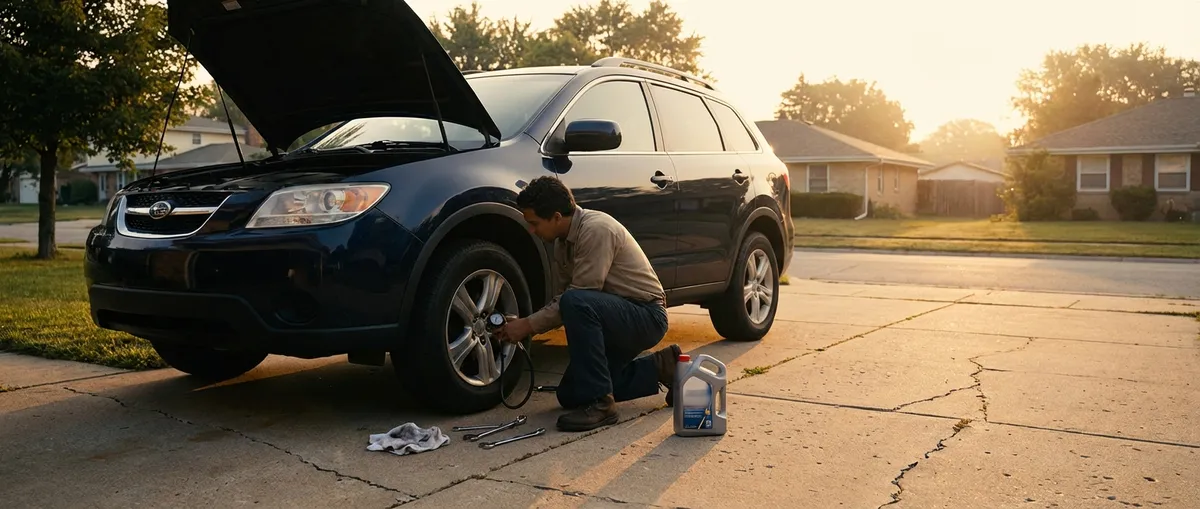
Fluids: The Quiet Lifeline of Your Engine
Fluids are the easiest thing to ignore and the fastest way to turn a small problem into a major repair. Engine oil should be checked on level ground with the engine off and cooled for a few minutes—pull the dipstick, wipe it, reinsert, and confirm the level sits between the low and full marks with a clean, amber-to-brown appearance (black and gritty can signal it’s time to change or at least investigate). While the hood is up, take a look at coolant level in the overflow tank; it should sit between the “MIN” and “MAX” marks, and you should never remove the radiator cap on a hot engine due to burn risk.
Brake fluid deserves just as much attention: a low level can point to pad wear or a leak, and fluid that’s dark or murky might be absorbing moisture, reducing braking performance. Power steering (if your car isn’t fully electric or using electric power steering), transmission fluid (if your car has a dipstick for it), and windshield washer fluid all play in the same reliability story—each has its own reservoir and markings, typically labeled on the cap. Your actionable move: set a calendar reminder to check all accessible fluids once a month and always before any trip over 200 miles. If you notice sudden drops, unusual colors, or burnt smells, treat that as a “see a mechanic soon” flag, not a “wait and see.”
Tires: Where All Your Car’s Technology Meets the Road
Everything your car does—braking, accelerating, cornering—funnels through four fist-sized contact patches of rubber. Proper tire pressure is the single easiest performance and safety upgrade you can give your car in under five minutes. Use the pressure spec on the doorjamb sticker (driver’s side), not the max pressure on the tire sidewall. Check pressure when the tires are “cold” (before driving more than a couple of miles), and expect readings to drop about 1 psi for every 10°F drop in temperature. Underinflation can lead to poor fuel economy, sluggish handling, and increased risk of blowouts from heat buildup; overinflation can reduce grip and create a harsh, skittish ride.
Tread depth matters just as much as pressure. Worn tread dramatically increases stopping distances, especially in rain. You can use a tread depth gauge or the old-school penny test—if you insert a penny head-first into the tread and you can see all of Lincoln’s head, the tire is too worn. Also scan for uneven wear patterns: more wear on the inner or outer edges can signal misalignment or suspension issues, while cupping or scalloping might point to worn shocks or struts. Your actionable move: check tire pressure monthly and before long drives, rotate tires roughly every 5,000–7,500 miles (often with oil changes), and have an alignment done any time you notice the car pulling to one side or see uneven wear.
Brakes and Steering: Feel Changes Before They Become Emergencies
Brakes don’t usually fail overnight—they give you plenty of warning if you’re paying attention. When you press the pedal, it should feel firm and consistent, not spongy or sinking slowly toward the floor. Grinding or metallic scraping often means pads are down to the backing plates and can damage rotors quickly if ignored. High-pitched squealing can be built-in wear indicators telling you it’s time to inspect. Vibration through the steering wheel or pedal when braking can suggest warped rotors or uneven pad deposits. If your car has a brake wear or ABS warning light on the dash, don’t treat it like background noise; have it scanned and addressed promptly.
Steering feel is another early-warning system. The wheel should turn smoothly without dead spots, binding, or clunks. If the car wanders on straight roads, requires constant correction, or pulls strongly under braking, that’s worth immediate attention—it can indicate alignment issues, worn suspension components, or uneven braking side to side. Power steering noises (whining when turning at low speeds) or heavy steering effort can signal low fluid (on hydraulic systems) or problems with the pump or electric assist. Your actionable move: once a week, pay conscious attention during a low-traffic drive—how the brake pedal feels, how straight the car tracks, and whether any new noises appear under braking or steering. Treat new noises or changes as a to-do, not background.
Electrical and Lighting: See and Be Seen
Modern cars hide a huge amount of complexity behind a simple start button or key turn, but there’s still a lot you can monitor easily. A slow crank when starting, dimming interior lights when you hit the starter, or flickering headlights can all hint at a weak battery or charging system issue. Most batteries last around 3–5 years in typical conditions; if you’re in that range, it’s smart to have it load-tested rather than waiting for a no-start scenario at the worst time. Corroded battery terminals (white or bluish buildup) can cause intermittent electrical gremlins—cleaning them with a proper terminal brush and applying a bit of dielectric grease can save a lot of headaches.
Lighting is both a safety and a legal issue. Walk around the car with lights on occasionally—headlights, high beams, turn signals, brake lights, reverse lights, and hazards—to ensure everything works. A burned-out bulb can often be DIY-replaced cheaply with basic tools; your owner’s manual usually shows how. If multiple lights are acting up, especially on one side, it might indicate wiring or ground issues instead of just bad bulbs. Your actionable move: perform a quick once-a-month electrical check—test all exterior lights, pay attention to how quickly the engine cranks, and note any warning lights that stay on. For warning lights, use the owner’s manual to distinguish between “check soon” and “stop now” types and react accordingly.
Cabin, Filters, and Small Habits That Save Big Money
What happens inside the car matters for reliability, too. Your cabin air filter is an often-overlooked part that directly affects airflow from the HVAC system and the performance of defrost and A/C. A clogged filter forces the blower motor to work harder, can fog windows more easily, and can make the interior smell musty. Most cabin filters are accessible behind the glovebox or under the cowl and can be swapped with basic tools in minutes. The engine air filter is just as important: a dirty one can reduce power and fuel economy and allow contaminants into the engine. Inspecting it every 10,000–15,000 miles (or per the manual) and replacing as needed keeps the engine breathing properly.
Small habits also protect your car from “slow damage.” Avoid resting your foot on the brake or clutch pedal when you’re not using it, as light constant pressure accelerates wear on pads and clutch components. Don’t rev a cold engine hard right after startup; give it a minute of gentle driving so oil can fully circulate. In hot weather, try to park in shade where possible to protect interior materials and electronics from heat stress, and crack windows slightly if safe to reduce cabin temperatures. Your actionable move: combine a quarterly “filter day” (check cabin and engine filters, clean out trunk/clutter, vacuum vents) with a quick review of your driving habits—anything that involves constant partial-pressure (brake, clutch, or even resting your hand heavily on the shifter) is worth breaking.
Conclusion
Maintenance doesn’t have to mean memorizing torque specs or buying a toolbox full of specialty gear. By focusing on a few practical habits—regular fluid checks, tire care, early brake and steering attention, basic electrical checks, and small cabin and driving tweaks—you dramatically reduce your chances of roadside surprises and expensive repairs. Treat these as part of driving, not separate chores: a five-minute check in your driveway can be the difference between an easy trip and an avoidable breakdown. Over time, you’ll develop a feel for your car that makes it easier to spot issues early and keep every drive smoother, safer, and more enjoyable.
Sources
- National Highway Traffic Safety Administration (NHTSA) – Tire Safety - Official guidance on tire pressure, tread, and maintenance for safe driving
- U.S. Department of Energy – Fuel Economy: Keeping Your Car in Shape - Explains how routine maintenance like tire pressure and filters impacts fuel efficiency
- AAA – Car Battery and Electrical System - Overview of battery life, testing, and symptoms of electrical system issues
- Bridgestone – How to Check Your Car’s Fluids - Practical instructions for inspecting essential vehicle fluids
- Carnegie Mellon University – Vehicle Maintenance Tips - Concise university guide to core maintenance practices and safety checks