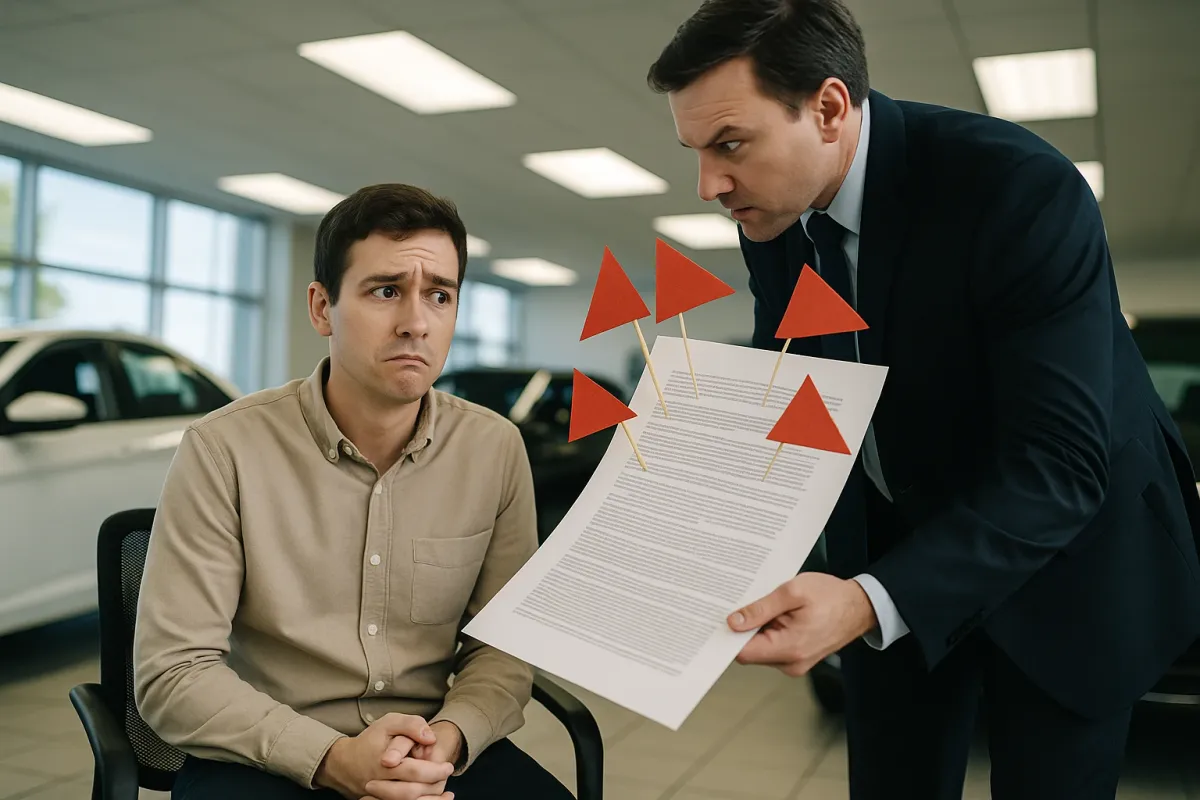
Today’s car market is still tricky: prices are slowly normalizing from pandemic highs, interest rates remain elevated, and dealers are under pressure to move inventory before year‑end. That combination can drive some stores to lean hard on aggressive tactics. If you’re shopping this season, treat your next test drive the way people in that “relationship red flags” article wish they’d treated their first dates—eyes open, no excuses, and ready to walk away.
Below are five “relationship-style” red flags to watch for when buying a car right now, plus what to do instead.
1. Love-Bombing: “I Can Get You Approved for Anything, No Problem”
In those relationship stories, a classic red flag is someone who comes on too strong too fast—grand promises, over-the-top affection, and talk about forever on date one. At the dealership, the equivalent is the salesperson who guarantees the world before they’ve seen a single pay stub, credit score, or lender response: “We get everyone approved,” “You’ll drive out today, guaranteed,” or “Don’t worry about price, we’ll make it work.”
This is especially risky in today’s higher-rate environment. Lenders have tightened standards, and the “we approve everyone” line often hides ugly financing: 7–10 year terms, very high interest, or a loan stacked with unnecessary extras just to get a bank to say yes. Before you go in, check your own credit score via your bank or a reputable service, and get at least one preapproval from a credit union or your own bank. That way, when someone starts love‑bombing you with promises, you can anchor the conversation to real numbers. If the dealer’s offer is dramatically worse than your preapproval—or they’re dodging your direct payment questions—treat it like any relationship that feels “too good to be true” and walk away.
2. Isolation Tactics: “You Can’t Leave or This Deal Is Gone”
A common theme in stories about toxic partners is isolation—keeping you away from your support network so you’re easier to control. Car shoppers see a similar dynamic in dealerships that keep you in the chair for hours, “lose” your keys after an appraisal, or warn, “If you leave, I can’t guarantee this price.” In a year when many brands are starting to offer better incentives again, urgency pressure is a tool to keep you from comparison shopping.
You should assume any real deal will still be there if it’s truly fair. Before visiting, set your own time limit: for example, “I’m leaving in 90 minutes no matter what.” Tell them up front that you have other appointments. Keep your phone charged and a photo of your driver’s license and insurance card handy, so they don’t physically need to hold onto anything of yours. If they hesitate to return your keys or paperwork, or they repeatedly stall when you say you need to go, that’s a huge red flag about how they’ll treat you after the sale. A reputable dealer will encourage you to think, compare, and come back—because they know the deal stands on its own merits.
3. Gaslighting Over Numbers: “That’s Not What We Said”
In the relationship red‑flag stories, gaslighting shows up as one person constantly rewriting history: “I never said that,” “You’re overreacting,” or “You misunderstood.” At dealerships, gaslighting often happens around the price, trade‑in value, or interest rate. With lots of brands pushing year‑end offers online, some stores advertise one set of numbers on the web, then “forget” the discount or add surprise fees when you’re in the finance office.
Go into the process assuming you’ll have to defend your own memory. Screenshot the online listing showing the price, VIN, and stock number. Save emails or texts that quote specific figures. When you sit down, ask for a printed or emailed purchase order with the full out‑the‑door price, including taxes and fees, before you talk financing or monthly payment. If they start saying things like, “That price didn’t include destination,” or, “You must have misread the ad,” calmly show your proof. If they still resist or try to make you feel unreasonable, don’t argue for hours—stand up, thank them for their time, and go. Just as in relationships, respectful partners don’t make you question your sanity over basic facts.
4. Hidden Baggage: “We’ll Talk About the Warranty Later”
Many people in toxic relationships say they ignored hidden baggage: secret debts, unresolved issues, or major life complications brushed off as “no big deal.” In the car world, hidden baggage is everything that isn’t obvious in the quick walk‑around: accident history, flood damage, heavy rental use, aftermarket modifications, or a warranty that’s about to run out in three months. With used values softening after the recent peak, many high‑mileage, rough‑use units are being moved aggressively—and you don’t want to be the one who takes that baggage home.
For any used car—especially one that seems like an unusually good deal—start with a VIN check from services like Carfax or AutoCheck, but don’t stop there. Ask specifically if the vehicle was ever used as a rental, fleet, or rideshare car; if there are any open recalls; and whether all factory campaigns have been completed. Insist on a pre‑purchase inspection by an independent mechanic of your choosing, not someone tied to the dealer, and pay for it yourself—it’s cheap insurance. On newer vehicles, clarify what factory warranty remains and get it in writing on your contract. If they resist letting the car out for an inspection or get vague when you ask about history, assume there’s something they don’t want you to see.
5. Long-Term Control: “We Just Set the Monthly Payment for You”
Those relationship red‑flag lists are full of stories about control—partners who manage the money, make all the decisions, and keep the other person in the dark. In the dealership finance office, the equivalent is the F&I manager who immediately pivots to, “What monthly payment do you want?” and tries to control every lever—term, rate, extras—without ever talking about the total cost. In an era of longer and longer car loans (84+ months is increasingly common), this is how people end up trapped in negative equity cycles for years.
Flip the script by focusing on total cost, not just the monthly. Decide your maximum out‑the‑door budget before you go in, and your maximum loan term (for most buyers, 60 months is a healthy upper limit; 72 only if you understand the trade‑offs). When they ask about your target payment, respond with, “Let’s first agree on the selling price and out‑the‑door amount.” Say no automatically to high‑margin add‑ons like paint sealants, VIN etching, or “security packages” unless you specifically planned to buy them—and if you do consider something, ask, “What is the standalone price of this item, and can you remove it if I decline?” If the finance manager gets annoyed when you read the contract line by line, or they keep reprinting pages while changing terms you didn’t agree to, stop the process and step away. You’re signing up for years of payments—no honest partner should rush you through that moment.
Conclusion
Those viral stories about people ignoring relationship red flags are painful reading because the warning signs were almost always there—just easy to dismiss in the moment. Car buying in late 2025 is similar. Markets are shifting, dealers are hungry, and the pressure is real, but so are the warning signs when a deal starts to turn toxic.
Treat your next purchase like the long‑term relationship it is. Don’t fall for financial love‑bombing, don’t let anyone isolate you from your options, don’t accept gaslighting over numbers, always dig for hidden baggage, and never give up control over the long‑term commitment you’re making. The right car, at the right price, from the right seller, won’t make you feel rushed, confused, or cornered—and just like in healthy relationships, that peace of mind is worth holding out for.