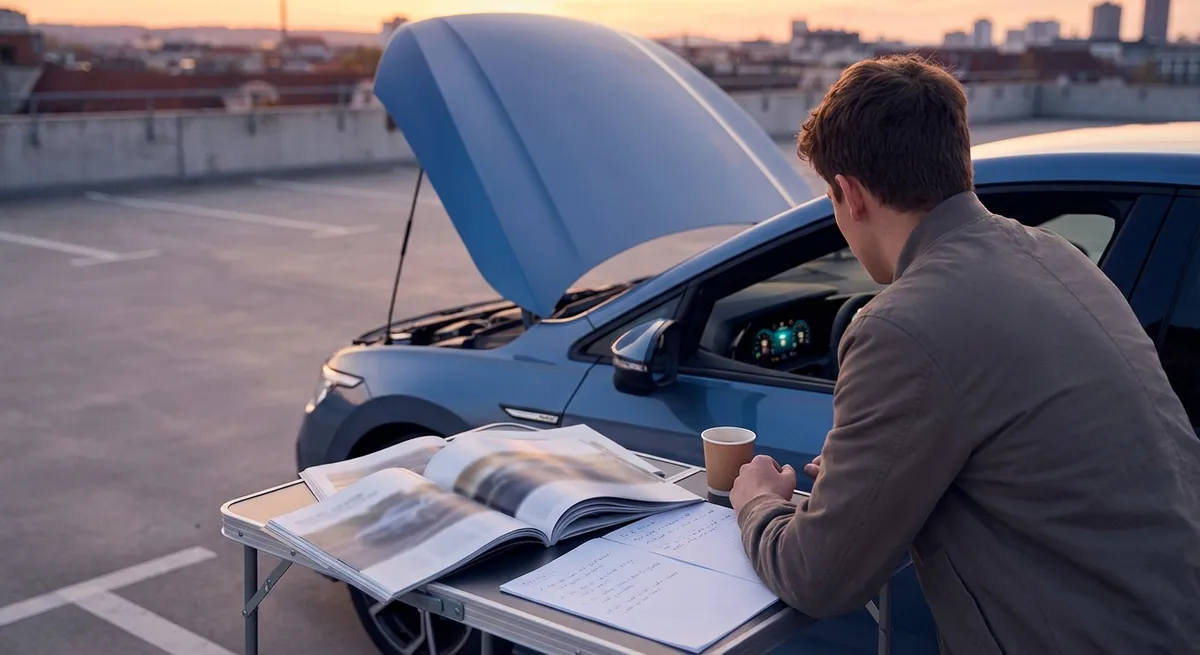
Understand Who the Review Is Really For
Before you trust a verdict, figure out who the reviewer is actually talking to.
A performance-focused reviewer might criticize a car for being “boring” when it’s actually perfect for a commuter who values comfort and fuel economy. On the other hand, a family-oriented publication might love a vehicle’s safety and space but gloss over weak acceleration or vague steering that will bother an enthusiast.
Look for clues:
- Does the review talk more about 0–60 times and lap performance, or about child-seat fit and cargo room?
- Is the test conducted on a track, mountain road, or in city traffic?
- Are they comparing it to sports cars, crossovers, or budget compacts?
Match the reviewer’s priorities to yours. If you care about reliability, operating costs, and comfort, a review obsessed with Nürburgring lap times won’t tell you what you actually need to know. Bookmark reviewers and outlets that consistently talk about the things you care about, whether that’s towing capacity, safety tech, EV charging, or long-distance comfort.
Separate Specs From Real-World Impressions
Car makers and reviewers love numbers—horsepower, torque, 0–60, curb weight, battery capacity. They’re useful, but only when paired with real-world context.
Ask yourself:
- How does it actually feel on the road? A car with “only” modest horsepower may feel strong around town if it has good low-end torque or responsive tuning.
- Is the transmission behavior explained? CVTs, dual-clutch automatics, and traditional automatics each have very different driving manners. A good review describes how they behave in traffic, not just in theory.
- Do braking and handling impressions match the car’s mission? Soft suspension and light steering might be a plus in a daily driver, but a downside in a performance model.
Watch for reviews that only list specs without describing what they mean in daily use. You want insights like “quick to merge at highway speeds,” “hesitates on downshifts when passing,” or “body roll is controlled but ride remains comfortable over rough pavement.” Those details help you imagine what living with the car will actually be like.
Compare Multiple Reviews to Spot Consistent Themes
One review can mislead you—five reviews start to show a pattern.
When you’re serious about a model, read or watch several reviews from different types of outlets: professional publications, independent YouTubers, and long-term ownership reports. You’ll start to see recurring themes:
- If three or more reviewers mention a firm ride, small rear seat, or confusing infotainment, treat that as a likely reality.
- Conflicting opinions—especially on subjective things like styling or seat comfort—mean you should prioritize seeing the car in person or scheduling a test drive.
- Long-term tests (6–12 months) and owner forums can reveal durability and day-to-day quirks that first-drive reviews miss, like creaks, infotainment glitches, or real fuel economy.
Pay special attention to:
- Noise levels: Is wind or road noise frequently mentioned?
- Infotainment usability: Do reviewers complain about laggy screens or buried menus?
- Driver assistance: Are lane-keeping and adaptive cruise described as smooth and trustworthy, or intrusive and jumpy?
Use reviews as a filter, not a final verdict. If multiple credible sources highlight the same strengths and weaknesses, those are the points you should focus on in your own evaluation.
Translate Reviewer Language Into Practical Takeaways
Reviewers often use shorthand that sounds flashy but doesn’t always explain what you’ll actually experience. Learning to decode this language turns vague impressions into useful buying criteria.
Examples of translation:
- “The ride is firm.” You may feel more bumps and expansion joints; could be tiring on rough roads but beneficial for handling.
- “Light steering with little feedback.” Easy to maneuver in parking lots, but may feel numb or uninspiring on twisty roads.
- “Body roll is noticeable.” In quick turns or lane changes, the car leans more; not unsafe by itself, but less confidence-inspiring.
- “The cabin is well-insulated.” Quieter highway cruising; good for long trips and phone calls.
- “Laggy throttle response.” When you press the accelerator, the car hesitates before responding—annoying in city driving or when overtaking.
Each time you hit a phrase like this, ask: “What would that feel like during my daily drive?” This helps you convert abstract review language into concrete expectations about comfort, fatigue, and confidence behind the wheel.
Use Reviews to Plan a Focused, Real-World Test Drive
The most valuable way to use car reviews is as a checklist for what to test yourself. Instead of simply driving around the dealer’s block, build a short, targeted test route and set of checks.
Use what you learned from reviews to:
- Recreate your real driving: If you commute on the highway, insist on a highway stretch. If you deal with tight parking, test a cramped lot or parallel parking.
- Check specific concerns: If reviews mention a stiff ride, purposely drive over rough pavement, patched asphalt, and speed bumps.
- Evaluate tech in motion: Use adaptive cruise, lane-keeping, parking sensors, and camera views while actually driving, not just sitting parked.
- Test visibility and comfort: Adjust mirrors, assess blind spots, try different seat positions, and see how easy it is to use climate and audio without taking your eyes off the road.
Bring along 2–3 key points you’ve seen repeatedly in reviews (for example: “firm seats,” “noisy at 70 mph,” “infotainment is distracting”) and directly test each one. If your impression matches the reviewers’ and you still like the car, that’s a strong sign it fits your needs. If your impression differs, trust your own experience—you are the one who will live with it.
Conclusion
Modern car reviews are powerful tools, but they’re most useful when you know how to read them critically. Understand who the review is for, separate specs from real-world impressions, cross-check multiple sources, decode reviewer language, and then turn all of that into a focused test-drive plan.
Instead of chasing the “best” car on paper, you’ll be using reviews to find the car that’s actually best for your life, your roads, and your priorities. That’s how enthusiasts and everyday drivers alike get more value from every review they read or watch.
Sources
- Consumer Reports – How to Buy a New Car – Practical guidance on evaluating vehicles and using reviews and ratings wisely
- Edmunds – Car Reviews & Ratings – Example of structured professional reviews with real-world impressions, pros/cons, and testing data
- Car and Driver – How We Test Cars – Explains standardized automotive testing methods and what common performance metrics actually mean
- U.S. Department of Energy – Fuel Economy Guide – Official fuel-economy data that you can compare with reviewers’ real-world consumption reports
- IIHS – Vehicle Ratings – Independent safety ratings that complement safety impressions mentioned in car reviews