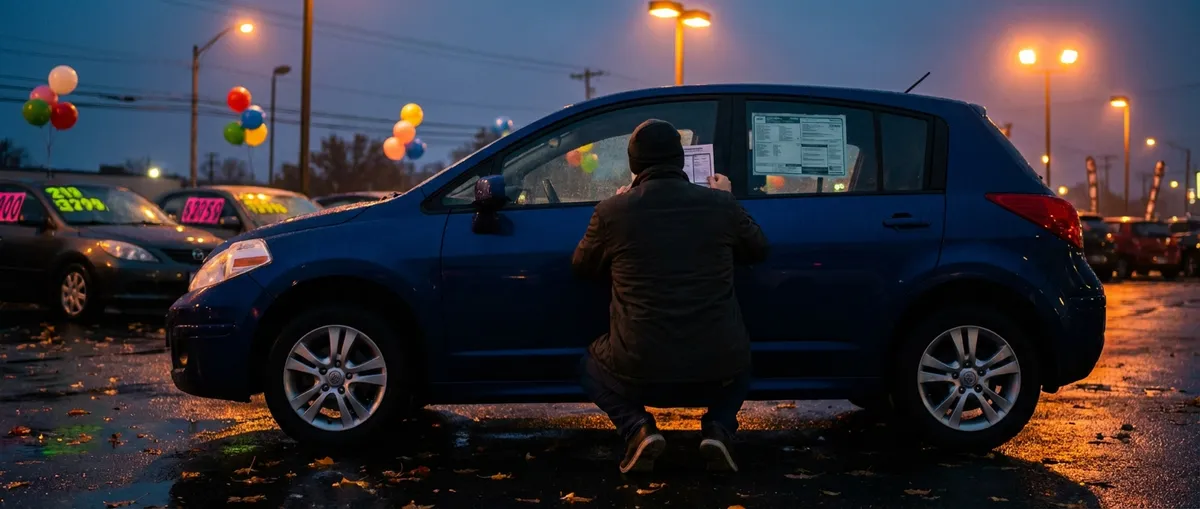
This guide flips that script. You’ll learn how to look past the sales pitch, test a car the way you’ll actually live with it, and use real numbers—not emotion—to decide if a deal is truly “good.” These five practical habits work whether you’re buying your first car or upgrading to something more fun.
Look Past the Monthly Payment and Break Down the Real Cost
Dealers love to ask, “What monthly payment are you looking for?” It sounds harmless, but it lets them stretch the loan, pack in extras, and still hit your number while you pay far more overall.
Instead of negotiating around a payment, focus on the full picture:
- Start with the out-the-door price, not the sticker. That’s the total with taxes, doc fees, and other charges. Ask for it in writing before talking payments.
- Calculate total interest. A low payment with a 72–84 month term can add thousands in interest alone. Use a free loan calculator (from your bank or a reputable site) and compare:
- 48 vs 60 vs 72 months
- Different rates (e.g., 5% vs 8%)
- Check insurance estimates before you fall in love. Sport trims, turbo engines, and certain brands can dramatically raise premiums. Get quotes with the exact year, make, model, and trim.
- Factor in fuel and maintenance. A cheaper older SUV with poor mpg and pricey tires might cost more to live with than a slightly more expensive, efficient sedan.
Actionable point #1:
Write down four numbers for every car you’re considering: out-the-door price, loan interest over the full term, insurance estimate, and average fuel cost per year. If one is way out of line, it’s not actually a good deal.
Decode the Car’s Story Before You Talk Price
Every car has a history, and that story matters more than the shine on the paint. Especially for used vehicles, your best leverage is what you know before you ever step onto the lot.
Practical steps:
- Always run a vehicle history report using the VIN (Carfax, AutoCheck, or another reputable service). Watch for:
- Branded titles (salvage, flood, rebuilt, lemon buyback)
- Multiple owners in a short time
- Frequent auctions or long gaps between registrations
- Cross-check mileage with age. A car that’s 8 years old with unusually low miles deserves extra scrutiny; it could be a long-sitting vehicle or the odometer may be suspect if other records don’t line up.
- Ask for service records. Ideal: dealer service history or a consistent independent shop with dates, mileage, and specific work done—not just “oil change.”
- Check for open recalls on the NHTSA website using the VIN. Open recalls aren’t always deal-breakers, but they should be fixed at no cost by the manufacturer.
- Search the VIN or plate online. Enthusiast forums, for-sale listings, and even old ads sometimes reveal prior modifications, track use, or past issues.
Actionable point #2:
Treat the VIN like a report card: don’t negotiate or commit until you’ve pulled a full history report, checked for recalls, and verified mileage and service patterns actually make sense.
Test-Drive Like You’ll Actually Use the Car
Most buyers take a quick spin around the block, nod, and sign. That’s barely enough to judge a rental car, let alone a long-term purchase. A meaningful test drive should feel like a mini version of your real life with that vehicle.
How to structure a smarter test drive:
- Drive your actual mix of roads. If you commute on the highway, insist on a highway segment. If you live on hills, test hills. City stop-and-go? Include that too.
- Test at parking speed. Try tight parking-lot maneuvers, parallel parking, and backing into a spot. Check visibility, camera clarity, and how easy it is to judge the car’s corners.
- Simulate your daily load. Bring the car seat, stroller, golf clubs, or tool bags you actually carry. Fold the seats, load the trunk, and see if it’s practical without gymnastics.
- Check noise and comfort after 15–20 minutes. Subtle seat pressure, steering-wheel vibration, or road noise can be tolerable for 5 minutes and painful after an hour.
- Try key tech features in real time. Pair your phone, test Android Auto/Apple CarPlay, adjust driver aids (adaptive cruise, lane-keeping), and see if the menus are intuitive or frustrating.
Actionable point #3:
Don’t be rushed—plan a 20–30 minute route that includes highway, low-speed turns, parking, and at least one situation you face daily. If the dealer won’t allow that, consider it a red flag.
Use Independent Numbers to Anchor Your Negotiation
A strong deal starts before you arrive at the dealership, with data you can bring up calmly and confidently. When you know the realistic market value, you’re not arguing from feelings—you’re referencing the market.
Steps to prep your numbers:
- Research market value using multiple guides. Check several sources (Kelley Blue Book, Edmunds, NADA, or your regional equivalent) for:
- Trade-in value
- Private-party value
- Dealer retail range
- Study local listings. Search your area (or within a reasonable distance) for the same year, trim, mileage, and condition. Pay attention to:
- How long cars have been listed (stale listings may be more negotiable)
- Which options add real value in your region (AWD, heated seats, tow packages)
- Know your walk-away number. Factor in your research, your budget, and the car’s condition. Set:
- A “target” price you’d be happy with
- A hard ceiling where you will politely walk away
- Get pre-approved financing from a bank or credit union. This gives you:
- A benchmark interest rate
- A maximum loan amount
- Leverage to compare any dealer offer directly
Actionable point #4:
Show up with printed or screenshot evidence of market values and your pre-approval terms. Use these to keep negotiations grounded: you’re not asking for a “deal,” you’re asking for a price that matches the market.
Slow Down at the Finance Desk and Guard Against Add-Ons
Many buyers think the negotiation ends when they agree on a price. In reality, a lot of profit—and risk for you—shows up in the finance office through extended warranties, add-ons, and quietly marked-up rates.
Protect yourself with a few specific habits:
- Read every line item on the buyer’s order. Look for extras like:
- Fabric protection, paint sealant, VIN etching
- “Appearance packages” or “protection packages”
- Nitrogen in tires, window tint at inflated prices
- Politely decline bundled add-ons you didn’t ask for. You are not required to accept them. Ask for a version of the contract with those removed and the price adjusted.
- Compare the dealer’s interest rate with your pre-approval. If the dealer’s financing is higher, ask if they can match or beat your bank or credit union. If not, stick with your pre-approval.
- Evaluate extended warranties rationally. Consider:
- How long you plan to keep the car
- Reliability history of that make/model
- Whether the coverage is from the manufacturer or a third party
- Total price vs. what common repairs actually cost
- Never rush signatures. Take copies home if possible, or step out and carefully re-read the contract on your own. Any pressure to “sign now or lose the deal” is a warning sign.
Actionable point #5:
Treat the finance office as a second negotiation: actively remove any add-ons you don’t value, compare rates with your pre-approval, and don’t sign until every number matches what you agreed to on paper.
Conclusion
A good car should improve your daily life, not quietly strain your budget or patience. When you focus on total cost instead of just payments, decode the car’s history, test-drive realistically, rely on market data, and guard the last step of the process, you’re no longer a “walk-in customer”—you’re an informed buyer.
Use these five habits every time you shop, and you’ll not only save money—you’ll end up with a car that fits how you drive, what you haul, and how you like to live behind the wheel.
Sources
- Consumer Financial Protection Bureau – Auto Loans - Explains how auto financing works, common dealer tactics, and how to compare loan offers
- National Highway Traffic Safety Administration – Recalls Lookup - Official U.S. government tool for checking open safety recalls by VIN
- Kelley Blue Book – Car Values - Provides market-based valuations for new and used cars to help anchor negotiations
- Edmunds – How to Test-Drive a Car - Practical guide to structuring a meaningful test drive and what to look for
- Federal Trade Commission – Buying a Used Car - Covers buyer rights, vehicle history checks, and contract tips for used-vehicle purchases