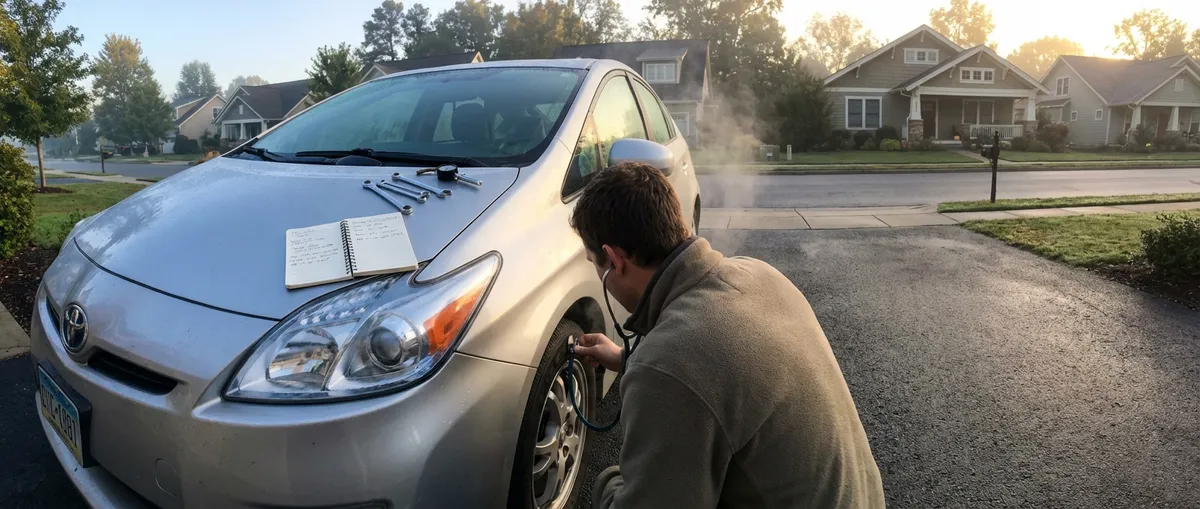
This guide walks through five practical habits that help you spot and solve small issues before they turn into expensive repairs, with details aimed at drivers who care about how their car feels as much as how it looks.
Learn Your Car’s “Baseline” Before Something Feels Wrong
You can’t notice a problem if you don’t know what “normal” feels like.
Spend a week paying attention to how your car behaves in everyday conditions—this becomes your baseline. Notice how the steering feels at parking-lot speeds vs. highway speeds, how firm the brake pedal is, when the transmission shifts under light vs. heavy throttle, and what the idle feels like at a stoplight (smooth, slight vibration, or occasional stumble). Turn off the radio and listen to wind and road noise at 30, 50, and 70 mph. Make a mental note of typical engine temperature on the gauge and where the tachometer sits at idle and at your usual cruising speed. Once you’re familiar with these patterns, even small changes—slower cranking when starting, slightly mushier brakes, or a new vibration at 60 mph—will stand out, giving you a chance to react early instead of waiting for something to fail.
Turn Strange Sounds and Smells Into Useful Clues
Most “mystery” noises and smells are actually pretty specific clues if you know what to listen (and sniff) for.
Squealing that changes with engine RPM often points to a worn or loose belt, while a rhythmic thumping that changes with road speed suggests a tire issue, flat spot, or bent wheel. A grinding or metallic scraping when braking usually points to worn brake pads contacting the rotors—something you want to address immediately before rotors are damaged. Groaning or whining at full steering lock can indicate low power-steering fluid or stress on the steering system. On the smell side, a sweet odor could be coolant, a sharp burnt smell might be engine oil or transmission fluid on a hot surface, and a burning-clutch or burnt-toast smell after stop‑and‑go driving can indicate clutch or automatic-transmission stress. When you detect a pattern, write down what you were doing (speed, turning/braking, weather, engine temperature) and how long it lasted. Sharing these details with a mechanic can cut diagnostic time significantly and help avoid “parts changing” guesswork.
Use Simple Visual Checks to Catch Wear and Leaks Early
A quick, regular visual inspection under the hood and around the car is one of the most powerful habits you can build—and it doesn’t require any advanced tools.
Once a month (or before long trips), park on level ground, let the engine cool, and pop the hood. Look for fluid residue, wet spots, or stains around hoses, the radiator, and the engine block—these can hint at coolant or oil seepage before it becomes a visible leak on the driveway. Check the coolant reservoir level against its markings, and look for unusual discoloration (rusty or oily) that may signal contamination. Pull out the engine oil dipstick (if your car has one) and check both level and color; dark is normal over time, but a milky or foamy appearance can indicate coolant contamination. Walk around the car and inspect tires for sidewall bubbles, cuts, and uneven tread wear that may signal alignment or suspension issues. While you’re there, look at the brake rotors through the wheels; heavy scoring, grooves, or a blue/purple tint hint at overheating or excessive wear. Catching these issues visually lets you schedule service on your terms instead of reacting to a roadside failure.
Treat Dash Lights as a Diagnosis Starting Point, Not an Alarm Bell
Modern cars are constantly self-checking—and the dashboard is how they talk to you.
Distinguish between warning colors: red lights generally mean stop as soon as it’s safe (oil pressure, overheating, brake system problems), while amber/yellow lights (check engine, traction control, tire pressure) usually mean “check this soon.” Instead of ignoring an amber light or panicking, use it as a starting point for a calm diagnosis. A basic OBD‑II scan tool or a reputable scan app plus a Bluetooth adapter can read trouble codes from the car’s computer; these codes don’t tell you the exact part to replace, but they narrow the system (for example, “evaporative emissions leak detected” vs. “misfire on cylinder 3”). For enthusiasts, tracking intermittent lights or codes over time can reveal patterns—like a sensor that only acts up in cold weather or after highway trips. Even if you plan to use a professional shop, bringing them the code history and the conditions when it appears can streamline repair decisions and help prevent unnecessary parts replacement.
Align Service Timing With How You Actually Drive
A maintenance schedule is not one-size-fits-all—especially if you push your car harder than the average driver.
Start with the factory maintenance schedule in your owner’s manual or on the manufacturer’s website, paying attention to the difference between “normal” and “severe” service intervals. Stop-and-go city traffic, frequent short trips, towing, extreme heat or cold, and spirited driving all count as severe use and shorten the practical life of fluids and some components. Engine oil that might last the full recommended mileage under gentle highway use can shear down or become fuel‑diluted more quickly with repeated high‑RPM runs or constant low‑speed driving. Brake fluid absorbs moisture over time, which can reduce braking performance under hard use; track‑day or mountain‑road enthusiasts may want to change it more often than the default recommendation. Likewise, transmission and differential fluids that see repeated heat cycles from towing or performance driving benefit from a more aggressive change schedule. By matching your real driving style—not the idealized “average driver”—to your maintenance plan, you turn routine service into active protection against failures you’re more likely to encounter.
Conclusion
Small issues are the car’s way of giving you a head start. When you know your vehicle’s baseline behavior, pay attention to unusual sounds and smells, perform regular visual checks, treat dashboard lights as diagnostic tools rather than vague threats, and tailor maintenance to your actual driving, you dramatically reduce the odds of sudden, expensive failures. For enthusiasts, these habits don’t just extend the life of the car—they make every drive feel more precise, predictable, and satisfying.
Sources
- [National Highway Traffic Safety Administration (NHTSA) – Vehicle Maintenance](https://www.nhtsa.gov/road-safety/vehicle-maintenance) - Federal safety guidance on essential maintenance to prevent breakdowns and crashes
- [Car Care Council – Car Care Guide](https://www.carcare.org/car-care-guide/) - Consumer-focused maintenance recommendations and explanations of common systems
- [Consumer Reports – Car Maintenance and Repair Guide](https://www.consumerreports.org/cars/car-repair-maintenance-guide/) - Evidence-based advice on service intervals, reliability, and cost-saving strategies
- [U.S. Department of Energy – Fuel Economy: Keeping Your Car in Shape](https://www.fueleconomy.gov/feg/maintain.jsp) - How proper maintenance impacts efficiency, performance, and operating cost
- [AAA – Vehicle Diagnostic Codes and Warning Lights](https://exchange.aaa.com/automotive/automotive-trends/understanding-dashboard-warning-lights/) - Clear explanations of common dashboard lights and what drivers should do next