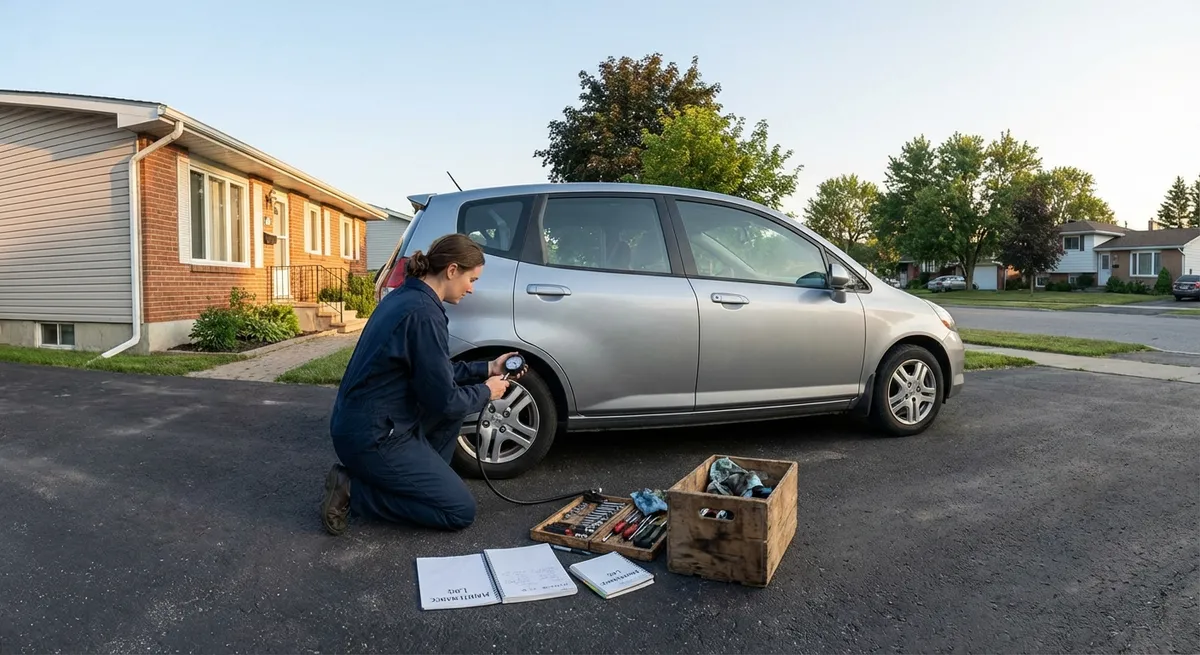
This guide focuses on practical, repeatable habits rather than big, one-time jobs. Each section includes an actionable point you can start using on your current car today.
Make Fluid Checks Part of Your Monthly Routine
Most owners wait for a dashboard light before thinking about fluids. That works for some systems, but by the time a warning appears, wear may already be underway. A 10–15 minute monthly fluid check can prevent overheating, brake fade, and early transmission wear.
Start with engine oil. Even if your car has an oil-life monitor, pop the hood once a month when the engine is cool. Pull the dipstick, wipe it, reinsert, and check both level and color. Dark brown is normal near the end of an oil interval; gritty, thick, or sludgy oil is not. If you’re regularly topping off more than a quart between changes, that’s worth a mechanic’s attention.
Next, visually inspect coolant, brake fluid, and power steering (if not electric assist). You’re mainly looking for two things: levels dropping over time and obvious color changes (e.g., dark or cloudy brake fluid). A slow loss of coolant or brake fluid usually signals a leak somewhere, even if you don’t see drips under the car.
Actionable habit #1: Set a recurring calendar reminder once a month to check oil, coolant, and brake fluid levels. Do it on the same weekend you pay bills or clean the house so it becomes part of your routine.
Treat Tire Care Like Part of Your Safety Equipment
Tires are your only contact with the road, but they’re also among the most neglected components. Underinflated or unevenly worn tires can increase stopping distance, reduce grip in the rain, and cost you fuel.
Check tire pressure at least once a month and before long trips. Use a good digital gauge and compare readings to the sticker on the driver’s door jamb, not the number on the tire sidewall. Temperature swings can change pressure noticeably; a cold morning may put your tires several PSI below spec.
While you’re there, inspect tread. Use the penny test or, better yet, a tread depth gauge. Look for uneven wear: more worn on the inside or outside edges, feathered tread blocks, or cupping. These patterns often indicate alignment problems, worn suspension components, or unbalanced wheels.
Actionable habit #2: Every month, check and adjust tire pressures and visually inspect tread and sidewalls for cracks, bulges, or uneven wear. Snap a quick photo of each tire with your phone every few months so you can compare wear patterns over time.
Listen and Feel for Changes Instead of Turning Up the Radio
Your car will usually “tell” you something is wrong before it fails. The key is training yourself to notice subtle changes in noise, vibration, and feel.
Once a week, drive a familiar stretch of road with the radio off and climate fan on low. Pay attention to:
- New squeaks or clunks over bumps (potentially worn bushings, ball joints, or sway bar links)
- Rhythmic humming that changes with speed (often tire or wheel bearing issues)
- Pulsation in the brake pedal under light braking (could indicate warped rotors)
- New vibration in the steering wheel or seat at highway speeds (might be balance, alignment, or a developing tire issue)
Also note changes in steering effort or straight-line tracking. If the car suddenly needs more correction to stay straight or the steering wheel sits off-center, that’s a flag for alignment or suspension inspection.
Actionable habit #3: Once a week, do a “quiet drive check”—radio off, windows up—and mentally note any new sounds, vibrations, or changes in braking or steering feel. If something new appears and sticks around for more than a couple of drives, put it on your list to have checked rather than waiting for it to get worse.
Build a Simple Mileage-Based Checklist (And Actually Use It)
Modern cars have long service intervals, but that can make maintenance easy to forget. Instead of relying only on the owner’s manual or the car’s reminder system, translate the key items into a simple checklist that matches how you drive.
Break your list into mileage ranges: every 5,000 miles, 15,000 miles, 30,000 miles, etc. Your owner’s manual or manufacturer maintenance schedule is the foundation. From there, adapt it to your usage. Lots of short trips, extreme heat/cold, towing, or dusty conditions count as “severe service” and usually justify shorter intervals.
At minimum, your checklist should cover:
- Oil and filter intervals (including time limits if you drive very few miles)
- Cabin and engine air filter checks
- Brake inspection (pads, rotors, hoses)
- Coolant and brake fluid replacement intervals
- Transmission service (if the manufacturer specifies intervals, follow them)
Actionable habit #4: Create a one-page maintenance checklist based on your owner’s manual and keep it in your glovebox or notes app, updating it with date and mileage every time you complete an item. This makes it far easier to see what’s due at a glance and reduces the chance of missing critical services.
Protect Exterior and Interior Surfaces Before They Degrade
Mechanical health is crucial, but preserving your car’s surfaces can save serious money and keep it pleasant to live with. Neglected paint, sun-baked interiors, and dried-out weatherstripping turn a solid car into something that looks and feels tired long before its time.
Washing matters more than waxing. Regularly removing road salt, dirt, and tree sap prevents clear coat damage and corrosion. If you live where roads are salted, frequent winter washes—including the underbody—are essential. After washing, a simple spray sealant or quick detailer helps maintain protection with minimal effort.
Inside, heat and UV are the biggest enemies. Park in the shade or use a windshield sunshade when possible. Clean interior surfaces with products designed for automotive materials (not household cleaners) and condition leather if equipped. Treating door seals and rubber weatherstripping a couple of times a year can help prevent squeaks, leaks, and stuck doors in freezing weather.
Actionable habit #5: Commit to a regular wash schedule (for example, every two weeks in normal conditions and weekly in winter or near the ocean) and pair it with quick paint protection and a 5-minute interior wipe-down. Treat exterior rubber and weatherstripping at least twice a year to reduce wind noise, water leaks, and door seal cracking.
Conclusion
Keeping your car reliable and enjoyable doesn’t require a full toolbox or weekend-long projects. It comes down to a handful of consistent habits:
- Monthly fluid checks
- Regular tire inspections and pressure adjustments
- Quiet drives to listen and feel for changes
- A simple, customized mileage-based checklist
- Scheduled care for paint, rubber, and interior surfaces
These preventive moves cost little in time or money but pay off in fewer surprises, lower repair bills, and a car that feels solid and trustworthy long after the new-car smell is gone. Start with one habit this week, make it stick, then layer in the others—your future self (and your car) will thank you.
Sources
- [U.S. Department of Energy – Fuel Economy: Tire Maintenance](https://www.fueleconomy.gov/feg/maintain.jsp) – Explains how tire pressure and maintenance affect safety, fuel economy, and wear
- [National Highway Traffic Safety Administration – Tire Safety](https://www.nhtsa.gov/equipment/tires) – Official guidance on tire inspection, tread depth, and safe usage
- [AAA – Vehicle Preventative Maintenance](https://exchange.aaa.com/automotive/maintenance/vehicle-preventative-maintenance/) – Overview of key maintenance items and recommended intervals for reliability
- [Car Care Council – Free Car Care Guide](https://www.carcare.org/car-care-guide/) – Consumer-focused guide to fluids, filters, and seasonal maintenance checklists
- [Penn State Extension – Road Salt and Your Vehicle](https://extension.psu.edu/road-salt-and-your-vehicle) – Details on how road salt accelerates corrosion and why frequent washing (including underbody) matters