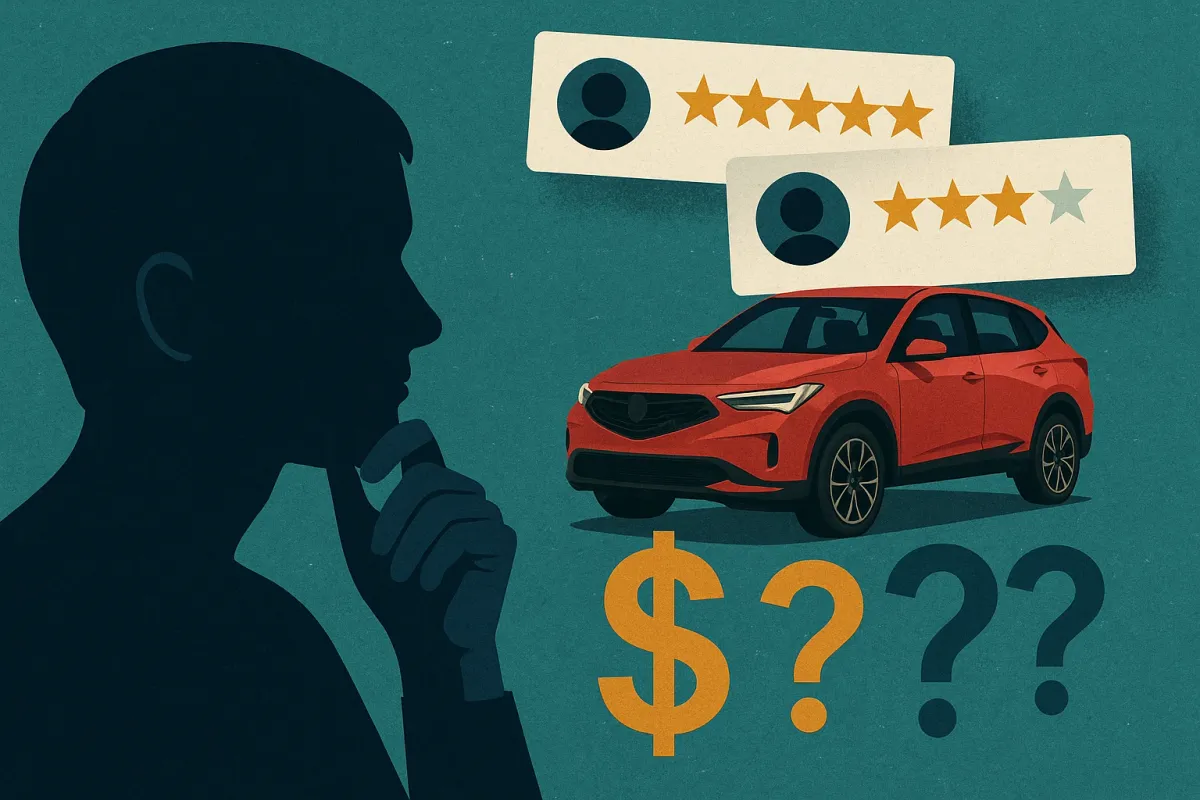
If you learn to read reviews the way a mechanic reads a service report, you’ll spot red flags early, avoid trending duds, and find the car that actually fits your life. Here’s how to turn today’s flood of online opinions into genuinely useful insight.
Look For “Everyday Chaos” Scenarios, Not Just Showroom Impressions
A lot of reviews still focus on that first sunny test drive: quiet roads, an empty trunk, and a full tank. Real life looks more like Thanksgiving traffic with kids in the back, luggage piled high, and your phone at 8% battery.
When you read or watch reviews, pay close attention to how the car handles everyday chaos:
- Search for reviewers who mention commuting in stop‑and‑go traffic, not just highway cruising. Hybrids and EVs often shine here, while some turbo gas engines feel jerky or laggy.
- Look for cargo tests: stroller plus groceries, luggage for a long weekend, or a full Costco run. Photos and videos of the trunk in real‑use situations are more revealing than capacity numbers.
- Check how parents and pet owners talk about the car. Do child seats fit without gymnastics? Are the rear doors wide enough? Is there a low load floor for dogs?
- Look for comments about parking and tight spaces. A big SUV might feel safe on the highway but exhausting in city parking garages.
- Pay attention to how reviewers describe the car when they’re tired, stressed, or running late. That’s when annoyances like slow infotainment, awkward shifters, and tiny buttons really show up.
Action step:
Before you shop, write down three “worst‑case” daily situations for you (e.g., rainy night highway drive, school drop‑off chaos, long holiday trip). Then, while reading reviews, actively check if people mention those exact scenarios.
Separate Emotional Drama From Real Reliability Clues
Online, you’ll see a lot of “this car is trash” or “best car ever” posts that sound like breakup rants or in‑law arguments. You can’t base a $30K+ decision on that level of drama. But buried in those rants are real reliability signals if you know what to look for.
Here’s how to filter the noise:
- Discount one‑off horror stories with no detail. Look for patterns: the same transmission issue, touchscreen failure, or sensor glitch reported by multiple owners.
- Notice when problems happen. Early production years of a new model or major redesign tend to have more bugs. Mid‑cycle refreshes are often safer bets.
- Separate “annoyances” from “deal‑breakers.” A rattling trim piece is annoying; repeated engine misfires are a serious red flag.
- Cross‑check owner reviews with service bulletins and recall info on official manufacturer or government sites. If complaints match known issues, take them seriously.
- See how dealers and manufacturers respond in owner stories. Do they fix issues promptly under warranty, or do owners get the runaround?
Action step:
Pick three sources for reliability info: a large owner forum or Facebook group, a consumer reliability database (like Consumer Reports, J.D. Power, etc.), and official recall/service bulletin listings. Only consider a problem a “real risk” if you see it show up in at least two of those places.
Treat Tech And Safety Features Like A Relationship, Not A Checklist
Like the partner who “seems perfect on paper” but doesn’t work in real life, a car that looks loaded with tech can still be frustrating or even unsafe if it’s poorly implemented. Driver‑assist systems (lane keep, adaptive cruise, auto braking) and infotainment are where many owners either fall in love or want a divorce from their car.
When reviewing these features, go beyond the brochure:
- Look for tests of driver‑assist in bad conditions: night, heavy rain, faded lane markings, or stop‑and‑go traffic. Many systems work fine on a sunny highway and fall apart in real life.
- See how often owners complain about false alerts, random braking, or “nanny” behavior from safety systems. Constant nagging quickly leads to people turning features off.
- Check whether wireless Apple CarPlay/Android Auto are standard and how stable they are. Frequent disconnects, lag, or audio glitches are common complaints in newer models.
- Pay attention to screen layout and physical buttons. Reviewers who highlight deep menus or small touch targets are warning you about daily frustration.
- If the car has over‑the‑air (OTA) updates, look for stories of what’s actually changed. Have updates fixed common bugs or introduced new problems?
Action step:
When watching video reviews, skip straight to tech and safety sections and watch those twice. Then check owner comments specifically for terms like “lane keep,” “adaptive cruise,” “CarPlay,” “Android Auto,” and “software update” to see what living with the tech is really like.
Use Test Drives Like A “Pre‑Holiday” Stress Test
Hosting a big family holiday exposes every weakness in your kitchen and home. A proper test drive does the same for a car. Most buyers still accept a quick, controlled loop around the block that reveals almost nothing.
Use reviews to design a smarter test drive:
- Note specific complaints about visibility, blind spots, or thick roof pillars. On your drive, do deliberate lane changes and tight turns to see if you agree.
- If reviews mention wind noise, tire roar, or a harsh ride, take the car on both coarse pavement and higher‑speed roads to check it yourself.
- For EVs and hybrids, watch reviewers talk about regenerative braking feel. During your test, switch between modes and see if any feel natural in traffic.
- If people mention a “laggy” transmission or hesitation, try quick merges, passing maneuvers, and rolling stops. You want to know how the car behaves when you ask for power urgently.
- Note steering feel comments. During the test, try parking‑lot maneuvers, highway cruising, and a couple of curves to sense how connected you feel.
Action step:
Pull 3–5 specific “concerns” from reviews of your shortlisted car and turn them into a printed or phone checklist. Take it to the dealership and make sure you test each one before you even think about signing anything.
Read Reviewer Bias Like You’d Read Family Dynamics
Those family and relationship stories going viral right now all have one thing in common: everyone has a role, a bias, and their own version of events. Car reviewers are no different. Understanding who’s talking helps you decide how much to trust their opinion.
Here’s how to decode it:
- Identify the reviewer type: enthusiast, commuter, family driver, off‑roader, EV geek, luxury shopper, etc. A sports‑car fan might hate the same soft ride a family buyer would love.
- Look at what they usually review. Someone who lives in high‑end German sedans will judge an affordable compact much more harshly than a budget‑focused reviewer.
- Notice if the content is sponsored or if the car is a press loan. That doesn’t automatically mean bias, but it does mean you should weigh those opinions alongside independent owner reviews.
- Check their long‑term tests. One‑day impressions are often wildly different from six‑month experiences, especially with comfort, tech bugs, and fuel economy.
- Compare multiple reviews on the same car. If everyone praises the same strengths and complains about the same quirks, that’s likely accurate. Wildly out‑of‑step opinions may just reflect personal taste.
Action step:
Follow 2–3 reviewers whose driving needs and preferences match yours (same climate, similar commute, comparable family size or hobbies). Use their reactions as your main filter, and treat the rest as supporting opinions rather than deciding factors.
Conclusion
Car reviews today are a lot like the personal stories dominating your social feeds: emotional, messy, and sometimes one‑sided—but incredibly valuable if you know how to read between the lines. When you focus on real‑world chaos instead of showroom shine, separate drama from reliability, treat tech like a living relationship, stress‑test cars on your own terms, and read reviewer bias like family dynamics, you stop being a passive consumer and become an informed driver.
Share this with a friend who’s “thinking about a new car next year.” One smart hour spent with reviews now can save them years of payments on the wrong one.